
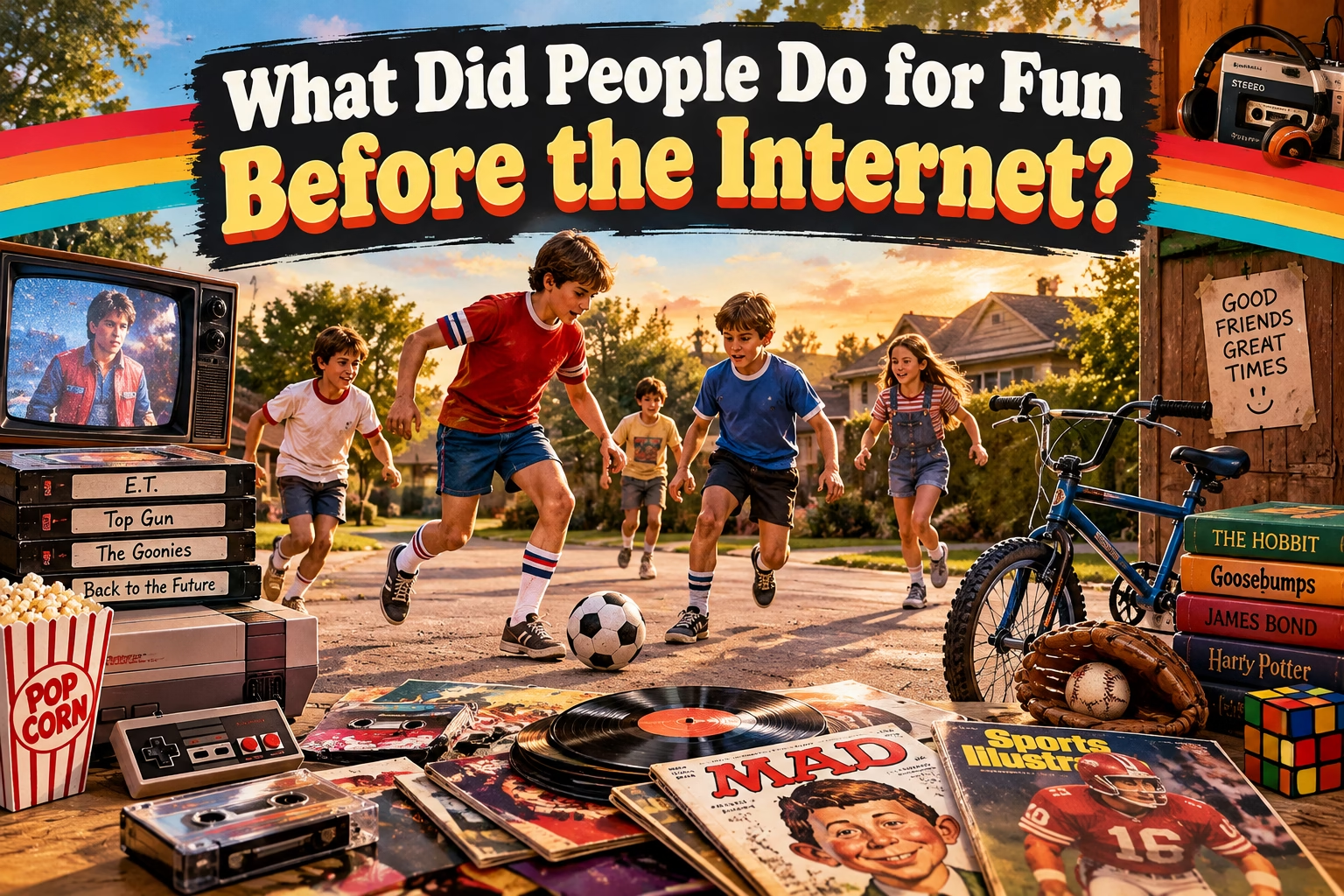
Before the internet became part of everyday life, people still had plenty of ways to have fun. They played outside, visited friends, watched television, listened to music, went to the cinema, played board games, rode bicycles, collected things, read magazines and simply spent time together.
Today, entertainment is available almost everywhere. A smartphone can provide music, videos, games, social media, movies, news and countless other distractions in seconds. If you are bored, you can open an app and instantly find something to watch or do.
But what happened before the internet?
In the 1980s, being bored did not necessarily mean reaching for a screen. There were no smartphones, social media feeds, streaming platforms or endless online videos. Entertainment was often more physical, social and local.
Children went outside. Teenagers met friends in person. Families watched television together. People rented movies, listened to cassette tapes, played board games and spent afternoons exploring their neighborhoods.
Life was not without entertainment. In fact, the 1980s were packed with popular music, movies, television shows, video games, toys, sports and hobbies.
The biggest difference was that entertainment was usually something people actively went looking for rather than something delivered continuously through a screen.
If you want to explore the bigger picture of everyday life during this fascinating decade, read our complete guide to how people used to live in the 1980s.
📺 Discover the Complete Guide: How People Used to Live in the 1980s →There Was No Internet — But There Was Plenty to Do
It is easy to imagine that people in the 1980s spent their evenings staring at the same wall because they had no internet.
Nothing could be further from the truth.
The decade had its own enormous entertainment culture. Popular music was everywhere. Television became a major part of family life. Cinemas attracted audiences. Video rental stores became weekend destinations. Arcades were popular with young people. Toys, magazines, books and board games filled bedrooms and living rooms.
The important difference was choice. Today, millions of entertainment options are available instantly. In the 1980s, people usually had a smaller number of options available at a particular moment.
Playing Outside Was a Huge Part of Childhood
One of the most noticeable differences between childhood in the 1980s and childhood today was how much time many children spent outdoors.
After school, children might finish their homework, have something to eat and then disappear outside for several hours.
They played in streets, parks, gardens, playgrounds and empty spaces around their neighborhoods.
Parents did not need to organize every minute of the afternoon. Children often created their own games.
Games Did Not Need Expensive Equipment
Many outdoor games required very little equipment.
- Hide-and-seek
- Tag
- Hopscotch
- Jump rope
- Skipping games
- Street football
- Basketball
- Catch
- Races
- Bike riding
A ball, bicycle, rope or even an empty piece of land could provide hours of entertainment.
Children often invented rules as they went along. If they did not have the equipment required for a particular game, they found a substitute.
Neighborhoods Were Natural Playgrounds
Before online communities, the neighborhood was one of the most important social spaces for children.
Friends lived nearby, so meeting someone could be as simple as walking a few minutes to their house.
Children often knew which houses belonged to their friends and which streets were popular places to play.
There was no need to send a message asking, “Where are you?”
You simply went outside and looked.
If your friends were not there, you might knock on a door, visit another friend or start doing something else.
Riding Bikes Was a Favorite Activity
Bicycles gave children freedom to explore their surroundings.
A bicycle could be transportation and entertainment at the same time.
Children rode around the neighborhood, visited friends, raced one another and explored places they had never seen before.
For many young people, the bicycle represented independence. It allowed them to travel farther than they could on foot without needing a parent to drive them.
Football and Other Sports Were Everywhere
Sports were a major source of entertainment before the internet.
Children played football in streets, schoolyards, parks and open spaces. Basketball, tennis, cycling, swimming and athletics were also popular depending on the location and community.
You did not need to belong to a professional club to enjoy a sport.
A group of friends could simply choose teams and start playing.
Arguments about whether the ball went out, whether a goal counted or who was supposed to be next were part of the experience.
There was no instant video replay to settle the argument.
Television Was One of the Biggest Forms of Entertainment
Television was extremely important in the 1980s.
Families gathered around the television to watch movies, sitcoms, cartoons, dramas, sports and news programs.
But television worked differently from today’s streaming services.
You usually watched whatever was being broadcast at that particular time.
If your favorite program started at 8:00 p.m., you had to be ready at 8:00 p.m.
There was no “watch later” button waiting for you.
Missing a Show Could Mean Missing It
This seems strange today, but missing an episode could be a real problem.
Unless the program was repeated or recorded, you might simply have to wait for the next broadcast.
This created shared viewing habits. People knew that their friends and classmates were likely watching the same popular programs at roughly the same time.
The next day, they could discuss what happened.
Cartoons Were a Big Deal for Children
Saturday mornings and after-school television could be especially exciting for children.
Cartoons provided colorful characters, adventures and comedy without requiring an internet connection.
Children often knew exactly when their favorite programs were broadcast.
They might hurry through breakfast or homework so they would not miss the beginning.
Television characters also appeared on toys, lunch boxes, clothes, school supplies and other products, making them part of everyday childhood culture.
Going to the Cinema Was an Event
Movies were another major form of entertainment.
Going to the cinema was different from opening a streaming service at home.
You had to choose a movie, travel to the cinema, buy a ticket and find a seat.
The experience itself was part of the fun.
Families, couples, teenagers and groups of friends could make an entire outing around going to the movies.
Popcorn, drinks, posters, trailers and the atmosphere of the cinema all contributed to the experience.
Video Rental Stores Became Weekend Destinations
Home video changed entertainment dramatically during the 1980s.
Video rental stores allowed people to bring movies home and watch them on their television.
Choosing a movie could become an activity in itself.
Families or friends walked through rows of VHS cases, read the descriptions on the boxes and tried to decide what to rent.
The biggest problem was simple: someone else might have rented the movie you wanted.
There was no online availability indicator telling you whether a movie was currently on the shelf.
People Played Video Games Without the Internet
Video games were already becoming an important part of popular culture in the 1980s.
Home consoles and arcade machines gave children and teenagers a new form of entertainment.
However, gaming was generally a local experience.
You played against the computer, against a friend sitting beside you or against other people at an arcade.
There were no massive online multiplayer worlds connecting players around the planet in the way modern gaming does.
Arcades Were Social Spaces
Video arcades could be noisy, colorful and exciting.
Players gathered around arcade machines, watched others play and competed for high scores.
Someone who was exceptionally good at a particular game could become well known among the local players.
Instead of following an online gaming personality, you might simply watch the best player in your neighborhood arcade.
Board Games Were a Family Favorite
Board games were another popular way to spend time indoors.
Families could gather around the dining table and play together.
Classic games involving money, property, strategy, words, trivia or luck could occupy an entire evening.
The entertainment came from the people playing as much as from the game itself.
Players laughed, argued about rules, celebrated lucky moves and occasionally became extremely competitive.
And unlike an online game, everyone was physically sitting around the same table.
Card Games Were Simple but Popular
A deck of cards could provide hours of entertainment.
Different families and communities had their own favorite card games.
Card games were inexpensive, portable and easy to learn.
People played at home, on holidays, during family gatherings or while visiting friends.
Sometimes the simplest entertainment was the most convenient because it required almost no preparation.
Puzzles and Books Helped Fill Quiet Afternoons
Reading was another important form of entertainment.
Children read comics, adventure stories, novels and magazines. Adults read newspapers, novels, magazines and books about hobbies or current events.
Libraries were valuable sources of entertainment because they allowed people to borrow books without buying them.
Puzzles, crosswords and word games also provided ways to pass the time.
These activities required concentration and imagination rather than constant visual stimulation.
Magazines Were a Major Part of Popular Culture
Magazines were an important source of entertainment and information.
People bought magazines about music, movies, sports, fashion, cars, celebrities, hobbies and many other subjects.
Teenagers could cut out pictures, collect posters and share magazines with friends.
Without social media, magazines were one of the ways people discovered what was happening in popular culture.
Music Was Everywhere
Music was one of the defining forms of entertainment of the 1980s.
People listened to records, radio broadcasts and cassette tapes. Portable cassette players made it possible to take music outside the house.
Music could accompany almost any activity: cleaning the house, studying, traveling, exercising or simply relaxing.
Making a Mixtape Was an Activity
Creating a mixtape required time and patience.
You might record songs from the radio, copy tracks from another cassette or carefully arrange your favorite songs.
The order mattered.
A mixtape could be created for a friend, a road trip, a party or simply personal listening.
There was no instant playlist generator. You had to make the choices yourself.
Dancing and Parties Were Offline
Parties were another major form of entertainment.
People gathered in homes, community spaces, clubs or other venues, depending on their age and location.
Music played through speakers, people talked face-to-face and photographs were taken with cameras rather than smartphones.
There was no live social media audience watching the event.
What happened at the party generally stayed with the people who were actually there.
Hobbies Were a Bigger Part of Free Time
Without endless online entertainment, hobbies could occupy a significant part of people’s free time.
Some people collected stamps, coins, postcards, records, comic books, toys or sports memorabilia.
Others enjoyed photography, drawing, painting, cooking, gardening, model building, sewing, fishing or repairing things.
Hobbies provided a sense of progress. Someone could spend weeks or years building a collection or improving a skill.
Collecting Things Was a Serious Hobby
Collecting was particularly interesting because it gave people something to search for.
Collectors might visit shops, markets, fairs and other places looking for missing items.
Finding a rare object could be genuinely exciting.
There was no online marketplace with thousands of listings available at the click of a button.
Sometimes you had to physically discover something.
Shopping Was Also Entertainment
Shopping centers and local shops were not simply places to buy necessities.
For teenagers in particular, going to a shopping center could be a social activity.
Friends walked around, looked at clothes, checked music stores, visited snack shops and talked.
They did not necessarily need to buy anything.
Browsing itself could be part of the fun.
Going to Restaurants and Cafés
Eating out could also become entertainment.
Families might go to a restaurant for a special occasion, while teenagers could meet friends at cafés or casual food places.
Conversations happened around the table without everyone placing a phone beside their plate.
A meal could therefore be both food and social entertainment.
Road Trips Were Different
Long car journeys could be challenging without smartphones and tablets.
Passengers did not have endless streaming libraries available during the journey.
Instead, people listened to the radio, played games, talked, read books or simply looked out of the window.
Families might use printed maps to plan routes.
Children sometimes played simple car games such as spotting certain vehicles, counting objects or looking for landmarks.
A long journey could feel much slower, but it also created opportunities for conversation.
Family Games and Conversations Filled the Evening
Once dinner was finished and the television was off, families had many ways to spend time together.
They could talk, play cards, work on puzzles, listen to music or simply sit together.
Relatives visiting the house were often part of the entertainment too.
A family gathering did not require a digital activity to keep everyone occupied.
Children Invented Their Own Entertainment
Perhaps one of the biggest differences was the amount of creativity required.
When children became bored, there was no infinite video library waiting for them.
They had to decide what to do.
A cardboard box could become a car, a spaceship or a house. A blanket could become part of a fort. A garden could become an imaginary jungle.
Imagination was not necessarily something that had to be taught. It naturally became part of play.
Rainy Days Were Different
When the weather prevented outdoor activities, children needed indoor alternatives.
They might read, draw, play board games, watch television, build models, play with toys or visit a friend.
A rainy afternoon could feel long, but it could also encourage creativity.
The important point is that boredom was not immediately solved by opening an app.
Sleepovers Were Social Entertainment
Sleepovers could be an exciting event for children and teenagers.
Friends gathered at someone’s house, ate snacks, talked, played games, watched movies and stayed awake as long as possible.
The fun came from being together.
There was no need to document every moment online.
What Happened When People Were Truly Bored?
This may be the most interesting question.
Sometimes people simply stayed bored.
And that was not necessarily a disaster.
Boredom could encourage someone to pick up a book, call a friend, go outside, clean their room, start a hobby, draw something or invent a game.
It could also mean doing absolutely nothing for a while.
Modern life has made boredom easier to eliminate, but the occasional quiet moment can also give the mind space to wander.
1980s Entertainment vs Entertainment Today
| Entertainment in the 1980s | Entertainment Today |
|---|---|
| Playing outside with neighborhood friends | Online and offline social activities |
| Scheduled television programs | Streaming platforms and on-demand video |
| Video rental stores | Digital movie libraries |
| Arcade gaming | Online and console gaming |
| Board games and card games | Physical games plus digital games |
| Cassette tapes and records | Streaming music and digital playlists |
| Printed magazines | Websites, apps and social media |
| Libraries and physical books | Physical and digital books |
| Neighborhood activities | Local and online communities |
| Film cameras | Instant digital photography |
Why the 1980s Could Feel More Social
Not everyone in the 1980s was constantly social, of course. People had different personalities and lifestyles just as they do today.
However, many popular forms of entertainment naturally brought people together physically.
Watching television could be a family activity. Going to the cinema meant being in a room with other people. Playing football required other players. Board games required people around a table. Visiting a video rental store could become a family outing.
Entertainment often had a social component built into it.
People Had to Leave the House for Many Activities
Another major difference was physical movement.
Today, entertainment can be delivered directly to your home.
You can watch a movie, order food, play games, listen to music, shop and communicate with friends without leaving the house.
In the 1980s, many activities required going somewhere.
You went to the cinema to watch a movie. You went to the video store to rent a VHS. You went to the record shop to buy music. You went to the arcade to play games. You went to the library to borrow books.
The journey itself became part of everyday life.
There Was More Anticipation
Waiting was an important part of entertainment.
You waited for your favorite television program. You waited for a new movie to arrive at the cinema. You waited for your photographs to be developed. You waited for a new issue of a magazine. You waited for a new record or cassette from an artist you liked.
Anticipation could make the eventual experience feel more exciting.
Modern technology has made entertainment incredibly convenient, but convenience also removes much of the waiting.
Why People Still Remember 1980s Entertainment
Nostalgia for the 1980s is not simply nostalgia for old technology.
For many people, memories of the decade are connected to people and experiences: riding bikes with friends, watching television with parents, renting a movie on Friday night, playing games after school or listening to music in a bedroom.
The objects of the era became symbols of those experiences.
A VHS cassette can remind someone of a family movie night. A cassette tape can bring back memories of a favorite song. A bicycle can remind someone of summer afternoons outside.
That is why 1980s entertainment remains fascinating even for people who were not alive during the decade.
What Can We Learn From Pre-Internet Entertainment?
Looking at entertainment before the internet does not mean that modern technology should be rejected.
Today’s technology offers extraordinary opportunities. People can discover music from around the world, learn new skills, watch documentaries, communicate with distant relatives and enjoy games with friends in other countries.
But the 1980s remind us that entertainment does not always need to be instant.
Sometimes the best memories come from simple activities: going outside, talking with friends, playing a game around a table, reading a book or creating something with your own hands.
Frequently Asked Questions About Entertainment Before the Internet
People watched television, listened to music, played sports, visited friends, went to cinemas, played board games, read books and magazines, rode bicycles, played video games and enjoyed hobbies.
Children commonly played outside, rode bicycles, played sports, visited friends, played with toys, watched cartoons, read books, played board games and enjoyed arcade or home video games.
Yes. Television was already a major source of home entertainment, and VHS technology and video rental stores made watching movies at home increasingly popular.
People listened to music through radio, vinyl records and cassette tapes. Cassette players also made music more portable.
Yes. Home consoles, personal computers and arcade machines provided popular gaming experiences. Most games were played locally rather than online.
Teenagers met friends in person, talked on the telephone, went to cinemas and shopping centers, listened to music, attended parties, played sports, visited arcades and enjoyed hobbies.
Weekends could include family visits, sports, shopping, cinema trips, television, outdoor activities, hobbies, parties, board games, video rentals and time with friends.
Not necessarily. People had many forms of entertainment. The major difference was that entertainment was less instantly available, so people often had to be more active, social or creative when deciding what to do.
Outdoor play was a normal part of childhood, and there were fewer digital entertainment options available at home. Neighborhoods, parks, streets and playgrounds therefore became important social spaces.
The decade produced memorable music, movies, games, toys and television programs. Its physical and social style of entertainment also creates a strong sense of nostalgia for many people.
Before the Internet, People Created Their Own Fun
So, what did people do for fun before the internet?
They did a little bit of everything.
They played outside until the streetlights came on. They rode bicycles, played football, visited friends and invented games. They watched television programs at scheduled times, rented VHS tapes, went to the cinema and listened to music on records or cassettes.
They played board games, collected things, read books and magazines, attended parties and developed hobbies. They went shopping simply to spend time together. They talked for hours on the telephone. And when none of those options seemed interesting, they sometimes simply had to deal with being bored.
The internet did not invent entertainment. It transformed how entertainment is found, delivered and shared.
The 1980s show us a world where fun often required movement, imagination, planning and other people. Entertainment was not always available instantly, which meant that people sometimes had to create their own.
That is one of the reasons everyday life in the 1980s remains so fascinating today.
If you want to discover more about the technology, routines, homes, families and everyday habits that shaped the decade, continue exploring our complete guide: How People Used to Live in the 1980s.
