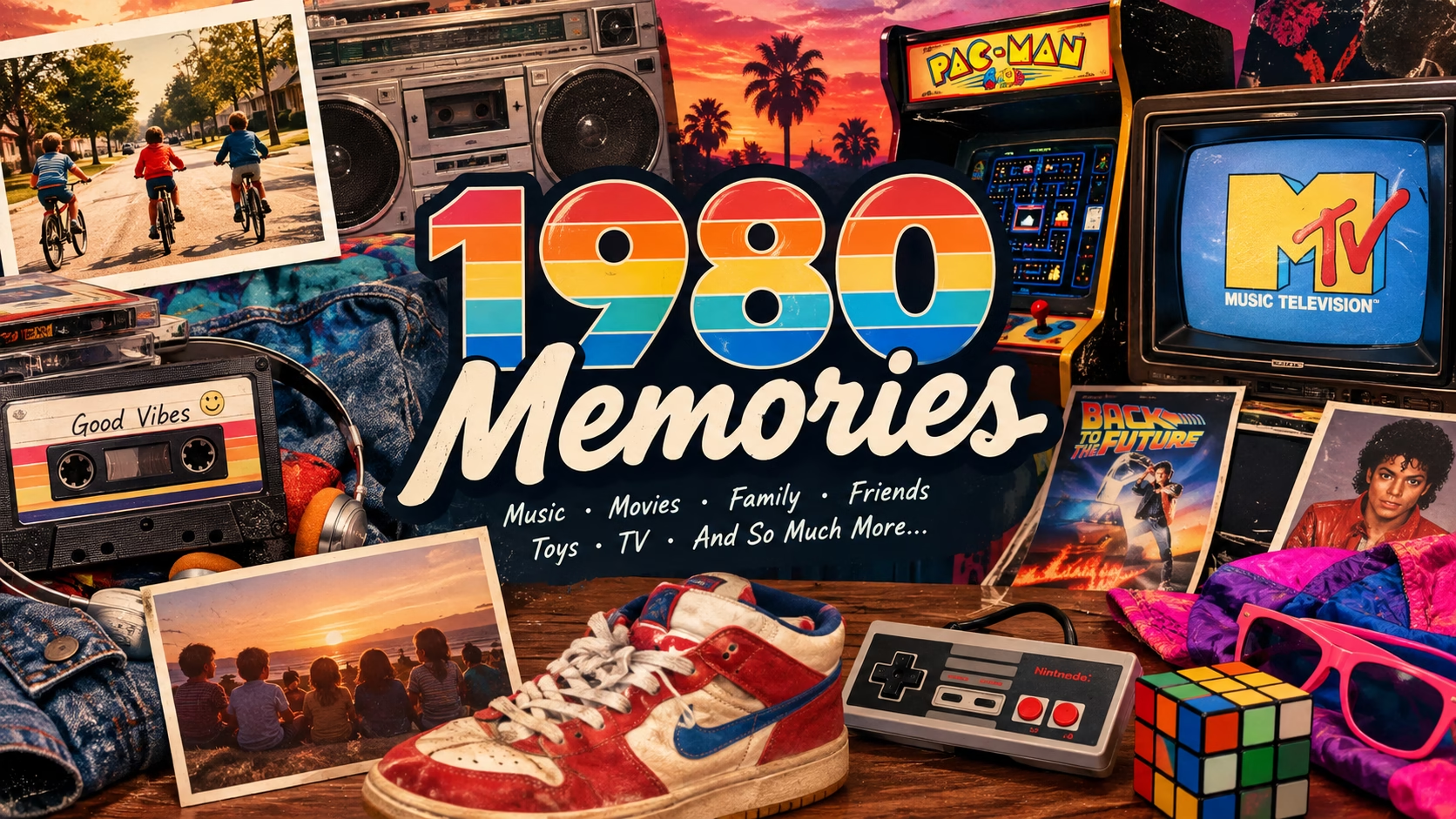
The 1980s were more than just a decade. They were a feeling. They were colorful, energetic, sometimes wonderfully simple, and filled with moments that many people still remember with a smile. From cassette tapes and arcade games to Saturday morning cartoons, family gatherings, handwritten notes, and unforgettable fashion, the memories of the 1980s continue to live in the hearts of millions.
“`Everyday Life in the 1980s
“`One of the most powerful things about 1980s memories is how ordinary moments could become unforgettable. There was no need for a major event to create a lasting memory. Walking to a friend’s house, riding a bicycle around the neighborhood, waiting for a favorite television program, or listening to music in a bedroom could become part of a person’s lifelong story.
Daily life moved at a different rhythm. People were not constantly connected to phones, social networks, notifications, and online messages. If someone wanted to talk to you, they might call your home telephone, visit your house, or simply wait until the next day.
Children often spent hours outdoors. Neighborhood streets, parks, playgrounds, and empty lots could become entire worlds of imagination. A bicycle could become a racing machine. A simple ball could create an afternoon-long competition. A cardboard box could become a spaceship, a castle, or a race car.
There was also a certain anticipation in everyday life. You had to wait for your favorite television show to come on. You waited for a new album. You waited for photographs to be developed. You waited for a letter to arrive. Waiting was simply part of life.
Imagine sitting beside a radio with a blank cassette ready to record your favorite song, hoping the DJ would stop talking before the music began. That tiny moment of anticipation is something that belongs to another era.
Technology Before the Digital Age
“`Today, technology is everywhere. In the 1980s, however, technology felt much more limited, physical, and exciting. Computers were beginning to enter homes, but they were far from the powerful devices people carry in their pockets today.
Home computers represented the future. For many families, owning one felt special. Children learned basic commands, experimented with simple programs, and discovered the fascination of making a machine respond to their instructions.
Video cassette recorders also changed home entertainment. Suddenly, families could record television programs and watch movies at home. Renting a movie could become a weekend event. Choosing a VHS tape from a video store was part of the experience.
Then there were cassette players and portable music devices. Music became something people could carry around. Creating a personal mixtape was an art form. People carefully selected songs for friends, family members, birthdays, road trips, or romantic occasions.
The technology of the decade may seem primitive now, but that is precisely what makes it nostalgic. Buttons had to be pressed. Tapes had to be rewound. Batteries ran out. Things occasionally broke. Technology demanded participation.
“`The Soundtrack of the 1980s
“`Music is one of the strongest gateways to memories from the 1980s. A single song can instantly bring back a bedroom, a school dance, a family car ride, or an old friendship.
The decade offered an extraordinary mixture of musical styles. Pop became larger than life. Rock remained powerful. New wave brought unusual sounds and futuristic influences. Hip-hop continued developing its identity. Dance music filled clubs and bedrooms alike.
Music videos became increasingly important, helping artists create visual identities as well as musical ones. For young people, discovering a new artist could feel like discovering an entirely new world.
Albums were physical objects. You could hold them, examine their artwork, read the credits, and place them carefully on a shelf. Cassette tapes offered another way to enjoy music, especially for people who wanted to listen away from the living room stereo.
That is why 1980s music remains so powerful. It is connected to personal experiences. A song heard during a summer vacation may forever feel like summer. A song associated with school may bring back classmates and teachers. A song played at a family celebration may instantly return you to that room decades later.
“`Television and Saturday Morning Cartoons
“`Television played a central role in family life during the 1980s. There were fewer channels than most people have access to today, and there was no streaming service offering thousands of programs instantly.
That limitation created something special: shared viewing. Families often watched the same programs together. Children knew exactly when their favorite cartoons were scheduled and made sure they were sitting in front of the television at the right time.
Saturday mornings were particularly memorable for many children. Getting up early, grabbing breakfast, and settling down to watch cartoons could become a weekly ritual.
Television characters became part of childhood identity. Children collected toys, wore clothing featuring their favorite characters, drew pictures of them, and talked about episodes with friends at school.
There was also something exciting about television being temporary. If you missed an episode, you might simply have to wait for another opportunity to see it. That made special broadcasts feel genuinely special.
“`Movies That Defined a Generation
“`The 1980s produced a remarkable collection of movies that became cultural landmarks. Family adventures, science fiction, action movies, comedies, fantasy stories, and coming-of-age films all found enthusiastic audiences.
Going to the cinema was an event. You did not simply open an application and start a movie. You traveled to the theater, bought a ticket, stood in line, purchased snacks, and found your seat.
Video rental stores later transformed the experience. Families could browse shelves of VHS tapes and debate which movie to take home. The cover art was often the first thing that caught your attention.
Movie nights became social experiences. Friends gathered together, families shared snacks, and everyone watched the same screen. The movie ended, the tape was rewound, and the evening continued.
Many people still remember the feeling of seeing a favorite 1980s movie for the first time. Even when watched decades later, these films can bring back the atmosphere of childhood and adolescence.
“`1980s Fashion and Style
“`Few decades are as recognizable through fashion as the 1980s. The style was bold, expressive, and often colorful. Clothing was not necessarily about blending in. For many people, fashion was a way to show personality.
Bright colors, denim, athletic-inspired clothing, oversized silhouettes, graphic designs, colorful accessories, and distinctive hairstyles all became part of the decade’s visual identity.
Hair was especially memorable. Different groups embraced different styles, but volume was often important. Hairstyles could require considerable effort, and photographs from the period frequently reveal just how distinctive the decade looked.
Fashion trends were influenced by musicians, television personalities, movies, athletes, and popular culture. Young people often wanted to dress like their favorite stars.
Looking back today, some 1980s fashion choices may appear unusual. Yet that is part of the charm. Nostalgia does not require everything to have been perfect. Sometimes the slightly awkward styles are precisely what make memories enjoyable.
“`Arcades, Toys, and Video Games
“`For many children and teenagers, arcades were magical places. Rows of colorful machines created a unique atmosphere filled with electronic sounds, music, competition, and excitement.
Playing an arcade game required skill and persistence. There was no endless supply of extra lives. Every coin mattered. Players wanted to improve their scores and prove themselves to friends.
Home video game systems also became increasingly popular. Suddenly, families could experience electronic games in their own living rooms.
Toys were equally important. Action figures, dolls, board games, building sets, toy cars, puzzles, and sports equipment filled children’s bedrooms.
One interesting difference between then and now was how long children could remain entertained by the same toy. Imagination did much of the work. A small collection of figures could produce countless stories.
You finally reach a difficult level, hear the familiar electronic sounds of the game, and suddenly everyone in the room is watching. Winning is not only about the game anymore. It becomes a shared memory.
School Memories
“`School memories from the 1980s often feel wonderfully simple. Students carried books, notebooks, pencils, lunch boxes, and sometimes a favorite toy hidden inside a school bag.
Classrooms had chalkboards, physical textbooks, paper assignments, and handwritten notes. Research often meant visiting a library, looking through an encyclopedia, or asking a teacher.
There were no instant online searches to answer every question. Finding information could take time, and that process often made discoveries feel more meaningful.
School friendships were another important part of the decade. Children met face-to-face every day. They exchanged jokes, shared snacks, traded cards or small collectibles, and made plans for the afternoon.
A school photograph could become a treasured memory. Years later, looking at an old class picture can bring back names, personalities, teachers, hairstyles, and moments that had almost disappeared from memory.
“`Family Life and Neighborhood Memories
“`Family life created many of the most meaningful 1980s memories. Even ordinary evenings could feel special because families often spent more time together without the distraction of personal screens.
Dinner might involve everyone sitting around the same table. Conversations could continue for a long time. Children listened to adults talking and sometimes joined the discussion.
Neighborhood life also encouraged social interaction. Children knew other children who lived nearby. Parents knew their neighbors. People borrowed things, exchanged food, visited one another, and sometimes simply stood outside talking.
Summer evenings could stretch for hours. Children played outside until it became dark, while adults sat nearby talking with friends and relatives.
These memories remind us that happiness does not always come from expensive entertainment. Sometimes it comes from belonging to a community and knowing that familiar people are nearby.
“`Food and Everyday Treats
“`Food has an extraordinary ability to preserve memories. A particular snack, drink, dessert, or homemade meal can transport someone back decades.
Many 1980s families remember homemade meals, simple breakfasts, packed lunches, weekend desserts, and special treats that were not necessarily available every day.
Going to a fast-food restaurant could feel like a special occasion. Children might associate certain meals with birthdays, family trips, or successful school days.
Birthday cakes were often homemade or purchased from a local bakery. Candles were placed carefully, photographs were taken, and everyone gathered around the birthday child.
The important thing was rarely the price of the food. It was the occasion surrounding it. A simple meal eaten with people you loved could become more memorable than an expensive dinner.
“`Photographs and Family Albums
“`Before smartphones and digital photo libraries, taking a photograph was a more deliberate experience.
Film cameras required rolls of film. You could not immediately see every photograph. After the film was used, it had to be developed.
This created a wonderful sense of anticipation. You might wait days before discovering how the photographs turned out.
Family albums became physical collections of memories. People carefully placed photographs into albums and sometimes wrote dates or names beside them.
Today, millions of photographs can disappear inside a phone’s storage. Older photographs, by contrast, often become family treasures precisely because they are physical and limited.
An old photograph can tell a story without saying a word. Clothing, furniture, hairstyles, cars, buildings, and expressions all reveal something about the past.
“`Cars and Road Trips
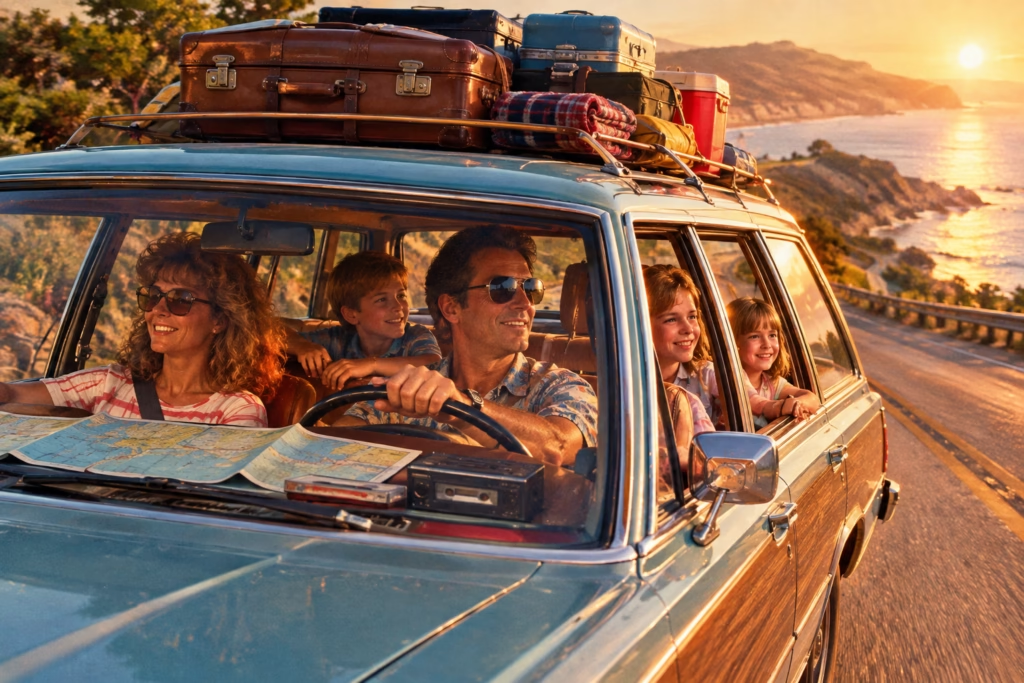
“`Road trips created another category of unforgettable 1980s memories. Families loaded their luggage into the car, checked the route, packed snacks, and started the journey.
Navigation was a different experience. Maps were folded and unfolded repeatedly. Someone in the passenger seat might become the official navigator.
Children looked through the windows, watched the scenery change, and asked the classic question: “Are we there yet?”
Music played an important role during long drives. Cassette tapes could provide the soundtrack for an entire vacation.
Road trips were not only about reaching the destination. The journey itself became part of the memory.
“`Birthdays and Holidays
“`Holidays and birthdays often created some of the strongest childhood memories.
Preparing for a birthday could involve decorating the house, choosing a cake, wrapping presents, preparing food, and inviting friends or relatives.
Children experienced genuine excitement when they saw wrapped gifts waiting for them. The anticipation could last for days.
Holidays brought families together. Relatives traveled to visit each other, special meals were prepared, and traditions were repeated year after year.
These traditions created continuity. A child could grow up remembering the same decorations, recipes, songs, games, and family jokes.
Many adults later realize that those repeated traditions were among the most valuable parts of childhood.
“`The Beauty of a Slower Life
“`Perhaps the most powerful part of 1980s nostalgia is the memory of a slower pace of life.
There were certainly challenges. The decade was not perfect, and life was not automatically easier. But technology had not yet created the constant digital connection that defines modern life.
When people left the house, they could genuinely become unreachable. There were no endless notifications demanding attention.
Children could become bored. Surprisingly, boredom often led to creativity. When there was nothing immediately available to watch or play, children invented games, explored their surroundings, read books, drew pictures, or simply talked.
Waiting also had value. Waiting for a letter made receiving it exciting. Waiting for a photograph made seeing it special. Waiting for a television program created anticipation.
The absence of instant access gave ordinary experiences more emotional weight.
“`Why We Still Miss the 1980s
“`Why do people continue to feel nostalgic about the 1980s decades later?
Part of the answer is childhood. For many people, memories of the decade are connected to growing up, discovering the world, forming friendships, and experiencing life before adult responsibilities became overwhelming.
Nostalgia is therefore not always about the decade itself. Sometimes we miss the person we were during that time.
We miss the excitement of discovering something new. We miss spending an entire afternoon outside. We miss hearing a favorite song for the first time. We miss visiting relatives, school vacations, family trips, and simple celebrations.
The 1980s also had a distinctive visual and cultural identity. Music, fashion, television, technology, toys, advertisements, and design all contributed to a recognizable atmosphere.
Even people who did not personally experience the decade can feel fascinated by it. Modern movies, television shows, fashion trends, music, and online communities continue to revisit the era.
That feeling is why an old song, photograph, toy, television commercial, or familiar smell can suddenly bring back an entire chapter of life.
“`How to Preserve Your 1980s Memories
“`Memories can become less detailed as the years pass, but there are simple ways to preserve them.
Write Down Your Stories
Start with ordinary memories. Write about your childhood home, your school, your favorite games, your first television, your family vacations, your neighborhood, and the people you knew.
Organize Old Photographs
Gather old photographs and identify the people, places, and approximate dates. Even a short note on the back of a photograph can become valuable information for future generations.
Preserve Family Recipes
If your family has traditional recipes from the period, write them down. Include the stories behind them. A recipe becomes much more meaningful when it explains who prepared it and when the family usually ate it.
Create a Memory Box
A small memory box can contain photographs, letters, old tickets, school items, postcards, cassette covers, toys, or other objects connected to your childhood.
Interview Family Members
Ask parents, grandparents, relatives, or childhood friends about their memories. Everyone remembers the same event differently, and those differences can make family history fascinating.
Most importantly, do not wait for the “perfect” memory to write down. Ordinary moments often become the stories we treasure most.
“`Remembering the Little Things
“`When people talk about the 1980s, they often mention famous music, movies, television shows, fashion, and technology. But the most meaningful memories are frequently much smaller.
It might be the sound of a parent’s keys at the front door. The smell of dinner coming from the kitchen. The sound of a bicycle rolling down the street. The feeling of opening a birthday present. The excitement of finding a new cassette. The sound of a school bell.
It might be a summer evening when the whole family sat outside. It might be a rainy afternoon spent playing board games. It might be a friend knocking on the door and asking whether you could come outside.
These details may seem insignificant when they happen. Years later, they can become priceless.
That is the strange beauty of memory. We do not always know which moments will stay with us.
“`The 1980s Were More Than a Decade
“`The 1980s were a period of change. Technology was developing rapidly, popular culture was becoming increasingly influential, and new forms of entertainment were entering homes.
Yet beneath all those changes were simple human experiences: friendship, family, curiosity, excitement, disappointment, laughter, discovery, and growing up.
That is why memories of the decade continue to feel personal. They are not really memories of cassette tapes, arcades, VHS players, colorful clothing, or television shows. Those objects are simply the doors through which we enter our own past.
For one person, the door might be an old photograph. For another, it might be a song. For someone else, it could be a childhood toy or the smell of a favorite meal.
Once that door opens, an entire world can return.
“`Conclusion: Keeping the Memories Alive
“`The magic of 1980s memories is not that everything was better back then. Every generation has its difficulties, changes, and imperfections. The magic comes from the personal meaning we give to the moments we experienced.
The 1980s gave millions of people memories of neighborhood adventures, family dinners, school friendships, music, movies, games, holidays, road trips, birthdays, and countless ordinary afternoons.
Those memories remain valuable because they remind us where we came from. They connect generations and allow younger family members to understand what life was like before smartphones, social media, streaming platforms, and constant digital communication.
Perhaps the greatest lesson of 1980s nostalgia is simple: we should pay attention to today’s ordinary moments too. The afternoon that seems completely normal today may become one of tomorrow’s most treasured memories.
So keep the photographs. Save the family stories. Write down the names. Ask older relatives about their childhoods. Preserve the recipes. Listen to the songs that bring back special memories.
Because decades from now, someone may look back at our present day with the same warm feeling that people have when they remember the 1980s.
And perhaps they will realize what we sometimes forget: the best memories are rarely about having the newest things. They are about the people we shared our time with and the little moments that made ordinary life feel special.
“`Frequently Asked Questions About 1980s Memories
“`What are some of the most common 1980s memories?
Common memories include cassette tapes, VHS movies, arcade games, Saturday morning cartoons, family road trips, school life, colorful fashion, music, board games, neighborhood play, birthday parties, and family gatherings.
Why are people nostalgic for the 1980s?
Many people associate the 1980s with childhood, adolescence, family life, friendships, music, entertainment, and a slower pre-digital lifestyle. Nostalgia often combines memories of a particular era with memories of who we were at that time.
What technology was popular in the 1980s?
Popular technology included cassette players, VHS recorders, home computers, early video game systems, electronic toys, televisions, film cameras, and landline telephones.
What did children do for fun in the 1980s?
Children played outdoors, rode bicycles, visited friends, played board games, collected toys, watched cartoons, played video games, participated in sports, read books, and invented games with neighborhood friends.
Why do old 1980s photographs feel so nostalgic?
Old photographs capture people, places, clothing, homes, cars, and everyday objects from a specific period. Because photographs were usually taken with film, they were also physical objects that families often carefully preserved.
How can I preserve my 1980s childhood memories?
You can preserve memories by organizing old photographs, writing personal stories, recording interviews with relatives, saving family recipes, creating a memory box, digitizing important documents, and creating a family history archive.