
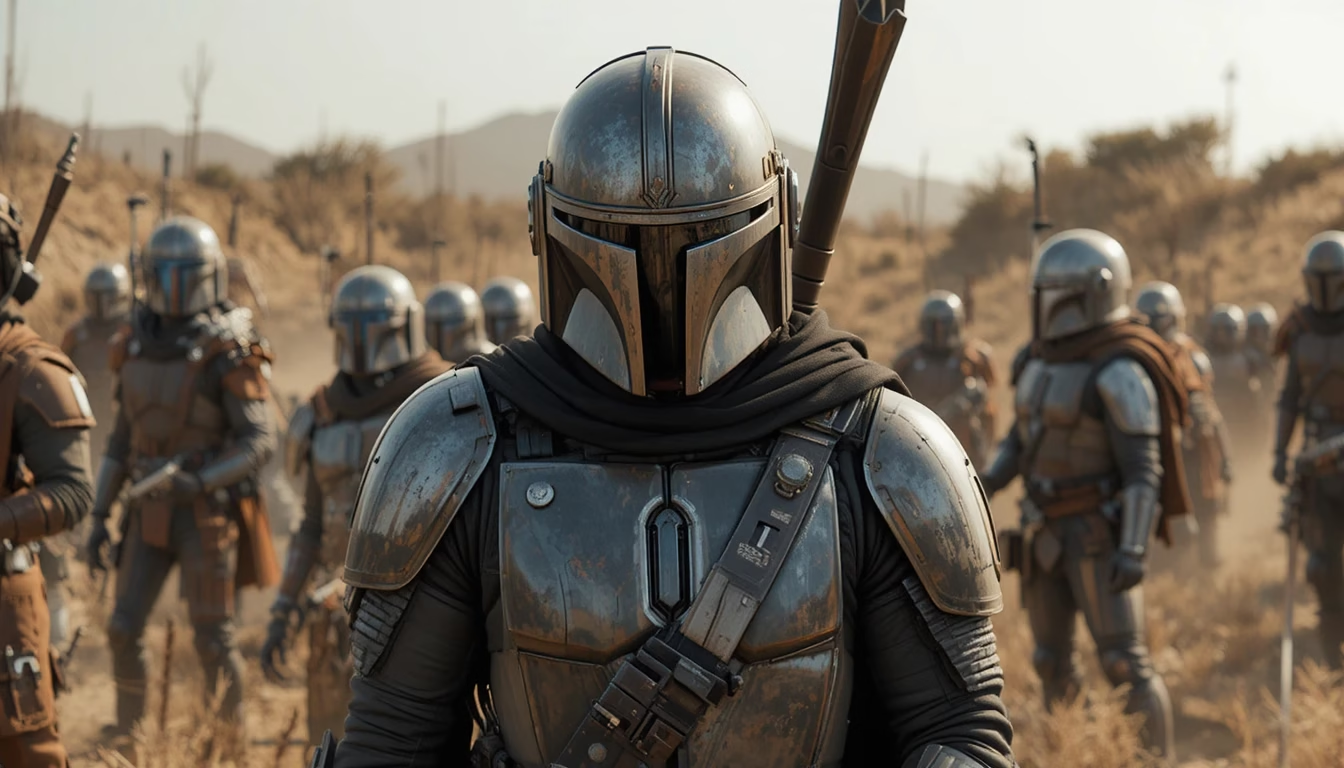
With Daisy Ridley returning as Rey in a post-Sequel Trilogy Jedi Order film, Star Wars must apply The Mandalorian’s winning formula: intimate stakes, practical magic, and myth-building over nostalgia.
Introduction: A Second Chance at Legacy
When Lucasfilm announced Daisy Ridley’s return as Rey Skywalker to lead a film about rebuilding the Jedi Order, reactions split sharply. After the divisive Sequel Trilogy, this project represents more than another Star Wars movie—it’s a reputation redemption opportunity. But to succeed where The Rise of Skywalker stumbled, this film must embrace the lessons of Star Wars’ most universally praised recent project: The Mandalorian.
The formula exists: grounded storytelling, practical effects, character-driven narratives, and respect for legacy without nostalgia-baiting. Rey’s journey deserves the same care that revived Din Djarin from concept to icon. Here’s how the Jedi Order film can chart a new course for the franchise’s future.
The Mandalorian Blueprint: What Works
1. Intimate Stakes Over Galactic Consequences
- Din Djarin protects one child, not the universe
- Emotional resonance comes from personal bonds, not planet-destroying weapons
- Application for Rey: Her struggle to train even 2-3 students will resonate more than another “Jedi vs. Sith” war
2. The “Used Future” Aesthetic
- Scratched armor, rusty ships, lived-in worlds
- Digital effects support practical elements, not replace them
- Application: Show a Jedi Order rebuilding with scavenged texts, repaired lightsabers, makeshift temples
3. Mystery Box Done Right
- Grogu’s origins unfolded gradually with purpose
- Questions answered at dramatically appropriate times
- Application: Rey’s search for Force-sensitive children should feel like discovery, not checklist
4. Legacy Characters Serving Story
- Luke Skywalker’s appearance in Season 2 finale earned through narrative
- His role advanced Din and Grogu’s journey
- Application: Any OT/PT character returns must serve Rey’s story, not hijack it
The Story: “Star Wars: Acolyte of the Force”
Working Title Concept: Star Wars: New Dawn or Star Wars: Rey of Hope
Time Period: 25 ABY (15 years after The Rise of Skywalker)
- Rey is approximately 40, seasoned but not elderly
- The Galaxy is in a fragile New Republic restoration
- No First Order remnants, but new threats emerging
Plot Framework:
Act I: The Reluctant Master
- Rey has established a small Jedi sanctuary on a remote world
- She trains 3 students—each representing different Force philosophies
- A discovery: Ancient texts hint at a “Third Way” beyond Jedi/Sith binary
- Conflict: Traditionalists vs. Rey’s reformed teachings
Act II: The Shadow Academy
- Rey discovers a rival school training Force-users in gray morality
- Led by a charismatic former Jedi who left Luke’s academy before its fall
- Moral dilemma: Are these “Gray Jedi” enemies or necessary evolution?
- The students are tempted by this middle path
Act III: Synthesis, Not Victory
- No grand battle against Sith or fleets
- Instead, a philosophical confrontation culminating in a Force ritual
- Outcome: A new Jedi Code acknowledging both light and dark within all
- The beginning of a truly balanced Order, not a light-side monopoly
Character Archetypes:
Rey’s Students:
- Kiran: Former stormtrooper child, pragmatic, struggles with empathy
- Elara: Noble-born, drawn to dark side power out of protective instinct
- Bracken: Alien species with unique Force perspective, comic relief
The Antagonist:
- Jorus Cade: Not a Sith, but a “Force Realist”
- Former Jedi historian who believes the old ways caused the Galaxy’s cycles of war
- Seeks to create Force-users free of dogma
- Ultimately becomes uneasy ally, not defeated villain
Visual and Thematic Direction
Cinematic Influences:
- The Empire Strikes Back (spiritual journey)
- The Last Samurai (teaching, tradition vs. change)
- Annihilation (weird, mystical Force manifestations)
- Princess Mononoke (balance, not conquest)
Force Representation:
- Return to practical effects for Force powers (wires, puppetry, props)
- Force visions depicted like Mandalorian Jedi temple scenes—atmospheric, haunting
- Lightsaber duels as last resort, not spectacle centerpiece
- The Force as mystical again, not superhero power
Production Design:
- Jedi Temple made from crashed Star Destroyer/Imperial ruins
- Symbolism: Building new future from Empire’s wreckage
- Planets with strong elemental themes (ocean, desert, forest, mountain)
- Costumes showing wear, repair, individuality—no uniform robes
The Mandalorian Crossovers That Make Sense
Cameo Considerations:
Grogu (50 years older):
- Now a trained Force-user, not a child
- Brief appearance as visiting “Jedi ambassador”
- Non-verbal communication only (maintains mystery)
- Connection to Rey through Luke’s legacy
Ahsoka Tano:
- Natural mentor figure for Rey
- Represents the “gray” path successfully walked
- Could appear as hologram or vision guide
- Voice role if Rosario Dawson unavailable
What to Avoid:
- No Din Djarin unless essential (tonal mismatch)
- No Baby Yoda cuteness exploitation
- No callback humor undermining stakes
- No undermining Rey’s authority with legacy characters
Director and Writer Considerations
Ideal Candidates:
Director:
- Deborah Chow (Mandalorian episodes, Obi-Wan Kenobi)
- Proved ability with character-driven Star Wars
- Understands TV-to-cinema scaling
- Strong with intimate moments amid spectacle
Writer:
- Dave Filoni for lore/consistency
- Damon Lindelof for philosophical depth (Watchmen, Lost)
- Avoid J.J. Abrams’ mystery boxes or Terrio’s over-explanation
Tone Guidelines:
- Hope without naivete
- Wisdom without pretension
- Mystery without frustration
- Respect for past without reverence paralysis
Marketing and Positioning
The Challenge:
- Sequel Trilogy fatigue is real
- Must attract casual fans beyond die-hards
- Need to differentiate from previous Jedi stories
Messaging Framework:
- “Forget what you know about Jedi”
- “The next generation of Star Wars begins”
- Focus on Rey as guide rather than chosen one
- Emphasize practical effects, real sets, cinematic artistry
Trailer Approach:
- First teaser: Rey meditating, students in background, no dialogue
- Second trailer: Philosophical conflict, not action scenes
- Final trailer: Emotional stakes, not plot reveals
- Music: New themes, not recycled Williams cues
Box Office Realities and Projections
Conservative Estimate: $600M Worldwide
- If perceived as “Rise of Skywalker follow-up”
- Hardcore fan attendance only
- Mixed reviews
Realistic Target: $850M-$950M
- With strong reviews (85%+ RT)
- Effective marketing differentiating from Sequels
- Appeal beyond core fandom
Optimistic Scenario: $1.1B+
- If positioned as “course correction”
- Word-of-mouth as “the Star Wars movie we’ve waited for”
- The Force Awakens-level event status
Key Factors:
- Release date distance from other franchise films
- China reception (Sequels declined there)
- Critics’ early reactions
- Disney+ series tie-in timing
The Larger Franchise Implications
Success Means:
- Vindication for Daisy Ridley’s Rey
- Viable post-Skywalker era for films
- Philosophical depth becoming Star Wars staple
- Director-driven approach over committee filmmaking
Failure Risks:
- End of mainline Star Wars films for years
- Confirmation that only OT-era stories work
- Permanent franchise fragmentation
- Loss of Ridley and other Sequel actors forever
Conclusion: The Force Must Balance
Rey’s Jedi Order film stands at a crossroads familiar to Star Wars: innovation versus nostalgia, commerce versus art, fan service versus storytelling. The Mandalorian found the balance by remembering George Lucas’s original vision: a personal story in a fantastical setting.
This film must be brave enough to:
- Let Rey fail as a teacher
- Question Jedi dogma without villainizing it
- Offer solutions, not just victories
- Trust audiences with philosophical complexity
- Build new myths, not repackage old ones
The tools exist. The blueprint is proven. The actress is willing. Now Lucasfilm must demonstrate the wisdom to learn from what worked—not just commercially, but artistically and spiritually.
This isn’t about “fixing” the Sequels. It’s about transcending them—taking their best elements (Rey’s resilience, the Force’s mystery) and building something that honors the past while forging a future. The Force is calling. Will this film answer with wisdom, or with fear?
The path forward is clear: Follow The Mandalorian’s Way.