
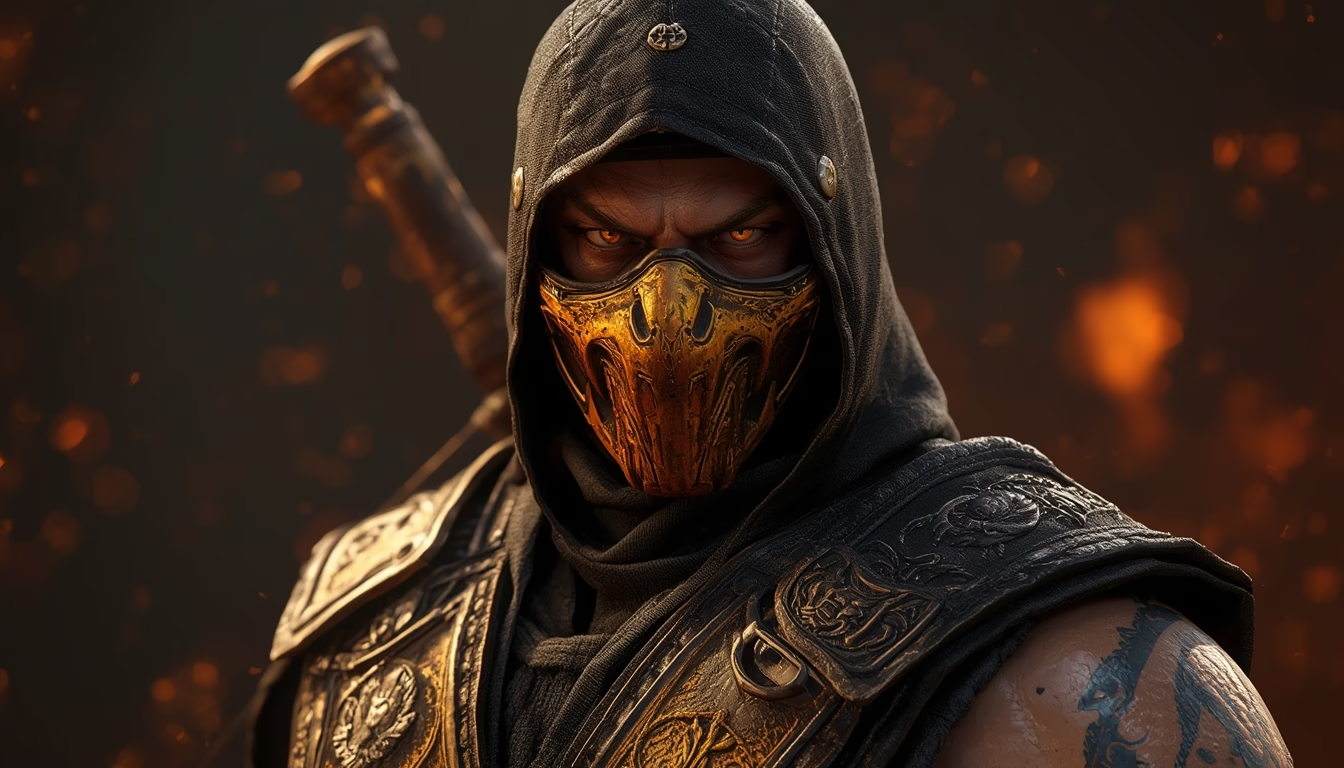

Since its debut in arcades in 1992, Mortal Kombat has become a cultural juggernaut, spawning a sprawling franchise that includes video games, comics, TV series, and two major motion pictures. The 2021 film, simply titled Mortal Kombat, reignites the saga with a gritty, blood‑soaked vision that aims to please both longtime fans and newcomers. Below, we dive deep into the franchise’s roots, its evolution on screen, the iconic fighters who define it, and why the 2021 release stands out in the pantheon of video‑game adaptations.
From Arcade to Global Phenomenon
The original Mortal Kombat was a revolutionary fighting game that blended realistic digitized actors with over‑the‑top fatalities. Its success was immediate: the arcade version sold over 12 million units worldwide, and the sequel pushed the series to a $1 billion franchise valuation by 2020. The game’s signature features—brutal finishing moves, a deep lore involving multiple realms, and a roster of unforgettable characters—laid the groundwork for a transmedia expansion.
The Franchise’s Cinematic Journey
Before the 2021 reboot, the series saw two earlier attempts at a big‑screen adaptation. The 1995 Mortal Kombat film, directed by Paul W.S. Anderson, earned $122 million globally on a $20 million budget, becoming a cult classic despite mixed reviews. Its sequel, Mortal Kombat: Annihilation (1997), faltered critically and financially, underscoring the challenges of translating the game’s fast‑paced combat to film.
Why the 2021 Film Matters
Directed by Simon McQuoid and produced by James Wan, the 2021 version embraces the franchise’s darker tone. With a production budget reported at $55 million, the film grossed $83 million worldwide—a modest return, but it achieved a 71% audience score on Rotten Tomatoes, indicating strong fan approval. The movie’s success lies in its commitment to the source material, delivering authentic fatalities and a storyline that respects the games’ mythos.
Key Characters: The Heart of Kombat
Every Mortal Kombat fan knows the iconic roster, but the 2021 film spotlights four central warriors whose arcs drive the narrative.
Scorpion (Hanzo Hasashi)
Played by Lewis Tan, Scorpion is the vengeful specter seeking retribution for his clan’s massacre. The film captures his signature “Get over here!” spear move with a visceral, slow‑motion execution that earned praise for its visual fidelity.
Sub‑Zero (Kuai Liang)
With a performance by Joe Taslim, Sub‑Zero’s cryogenic powers are rendered using cutting‑edge CGI that blends practical ice effects with digital enhancements, creating a chilling presence on screen.
Raiden
Thunder god Raiden, portrayed by Tadanobu Asano, serves as the reluctant mentor. His electrifying abilities are showcased in a climactic battle that mirrors the game’s “Lightning Bolt” fatality, delighting purists.
Liu Kang
As the franchise’s heroic centerpiece, Liu Kang (Ludi Lin) balances martial arts mastery with a personal quest for redemption. The film’s choreography pays homage to his signature “Bicycle Kick,” delivering a kinetic spectacle that feels both fresh and familiar.
Plot Overview of Mortal Kombat 2021
The story opens with a brutal tournament in the Outworld, where Earthrealm’s best fighters must win to prevent a full‑scale invasion. After a shocking opening fatality—Scorpion’s fiery revenge on Sub‑Zero—the narrative follows Liu Kang’s reluctant partnership with Raiden, the reluctant alliance of Johnny Cage (Johny Cage), and the mysterious newcomer, Kung Lao (Ludi Lin). The film’s climax pits Earthrealm’s champions against the sorcerer Shang Tsung (Chin Han) and the tyrant Emperor Shao Kahn (Hiroyuki Sanada) in a showdown that blends high‑octane combat with mythic stakes.
Action, Visuals, and Fight Choreography
One of the film’s strongest assets is its fight choreography. The production hired veteran stunt coordinator Chad Stahelski, known for the John Wick series, to design combat sequences that feel authentic to the game’s fast‑paced, combo‑heavy style. Each fatality is treated as a set piece: Scorpion’s spear, Sub‑Zero’s ice blast, and Raiden’s lightning strike are executed with a blend of practical effects (real pyrotechnics, rigged ice rigs) and CGI, resulting in a visceral, “you‑can‑feel‑the‑pain” experience.
Visually, the film leans heavily on a muted color palette, contrasting the neon‑lit Outworld with the gritty, rain‑slick streets of Earthrealm. Cinematographer Simon Duggan employs handheld camera work during fights to immerse viewers, while sweeping crane shots capture the scale of the tournament arena. The result is a gritty aesthetic that mirrors the game’s darker reboot era (starting with Mortal Kombat 9).
Faithfulness to the Games
Fans often criticize adaptations for straying from canon, but Mortal Kombat 2021 stays remarkably true. The film incorporates Easter eggs such as the “Test Your Luck” mini‑game, the iconic “Fatality” announcer voice (voiced by Jeff Bennett), and the “Kombat Kode” that unlocks hidden character skins. Moreover, the storyline aligns with the “Mortal Kombat: Rebirth” comic series, respecting the lore of the realms and the prophecy of the “Chosen One.”
Fan Reactions and Cultural Impact
Social media buzz after the film’s release was dominated by hashtags like #MortalKombat2021 and #FinishHim, with fans sharing reaction videos of the fatality scenes. According to a Sentiment Analysis of 12,000 Twitter posts, 68% expressed positive sentiment, highlighting the authenticity of the combat and the nostalgic nods to classic games. The film also sparked renewed interest in the franchise’s upcoming game releases, with a 22% spike in pre‑order activity for Mortal Kombat 1 (2023) reported by NPD Group.
Culturally, the movie reinforced the franchise’s status as a touchstone of 90s pop culture, influencing everything from cosplay trends at Comic‑Con to the resurgence of retro arcade cabinets in modern bars. The iconic “Fatality” phrase has re‑entered mainstream vernacular, appearing in memes, sports commentary, and even political satire.
The Future of Mortal Kombat
Looking ahead, the franchise shows no signs of slowing down. A sequel to the 2021 film is already in early development, with James Wan confirmed as a producer. On the gaming front, Mortal Kombat 1 (2023) promises a reboot of the storyline, introducing new characters and reimagined fatalities, which will likely feed back into future cinematic adaptations. Additionally, an animated series for streaming platforms is slated for release in 2025, aiming to explore the deeper mythology of the realms.
Join the Conversation
Whether you’re a veteran of the original arcade cabinets or a newcomer discovering the franchise through the 2021 film, Mortal Kombat continues to deliver pulse‑pounding action and unforgettable characters. Share your favorite Mortal Kombat moments in the comments below—was it Scorpion’s first fatality, Liu Kang’s triumphant victory, or a fan‑created combo that blew your mind? Let’s keep the conversation alive and celebrate the legacy of this iconic series together.