
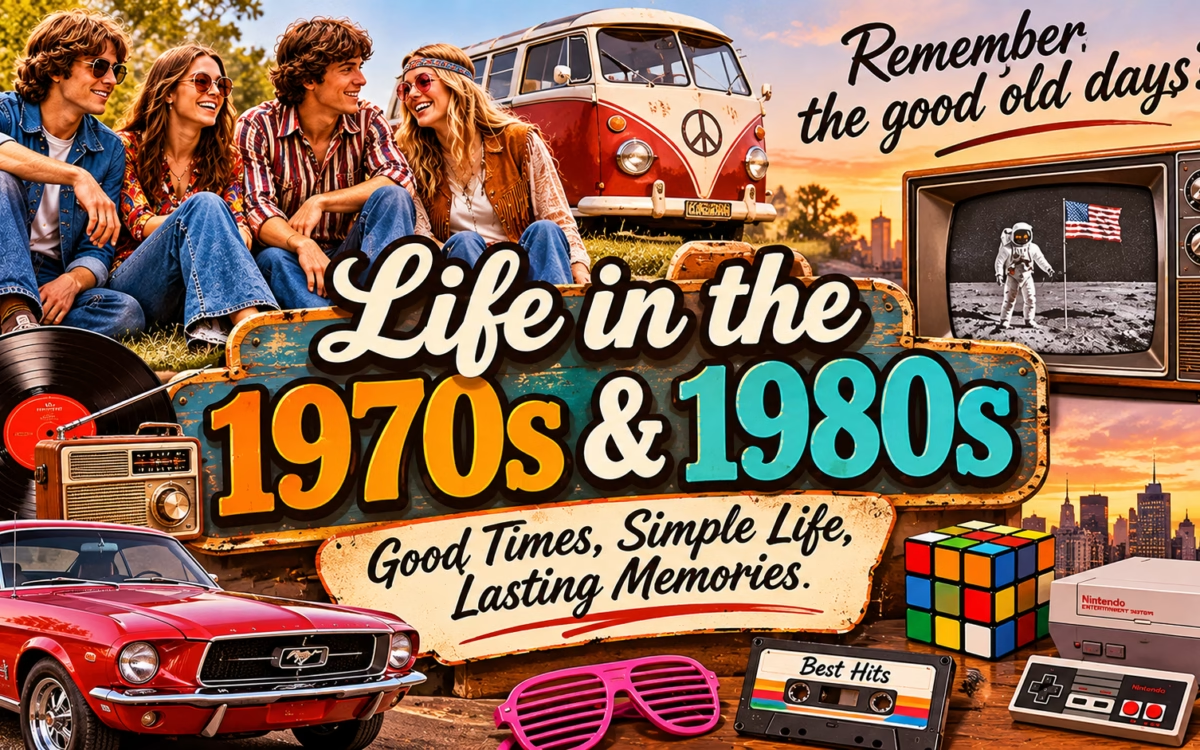
The 1970s were a decade of striking contrasts—a period when the world was still grappling with the aftershocks of the 1960s while simultaneously laying the foundations for the digital age that would follow. To understand what everyday life truly looked like back then, it helps to walk through a typical day across various facets of daily existence, from the way people dressed to the way they communicated, and from their leisure pursuits to the rhythms of work and family life.
Morning Routines and Breakfast Culture
Rise and Shine in the 1970s
Most households began their day with the comforting hum of an old electric stove or a gas range, while the clink of cutlery echoed through modest kitchens. Families would often gather around a table made of reclaimed wood or polished chrome, a centerpiece that reflected the era’s blend of practicality and pop style. Breakfast menus were simple yet hearty: toast with butter, boiled eggs, a bowl of cereal, or a steaming pot of coffee brewed from a percolator.
Breakfast Cereal and the Rise of Commercial Advertising
The 1970s also saw a boom in breakfast cereals targeted specifically toward children, with mascots like Tony the Tiger and Toucan Sam becoming household names. These cereals were often sold in bright, eye-catching boxes that reflected the decade’s penchant for bold colors and playful designs. Advertisements on television would play at the breakfast table, weaving messages about nutrition and the new “healthy” lifestyle that was gaining traction.
Work and Education
Office Life and the Shift Toward Personal Computers
At work, people were transitioning from typewriters to early computers—think the Apple II or the IBM 5100. Though not yet mainstream, these machines were beginning to reshape how clerks, engineers, and managers approached their daily tasks. Office environments were dominated by fluorescent lighting and open-plan desks that fostered a new sense of teamwork.
School and the New Curriculum Standards
In schools, teachers introduced the concept of “student-centered learning” alongside the classic lecture style. This era also witnessed the early introduction of computer labs in some schools, where students could experiment with programming on mainframe machines that were, in many ways, a far cry from today’s laptops.
Fashion and Entertainment
Iconic Clothing Styles and Accessories
Fashion in the 1970s was characterized by wide horizons—bell-bottom jeans, platform shoes, and polyester suits. Women wore afros, flared dresses, and bold makeup, while men sported flannel shirts, tie-dye vests, and a love for leisure suits. Accessories like large hoop earrings, headbands, and wide belts were ubiquitous, and color palettes leaned toward earth tones, bright reds, and vibrant oranges.
Music, Movies, and the Rise of Cable Television
The soundtrack of daily life was filled with the likes of disco, punk, funk, and classic rock. Vinyl records were a staple—both for personal use and for the burgeoning record shops. In the evenings, families gathered around the television, which had just begun to feature cable channels offering a variety of programming, from the new show “Happy Days” to the drama “The Love Boat.” Movie theaters still drew crowds to big-screen experiences, and drive-in theatres remained a nostalgic favorite.
Technology and Communication
Telephones and the Advent of Mobile Devices
The telephone was a central fixture in many homes, with rotary dial phones being gradually replaced by push-button models. Though the mobile phone was still decades away from becoming a common household item, the concept was beginning to surface in the early 1970s. For most, communication was still face-to-face or through landlines, and the idea of a phone in every pocket was a distant dream.
The Rise of the Personal Computer and Early Video Games
By the late 1970s, the first personal computers were appearing on the market, such as the Commodore 64. Though still a novelty for many families, they represented a glimpse into a future where information and entertainment could be accessed from the comfort of a living room. Early video games like Space Invaders and Pac-Man began to dominate arcades, offering a new form of entertainment that was both interactive and futuristic.
Family Life and Social Dynamics
Traditional Family Roles and the Beginning of Change
In many households, traditional gender roles were still prevalent. Men were often the breadwinners, while women managed the home, cooking, and childcare. However, the 1970s were also a period of social change, with movements for gender equality and civil rights gradually reshaping how society viewed family and work. The presence of the first family-oriented TV shows helped shape a sense of shared cultural identity.
Community and Social Interaction
Neighborhoods were tightly knit communities where people knew each other by name. Social interactions took place in local parks, community centers, or through block parties where live music or local bands might play. These gatherings were vital social outlets before the rise of digital communication.
Travel and Leisure
Road Trips and the Popularity of the Family Caravan
Road trips were a quintessential part of 1970s culture. Many families would set out on the open road in classic cars such as the Chevrolet Corvette or Ford Mustang, often equipped with a spare trunk filled with beach gear or picnic supplies. The concept of the “family caravan” was also emerging, with recreational vehicles (RVs) offering a mobile home experience for vacations.
Travel by Air and the Advent of Low-Cost Airlines
Air travel became increasingly accessible during this decade. Low-cost airlines began offering affordable fares, which broadened opportunities for international travel. While still not as common as today, the ability to book a flight to destinations like Mexico, Europe, or Canada became more attainable for many middle-class families.
Health and Nutrition
Dietary Trends and the Health Food Movement
Health consciousness began to influence everyday life, with an increased focus on balanced diets and exercise. The popularity of the “American Diet” grew, and the concept of portion control started appearing in nutritional guidance. Moreover, the rise of health food stores and specialty markets offered an array of options, from fresh produce to organic grains.
Exercise and Fitness Culture
The 1970s also saw the emergence of fitness culture. Gyms opened up across the country, providing people with access to a range of exercise equipment. The era’s music often mirrored the beat of a workout: the disco dancefloor and aerobics classes featuring music from the likes of Donna Summer or the Bee Gees. This movement laid the groundwork for the future of the fitness industry.
Public Services and the Economy
Public Infrastructure and the Influence of the Cold War
Infrastructure projects such as highways and bridges were a major focus in the 1970s, often funded by public investment and influenced by the economic conditions of the time. The Cold War also impacted everyday life, with concerns over nuclear safety influencing public policy, leading to the implementation of measures like emergency drills and public awareness campaigns.
Economic Conditions and Consumer Spending
Consumer confidence in the 1970s fluctuated due to inflation, oil crises, and shifting political landscapes. Despite these challenges, many families managed to keep up with their routine purchases, often opting for reliable brands and seeking value in everyday products. The economy’s ups and downs shaped how people budget
