
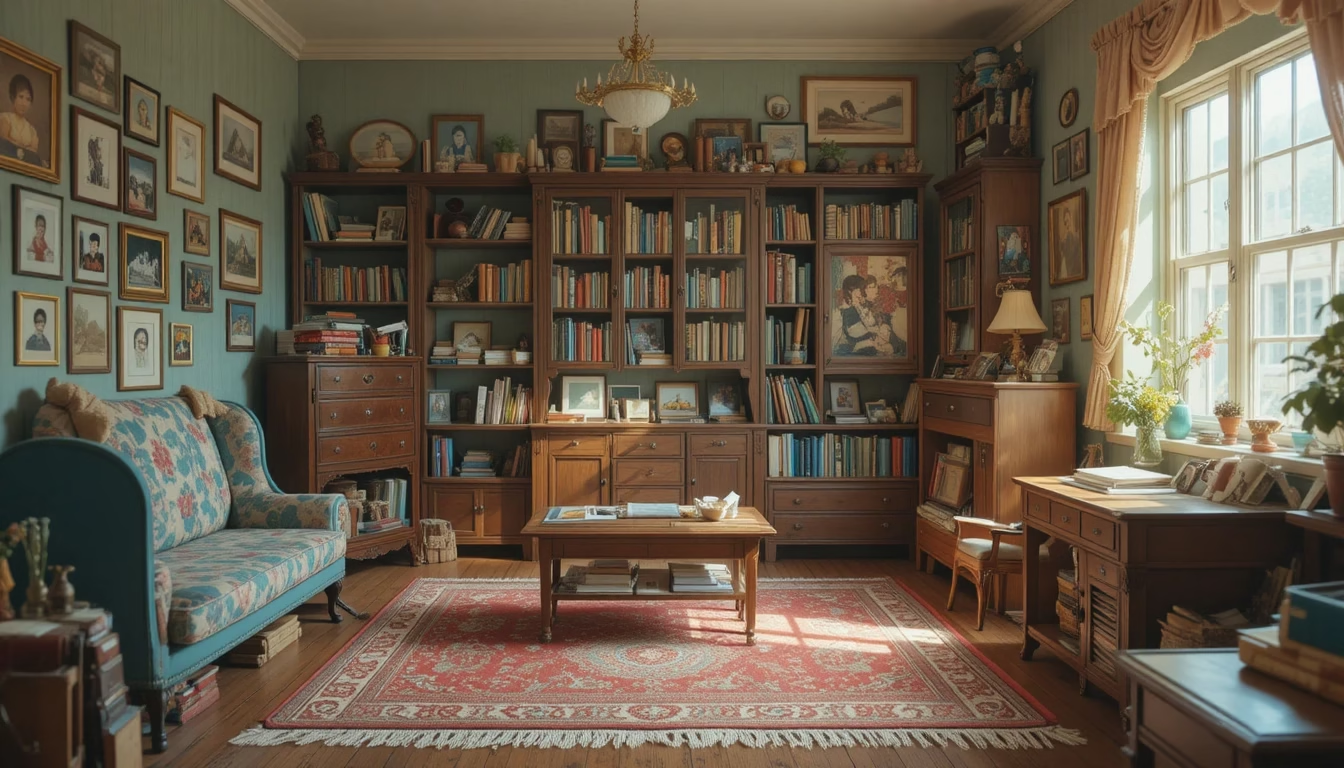
The Last Generation of Two Worlds
Hear the distinctive screeching symphony of a 56k modem connecting to the internet. Feel the satisfying click of a Sony Discman preventing skip protection. Smell the sweet, chemical scent of newly opened Pokémon cards or the waxy perfume of Lip Smackers. See the mesmerizing glow of a screen saver on a bulky CRT monitor, bouncing shapes protecting a phosphor burn.
Welcome to the 1990s childhood—a unique historical pivot point where the analog traditions of the 20th century collided headlong with the digital revolution that would define the 21st. This was childhood suspended between two realities: the physical, neighborhood-based world of previous generations and the emerging virtual landscape that would redefine human connection.
For children of the ’90s, experience was dual-layered. You played outside until streetlights came on and navigated early chatrooms. You collected physical trading cards and digital pets. You rented VHS tapes from Blockbuster while downloading your first MP3s. This hybrid existence created a childhood consciousness unlike any before—a generation fluent in both playground games and keyboard commands, equally comfortable with sidewalk chalk and HTML.
This comprehensive cultural history explores every facet of that transitional decade, documenting how 1990s children were the last to experience a truly analog childhood while becoming the first digital natives.
Chapter 1: The Technological Bridge Generation
The Dial-Up Digital Frontier
The most defining technological experience of 1990s childhood was undoubtedly the birth of home internet access—a slow, noisy, shared-family resource that felt like magic.
The Modem Ritual:
- That iconic sound sequence: dial tone, number tones, screeching handshake, followed by static hiss
- “GET OFF THE PHONE, I’M ON THE INTERNET!”—the household battle cry
- AOL’s “You’ve Got Mail!” announcement as a dopamine trigger
- Free trial CDs arriving weekly in the mail, becoming coasters or DIY art projects
- Screen names like XxSk8erBoi93xX or ILuvNSync429—carefully crafted digital identities
- AOL Instant Messenger (AIM) with away messages that were poetry: “Brb, getting food. TTYL. *NSYNC 4eva <3”
Early Internet Exploration:
- Neopets (1999): Your first virtual economy, learning HTML to customize pet pages
- Club Penguin (late ’90s beta) and Webkinz—safe social networks for kids
- Ask Jeeves searches that required full questions: “Where can I find cheat codes for Sonic?”
- Hamster Dance and Dancing Baby—viral content before “viral” was a concept
- GeoCities pages with animated .gifs, visitor counters, and MIDI background music
- Napster (1999) revolutionizing music consumption: spending hours downloading one song
The Multimedia Evolution
Gaming’s Golden Age:
- Nintendo 64 (1996): The jump to 3D with Super Mario 64 and The Legend of Zelda: Ocarina of Time
- Sony PlayStation (1995): CD-based gaming with Crash Bandicoot and Final Fantasy VII
- Game Boy Pocket/Color: Truly portable gaming with Pokémon Red/Blue (1998)—a phenomenon
- Arcades Still Thriving: Street Fighter II, Mortal Kombat, and light-gun games like Time Crisis
- Cheat Codes & Strategy Guides: Calling the 1-900 tip lines or buying official guides
Personal Audio Evolution:
- Cassette Tapes → CDs transition: Making mix CDs felt space-age compared to tapes
- Portable CD Players: The constant battle against “skip”—walking like you were carrying explosives
- Burning CDs: The ultimate power—creating custom playlists from MP3s
- MiniDisc (briefly): The forgotten format that felt incredibly futuristic
Home Video Revolution:
- VHS Dominance: Friday night Blockbuster trips, rewinding fees, “Be Kind, Rewind” stickers
- The DVD Arrival (1997): Mind-blowing extras like director commentaries and “making of” features
- TiVo and DVR (1999): Time-shifting television felt like cheating reality
Chapter 2: The Toy Renaissance: From Physical to Virtual Collecting
The 1990s witnessed perhaps the most diverse toy landscape in history, spanning simple physical toys to early digital companions.
The Collectible Frenzy
Beanie Babies (1993-1999): The speculative bubble of childhood. These plush animals with heart-shaped Ty tags (kept in protectors) became an economic phenomenon. The retirement announcements, hunting for rare editions like Peanut the Elephant (royal blue), and the belief they’d fund college created a unique collector mentality.
Pokémon Cards (1999 in US): The playground economy. The rustle of foil packs, the smell of fresh cards, the heart-pounding hope for a holographic Charizard. Binder organization by type/number, playground trading (often predatory), and the Base Set as cultural currency.
Pogs (early-mid ’90s): The simplest toy craze—milk caps with designs, slammed with slammers (often metal, often banned). The tactile satisfaction of flipping a stack, the community trading, the Alf and Simpsons licensed pogs.
Tamagotchi & Virtual Pets (1996): Your first digital responsibility. The frantic care schedule, the distinctive three-button interface, the panic when it beeped during class, the tragic pixelated death animations. Giga Pets and Nano Pets competed in the digital pet space.
Action Figures & Dolls Evolved
Mighty Morphin Power Rangers (1993): The toy-line synergy masterpiece. The Megazord combining robots, the Morphers and Power Weapons, and the eternal debate over which Ranger was best.
Star Wars Revival (1995 “Power of the Force” line): The Special Edition releases (1997) reignited collecting with new, muscular figures.
Barbie’s Digital Integration: Talk with Me Barbie (1997) with voice recognition felt like AI magic. Barbie PC (1999) brought computing to the doll universe.
American Girl Dolls: Historical immersion through dolls like Felicity (Revolutionary War) and Samantha (Edwardian era), with their elaborate books and accessories.
Creative & Educational Toys
LEGO’s Renaissance: Moving beyond basic blocks to themed sets like Pirates, Castle, and the revolutionary LEGO Mindstorms (1998) combining bricks with programming.
Super Soakers: The arms race of backyard warfare. From the original 50 (1990) to the CPS 2000 (1995)—the nuclear option of water guns.
K’NEX: The rod-and-connector system that built rollercoasters and Ferris wheels.
Board Games: Mouse Trap (re-released), Dream Phone, Crossfire, Cranium (1998) blending multiple skills.
Chapter 3: The Saturday Morning to Cable Transition
The Saturday Morning Tradition (Fading but Present)
Saturday mornings still meant cartoons, but the landscape was shifting:
The Last Great Cartoon Blocks:
- Fox Kids (1990-2002): Batman: The Animated Series (1992—dark, artistic), Animaniacs (1993—smart, self-referential), Power Rangers (1993), Spider-Man: The Animated Series (1994)
- ABC’s One Saturday Morning (1997): Recess (1997—brilliant social satire), Pepper Ann (1997)
- Kids’ WB: Pokémon (1998), Batman Beyond (1999)
The Commercials Between:
- Toys R Us “Christmas Hot Toy” catalogs pored over like sacred texts
- Crossfire (“CROSSFI-YAH!”), Moon Shoes, Skip-It with counter
- Public service announcements: “The More You Know” shooting stars
The Cable Revolution
Nickelodeon’s Golden Age:
- The orange splat logo, green slime, and absolute kid-centric ethos
- Nicktoons Debut (1991): Rugrats (1991—babies as philosophers), Doug (1991—awkwardness perfected), Ren & Stimpy (1991—gross-out surrealism)
- SNICK (Saturday Night Nickelodeon) lineup: All That (1994—kid SNL), Are You Afraid of the Dark? (1990—campfire horror), The Secret World of Alex Mack (1994)
- Game Shows: Legends of the Hidden Temple (1993—with its iconic Olmec), GUTS (1992—”DO YOU HAVE IT?”), Double Dare physical challenges
- Live-Action Sitcoms: Clarissa Explains It All (1991—breaking fourth wall), The Adventures of Pete & Pete (1993—surreal suburbia)
Cartoon Network Launch (1992):
- Toonami (1997): After-school anime block hosted by Moltar then T.O.M., introducing Dragon Ball Z, Sailor Moon, Gundam Wing
- Cartoon Cartoons (1995): Dexter’s Laboratory (1996), Cow and Chicken (1997), Johnny Bravo (1997), The Powerpuff Girls (1998)
- Hanna-Barbera reruns: Scooby-Doo, The Flintstones, Johnny Quest
Disney Channel Evolution:
- The Disney Afternoon continuing: Darkwing Duck (1991), Gargoyles (1994—surprisingly dark)
- Original Movies (DCOMs) starting in 1997: Under Wraps, Brink! (1998), Zenon: Girl of the 21st Century (1999)
Chapter 4: Fashion: The Grunge, Neon, and Minimalist Mashup
1990s kids’ fashion reflected the decade’s cultural contradictions: bright commercialism, grunge anti-fashion, and emerging techwear.
The Layered Aesthetic
Early ’90s (Hangover from ’80s):
- Neon everything: Bright windbreakers, Hypercolor shirts that changed color with heat
- Umbros shorts (soccer style), Zubaz pants (crazy patterns)
- Swatch watches still relevant, slap bracelets (until banned)
Mid-’90s Grunge Influence:
- Plaid flannel shirts tied around waist
- Doc Martens boots or ** combat boots**
- Babydoll dresses over tights
- Overalls with one strap undone
- Knee-high socks with Mary Janes
Late ’90s Minimalist/ Tech:
- Tommy Hilfiger, Nautica, Ralph Lauren—the logo-heavy prep
- Chunky sneakers: Steve Madden platforms, Skechers
- JNCO jeans (absurdly wide legs) vs. super low-rise jeans
- Frosted tips on boys, the Rachel haircut on girls
- Puka shell necklaces, butterfly clips, tattoo chokers
The Back-to-School Shopping Ritual
- Delia’s catalog—the bible of ’90s tween fashion
- Limited Too for sparkle and glitter everything
- Gadzooks for alternative fashion
- Payless ShoeSource for affordable trend copies
Chapter 5: School Culture: Trapper Keeper to Tech Lab
Classroom Technology Integration
- Apple Macintosh LC series with their all-in-one design
- Oregon Trail still, but now Number Munchers, Word Muncher, Carmen Sandiego
- The ClarisWorks/AppleWorks word processor with its distinctive font
- Dot matrix printers with tear-off edges and distinctive sound
- Overhead projectors with Vis-à-Vis markers and the occasional Elmo document camera
School Supplies as Personality
- Lisa Frank everything: psychedelic animals on binders, notebooks, pencils
- Trapper Keeper evolution: more sophisticated designs, zipper versions
- Gel pens in every color, ** scented markers**, *mechanical pencils*
- Pencil cases that transformed into robots or had multiple compartments
The Social Structure
- Book Fair days—Scholastic catalogs, buying Goosebumps or Animorphs
- Gifted and Talented programs pull-outs
- D.A.R.E. programs continuing with new mascots
- Field Day competitions and Square Dancing in gym class (inexplicably)
Chapter 6: Play & Leisure: The Last Outdoor Generation
Outdoor Play (Still Strong)
- Rollerblading explosion: Street Sharks or Rollerblade Lightning
- Skateboarding revival with the X-Games (1995) and Tony Hawk
- Bike culture: Mongoose or GT BMX bikes, pegs for friends to ride on
- Street hockey with Mylec equipment, manhunt, kick the can
- Playground equipment still metal and dangerous: merry-go-rounds, tall slides, see-saws
Organized Activities
- Little League with participation trophies becoming standard
- Soccer continuing to grow in popularity
- Gymnastics following the Magnificent Seven (1996 Olympics)
- Karate dojos in every strip mall
The Birthday Party Circuit
- Chuck E. Cheese with ticket blizzards
- Laser tag arenas with fog machines and blacklights
- Roller skating rinks with couples skates and video games in the arcade
- Sleepovers with Nintendo 64 tournaments, Truth or Dare, Light as a Feather/Stiff as a Board
Chapter 7: The Cultural Backdrop: Peace, Prosperity, and Emerging Anxiety
The ’90s child experienced a unique historical moment between the Cold War’s end and 9/11—a period of relative peace but emerging new anxieties.
Events That Filtered Through
- The Gulf War (1990-91): Watching Scud missile reports on CNN, yellow ribbons
- OJ Simpson Trial (1994-95): Even kids understood this cultural moment
- Princess Diana’s Death (1997): Global mourning witnessed
- Columbine Shooting (1999): A profound shift in school safety consciousness
- Y2K Anxiety (1999): Preparing for computers to fail at midnight
The “End of History” Optimism
- Fall of the Berlin Wall (1989) but processed in the ’90s
- Internet as democratic utopia narrative
- Environmental awareness growing: Earth Day celebrations, recycling programs in schools
- Multiculturalism emphasized in school curricula
Chapter 8: The Literary Landscape: From Print to Pixel
Book Series That Defined a Generation
Goosebumps (R.L. Stine, 1992-97): The horror gateway drug. Choosing books by their terrifying covers, the “Give Yourself Goosebumps” choose-your-own-adventure spinoffs.
Animorphs (K.A. Applegate, 1996-2001): Surprisingly dark body horror disguised as kid-lit. The visceral cover transformations, the moral complexity of guerrilla warfare.
Harry Potter (J.K. Rowling, 1997-2007): The midnight release parties starting in 1999, the universal cultural touchstone.
The Baby-Sitters Club (Ann M. Martin, 1986-2000): The business-minded girls’ series, the Super Specials, the notebook organization inspiration.
Magic Tree House (Mary Pope Osborne, 1992-present): Educational time travel.
American Girl books: Historical fiction tied to dolls.
Magazine Culture
- Nickelodeon Magazine, Disney Adventures
- Sports Illustrated for Kids
- Girl’s Life vs. Boys’ Life
- Nintendo Power with its fold-out posters
Chapter 9: The Psychological Legacy of a Hybrid Childhood
The 1990s child developed a unique cognitive and emotional profile:
- Digital Native Pioneers: The first generation to intuitively understand digital interfaces while remembering life before them. This created both adaptability and critical perspective.
- Privacy Paradox: Experienced childhood before social media oversharing but were early adopters of digital communication. Understand both the value of privacy and the urge to connect.
- Attention Bifurcation: Capable of deep focus (reading physical books for hours) and fragmented attention (channel surfing, early internet browsing).
- Physical-Digital Fluency: Equally comfortable with physical play and digital play, understanding the different satisfactions of each.
- Cautious Optimism: Raised during economic prosperity but witnessing early signs of 21st-century crises (school shootings, climate awareness, Y2K).
- The Last Collective Experience: The final generation where most children watched the same shows at the same time, played the same games, and shared cultural references before algorithmic fragmentation.
- DIY Media Skills: Learned basic HTML, created mix CDs, edited videos on early software—skills born of limited readymade content.
Conclusion: The Pivot Generation
The 1990s child stands at the precise pivot point of modernity. They are the last generation to:
- Call a friend’s house and ask parents if they can come out to play
- Use physical maps on road trips
- Develop film at a drugstore
- Experience the internet as a specific place you “go to” rather than an always-present layer
- Rent movies from a physical store
- Use a card catalog in a library
And the first generation to:
- Have internet access throughout childhood
- Experience digital photography
- Use cell phones as teenagers (late ’90s)
- Download music (legally or otherwise)
- Have email addresses as children
- Experience reality TV as a genre
- Use search engines for homework
This dual citizenship created a generation uniquely positioned to understand both analog and digital worlds, to appreciate the tactile and the virtual, to value both face-to-face interaction and digital connection. The 1990s childhood was a beautiful, sometimes awkward, transition—a slow-motion leap from one century to the next, with one foot in the physical playground and the other in the digital frontier.
The memories of this generation are preserved in both photo albums and early digital files, in yearbook signatures and AIM away messages, in mixtapes and burned CDs. It was the last childhood of its kind—a precious, fleeting moment when the world was both expanding infinitely online and still intimately knowable offline, when you could still get lost in your neighborhood but were learning to navigate the entire world from your bedroom computer.
What defined your ’90s childhood? Was it the hunt for a Charizard card, the dial-up internet struggle, the Saturday morning cartoon lineup, or something uniquely yours? Share your memories and keep this pivotal moment in childhood history alive for future generations.