
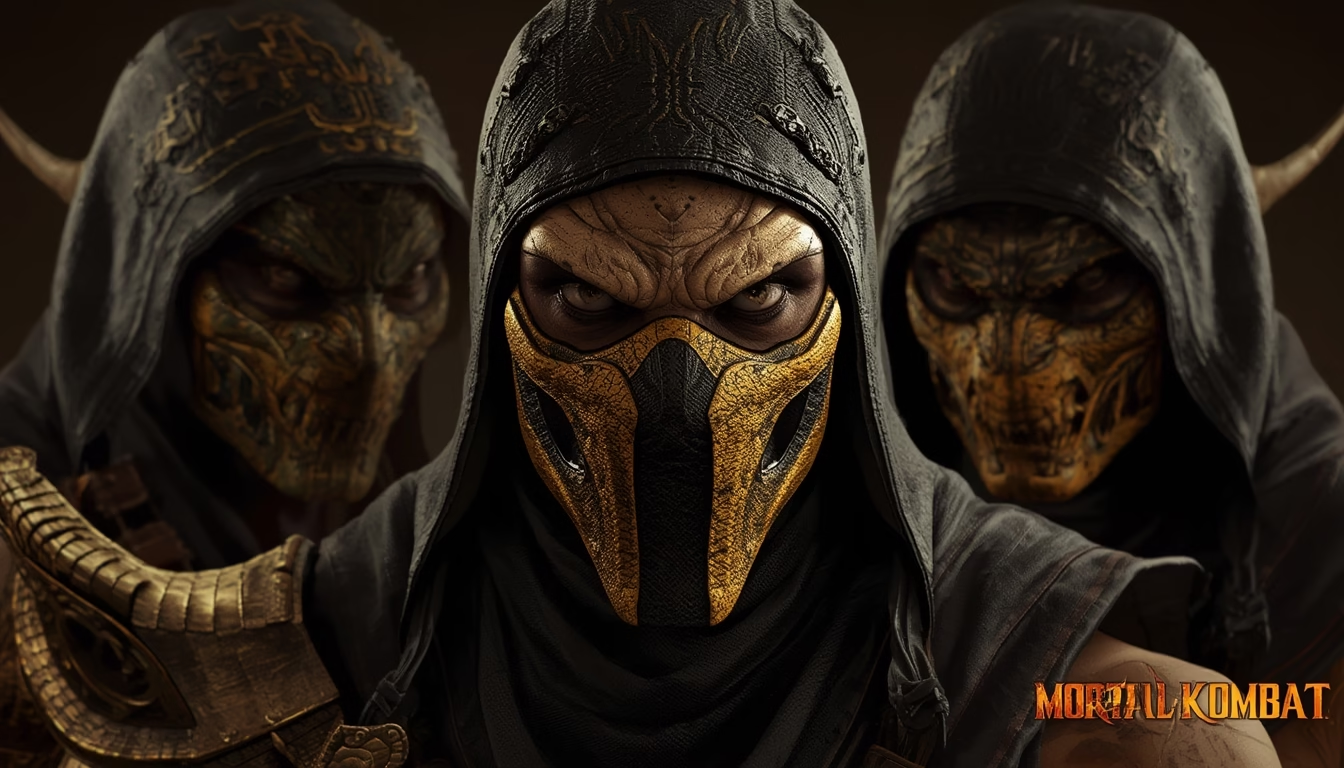
Since its debut in 1992, the Mortal Kombat franchise has evolved from a groundbreaking arcade fighter into a cultural juggernaut that spans video games, television series, comics, and two major Hollywood films. What started as a pixel‑perfect test of reflexes has become a worldwide phenomenon, thanks to its unforgettable villains, iconic heroes, and a storyline that balances mythic mysticism with brutal, over‑the‑top action. In this post we’ll dive deep into the franchise’s origins, explore the most notorious villains, break down the 2021 movie’s plot and production, and examine why fans keep coming back for more.
From Arcade Cabinet to Global Franchise
The original Mortal Kombat was developed by Midway Games and released on October 8, 1992. Its signature features—digitized actors, graphic “fatalities,” and a dark, martial‑arts‑infused storyline—set it apart from the cartoonish competitors of the era. The game’s success sparked a series of sequels, each expanding the lore of the Outworld, Earthrealm, and the realms beyond.
By the late 1990s, the franchise had already spawned a line of action figures, comic books, and an animated series (Mortal Kombat: Defenders of the Realm). The transition to live‑action film seemed inevitable, and after years of development hell, the first movie finally hit theaters in 1995, followed by a sequel in 1997. While both films were critically panned, they cemented the franchise’s place in pop culture and introduced a new generation to the world of kombat.
The Villains Who Define Mortal Kombat
Every great hero needs a worthy adversary, and Mortal Kombat’s rogues’ gallery is as diverse as it is deadly. Below are the most influential villains that have shaped the series’ dark tone.
Shang Tsung
Shang Tsung is the shape‑shifting sorcerer who first orchestrated the Mortal Kombat tournament. A master of soul‑stealing, he serves as the primary antagonist in the original game and appears in multiple sequels and the 2021 film. His ability to mimic other fighters makes him a tactical nightmare and a fan favorite.
Shao Kahn
The emperor of Outworld, Shao Kahn, embodies raw power and imperial ambition. Known for his signature “Kombat is a sport!” catchphrase, he has been the central villain in games from Mortal Kombat II to Mortal Kombat 11. His brutal, war‑lord persona drives many of the franchise’s major conflicts.
Quan Chi
As a necromancer and loyal lieutenant to Shao Kahn, Quan Chi brings a darker, more mystical threat. He first appeared in Mortal Kombat II and has since become a staple in the series’ storyline, often serving as the mastermind behind the scenes.
Baraka
Baraka’s razor‑shaped arms and feral demeanor make him instantly recognizable. Originally a member of the Tarkatan race, he has served both Shao Kahn and the Outworld empire, providing a visceral, animalistic counterpoint to the more cerebral villains.
Kronika
Introduced in Mortal Kombat 9, Kronika is the Keeper of Time, manipulating the timeline to reshape reality. Her motives are less about conquest and more about cosmic order, adding a philosophical layer to the franchise’s villainy.
Key Heroes and Their Role in the Film
While villains drive the conflict, the heroes give the audience someone to root for. The 2021 movie focuses on four central figures:
Scorpion (Hanzo Hasashi)
Played by Hiroyuki Sanada, Scorpion is a resurrected ninja seeking vengeance against those who murdered his clan. His iconic “Get over here!” line and flaming spear are faithfully recreated, making him the film’s emotional anchor.
Sub‑Zero (Kuai Liang)
Represented by Joe Taslim, Sub‑Zero is the younger brother of the original Sub‑Zero, who was killed by Scorpion. His cryogenic powers are visualized with striking blue CGI effects, and his internal struggle between honor and survival adds depth to the narrative.
Raiden
As the thunder god and protector of Earthrealm, Raiden (played by Tadanobu Asano) provides the mystical backbone of the story. The film captures his ethereal presence through subtle lighting and a restrained performance that balances godlike authority with human empathy.
Liu Kang
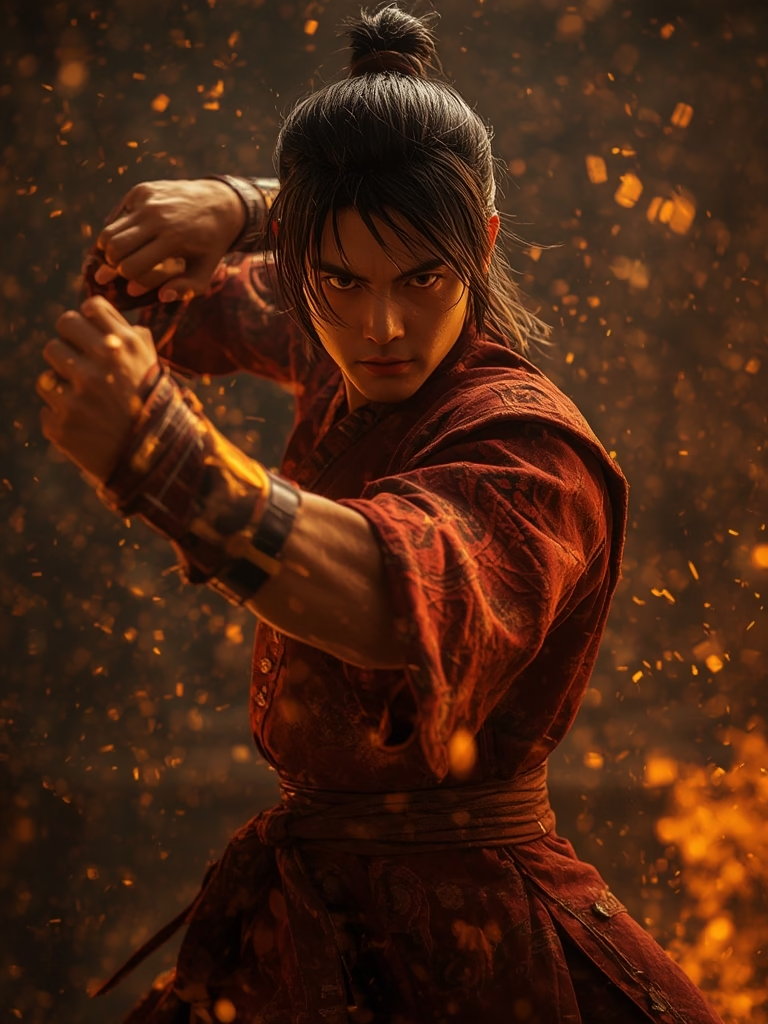
Liu Kang (Ludi Lin) is the franchise’s quintessential hero—an Earthrealm champion who embodies martial arts mastery and moral clarity. His fight scenes blend traditional kung fu choreography with the franchise’s signature over‑the‑top brutality.
Plot Overview of the 2021 Movie
The 2021 Mortal Kombat reboot follows a group of Earthrealm warriors who are lured into a deadly tournament hosted by Shang Tsung, who has been resurrected by the sorcerer Quan Chi. The tournament’s prize is a single wish granted by the Elder Gods, a promise that tempts each combatant with personal redemption or vengeance.
Scorpion, driven by a personal vendetta, discovers that Shang Tsung intends to use the tournament to open a portal for Shao Kahn’s invasion. As the fighters battle through a gauntlet of brutal arenas, alliances form and betrayals surface. The climax sees Scorpion confronting Shang Tsung in a fiery showdown, while Raiden attempts to seal the portal, and Liu Kang and Sub‑Zero team up to stop the impending Outworld onslaught.
The film ends on a cliffhanger: the portal remains partially open, hinting at a sequel that will explore the full-scale war between Earthrealm and Outworld.
Action, Visuals, and Fight Choreography
The movie’s greatest strength lies in its combat sequences. Director Simon McQuoid hired veteran stunt coordinators and martial‑arts experts to ensure each fight felt authentic yet cinematic.
Fight Choreography
Every major battle is a blend of traditional martial arts, wire‑work, and CGI enhancements. Scorpion’s spear throws are executed with a combination of practical effects and motion‑capture, giving them a tangible weight. Sub‑Zero’s ice attacks are achieved through a mix of practical frost rigs and digital overlays, creating a crisp, visual contrast against the film’s darker palette.
Visual Design
The production design leans heavily into the franchise’s iconic aesthetic: neon‑lit arenas, blood‑splattered backdrops, and a muted color scheme that emphasizes the supernatural. The use of practical set pieces—such as the “Pit” arena—helps ground the fantastical elements, while the CGI is reserved for the more outlandish fatalities.
Faithfulness to the Games
Fans will appreciate the numerous Easter eggs peppered throughout the film: the “Test Your Might” mini‑game appears as a training montage, the iconic “Finish Him!” voiceover punctuates the final blows, and classic fatalities—like Scorpion’s “Toasty!” move—are recreated with meticulous detail. While some liberties were taken for narrative flow, the core spirit of the games remains intact.
Fan Reactions and Cultural Impact
Upon release, the movie garnered a mixed critical reception but a largely positive response from the fan community. Social media platforms lit up with hashtags like #MortalKombatMovie and #ScorpionIsBack, where fans shared reaction videos, fan art, and debates over the film’s adherence to the source material.
Positive Highlights
- Authentic Fatalities: Viewers praised the faithful recreation of signature finishing moves.
- Diverse Cast: The inclusion of Asian actors in leading roles resonated with global audiences seeking representation.
- Modernized Storytelling: The film’s focus on character motivations, rather than pure spectacle, was seen as a step forward for the franchise.
Criticisms
- Pacing Issues: Some fans felt the early act dragged while the climax rushed through key plot points.
- Villain Depth: While Shang Tsung’s motives were explored, Shao Kahn’s presence was limited to a post‑credit tease, leaving hardcore fans wanting more.
Overall, the movie reinforced Mortal Kombat’s status as a cultural touchstone, inspiring cosplay conventions, meme culture, and renewed interest in the video game series.
The Future of the Franchise
With the success of the 2021 reboot, the studio has already green‑lit a sequel slated for release in 2024. Early reports suggest a deeper dive into Outworld’s politics, a full‑scale invasion led by Shao Kahn, and the introduction of fan‑favorite characters like Kitana and Mileena.
Beyond the big screen, the franchise continues to expand digitally. Mortal Kombat 11 remains a top‑selling title, and the upcoming Mortal Kombat 12 promises a new timeline mechanic that could tie directly into the film’s narrative, creating a cross‑media synergy that few other franchises have achieved.
Conclusion: Join the Conversation
From the pixelated arenas of 1992 to the high‑octane spectacle of modern cinema, Mortal Kombat has proven its staying power by constantly reinventing itself while honoring its roots. Whether you’re a lifelong fan who still remembers the original arcade cabinet or a newcomer drawn in by the latest film, there’s always a new fatality to discover and a fresh storyline to debate.
What’s your favorite Mortal Kombat moment? Share your thoughts in the comments below, and don’t forget to tag your friends who love the franchise. Let’s keep the kombat alive—one epic showdown at a time!