
Since its debut in 1992, the Mortal Kombat franchise has become a cultural juggernaut, transcending the arcade cabinets that first introduced us to its brutal, over‑the‑top combat. From pixelated fighters to blockbuster cinema, the series has evolved while staying true to the core elements that fans love: iconic characters, unforgettable finishing moves, and a mythic tournament that pits Earth’s champions against interdimensional threats. In this post, we’ll dive deep into the origins of Mortal Kombat, trace its journey to the silver screen, explore the legends of Scorpion, Sub‑Zero, Raiden, and Liu Kang, and break down the latest movie’s storyline, action, and visual flair. We’ll also hear what fans are saying, examine the franchise’s cultural impact, and peek at what the future might hold.
From Arcade to Icon: The Birth of Mortal Kombat
The original Mortal Kombat was the brainchild of Ed Boon and John Tobias, who wanted a fighting game that felt raw, visceral, and unmistakably different from the polished style of Street Fighter. The result was a roster of characters with distinct backstories, a dark fantasy setting, and the now‑infamous “Fatalities” that let players end a match with a gruesome, cinematic finish. The game’s success sparked a wave of sequels, spin‑offs, and a thriving competitive scene that cemented its place in gaming history.
Key Milestones in the Video Game Timeline
- 1992 – Mortal Kombat (Arcade): Introduced Scorpion, Sub‑Zero, Liu Kang, and the concept of a tournament spanning realms.
- 1995 – Mortal Kombat 3: Expanded the roster and added a more complex storyline involving Shao Kahn’s conquest.
- 1997 – Mortal Kombat Trilogy: Consolidated characters and story arcs, becoming a fan favorite.
- 2011 – Mortal Kombat (9): A reboot that modernized graphics and deepened lore, setting the stage for cinematic adaptations.
- 2023 – Mortal Kombat 1: Reimagined the timeline, introducing fresh twists while honoring classic characters.
Crossing Over: Mortal Kombat’s Leap to Film
The first major attempt to bring the franchise to the big screen arrived in 1995 with Mortal Kombat, directed by Paul W.S. Anderson. The film captured the game’s gritty aesthetic and introduced audiences to the tournament’s high‑stakes drama. While the special effects were modest by today’s standards, the movie’s faithful recreation of iconic Fatalities and its memorable soundtrack earned it a cult following.
A sequel, Mortal Kombat: Annihilation (1997), aimed to expand the universe but suffered from rushed production and uneven storytelling. Despite its flaws, both films laid the groundwork for future adaptations and kept the franchise in the public eye.
The 2021 Reboot: A Fresh Take on a Classic
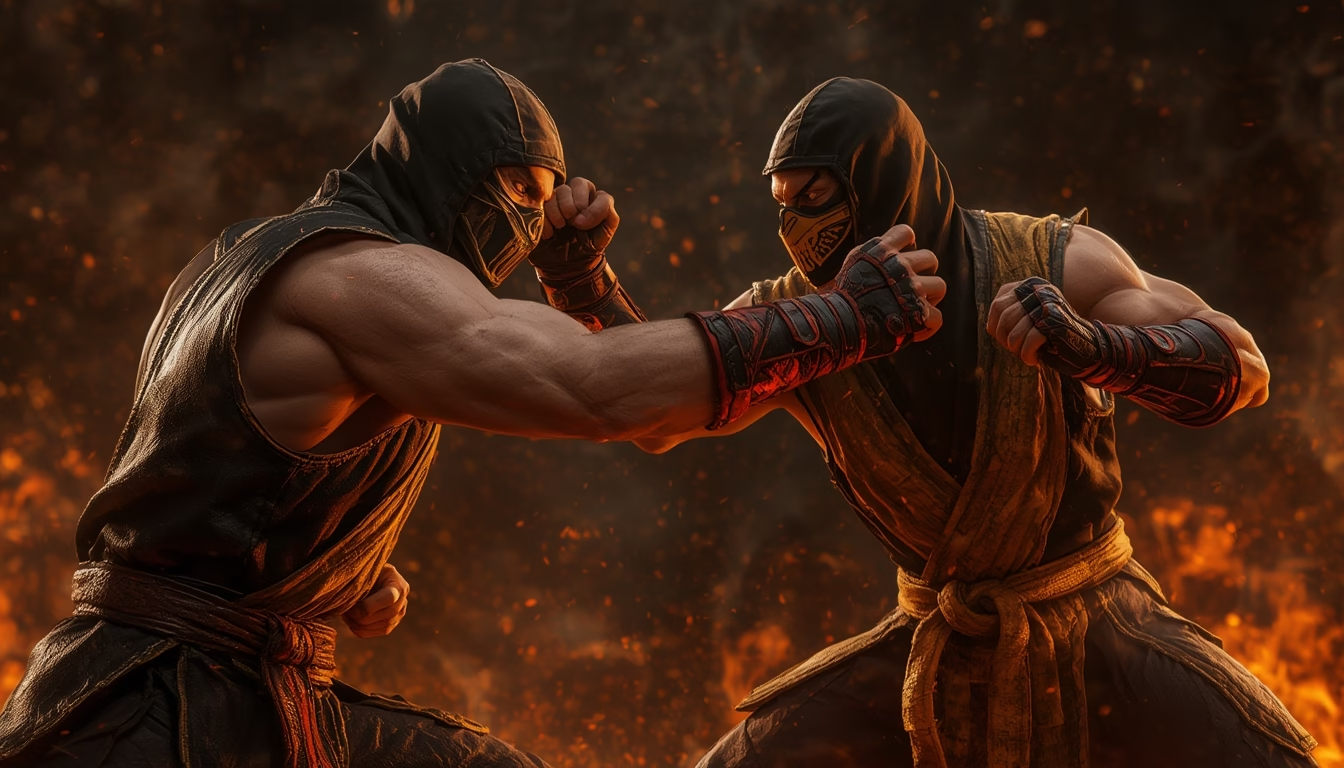
Directed by Simon McQuoid, the 2021 Mortal Kombat reboot embraced the franchise’s hyper‑violent roots while delivering state‑of‑the‑art visual effects. The film’s tone was darker, its fight choreography more grounded, and its use of Mortal Kombat martial arts—an amalgam of traditional kung fu, karate, and the series’ signature supernatural moves—gave each battle a distinct flavor. Audiences praised the faithful recreation of Fatalities, especially Scorpion’s “Get Over Here!” spear and Sub‑Zero’s icy freeze.
Meet the Legends: Scorpion, Sub‑Zero, Raiden, and Liu Kang
These four characters form the backbone of the Mortal Kombat mythos, each bringing a unique fighting style and narrative arc.
Scorpion (Hanzo Hasashi)
A resurrected ninja specter, Scorpion’s signature move—summoning a flaming spear—has become synonymous with the franchise. His backstory of vengeance against the Lin Kuei clan adds emotional depth, while his fiery Fatalities remain fan favorites.
Sub‑Zero (Kuai Liang)
Brother to the original Sub‑Zero, Kuai Liang embraces the Lin Kuei’s icy techniques, freezing opponents with a chilling stare. His moral compass often puts him at odds with the darker forces of the Outworld, making him a compelling anti‑hero.
Raiden
The thunder god and protector of Earthrealm, Raiden wields lightning and possesses the ability to manipulate time. His calm demeanor and strategic mind provide a counterbalance to the more impulsive fighters.
Liu Kang
Inspired by Bruce Lee, Liu Kang is a Shaolin monk whose martial arts mastery and fiery spirit embody the heroic heart of Mortal Kombat. His journey from a tournament contender to Earthrealm’s champion is a central thread throughout the series.
Storyline of the Latest Movie (2024)
The most recent installment, Mortal Kombat: Legacy of the Realms, picks up after the events of the 2021 reboot. Earthrealm faces a new threat: a coalition of Outworld warlords led by the resurrected sorcerer Shang Tsung, who seeks to merge the realms and become an omnipotent ruler.
Scorpion, now fully embracing his role as a guardian of Earthrealm, teams up with Sub‑Zero, Raiden, and Liu Kang to form an unlikely alliance. The plot weaves flashbacks that reveal Scorpion’s lingering guilt over his past actions and Sub‑Zero’s struggle to control his icy powers. Meanwhile, Liu Kang trains a new generation of fighters, introducing a fresh face—Kara, a street‑wise martial artist who blends parkour with Mortal Kombat martial arts.
The climax unfolds in an epic arena where each hero faces a personal trial. Scorpion confronts his former clan, Sub‑Zero battles his own clone, Raiden channels a massive thunderstorm to shield the Earthrealm, and Liu Kang duels Shang Tsung in a duel that blends traditional kung fu with supernatural energy. The film ends on a cliffhanger, hinting at a multiverse crossover that could bring characters from the 1995 film and the video game timelines together.
Action, Visuals, and Fight Choreography: A Critical Review
The film’s action sequences are its strongest asset. The choreography blends realistic martial arts techniques with the franchise’s signature supernatural abilities. Scorpion’s spear throws are executed with precise timing, while Sub‑Zero’s ice blasts are enhanced by practical effects that give a tangible chill to the set.
Visually, the movie benefits from cutting‑edge CGI that brings Outworld’s twisted landscapes to life. The use of high‑contrast lighting and saturated colors mirrors the arcade’s neon aesthetic, making each arena feel like a living, breathing stage for combat.
Fight choreography stands out for its attention to character-specific styles. Liu Kang’s fluid, Bruce Lee‑inspired movements contrast sharply with Raiden’s deliberate, thunder‑infused strikes. The inclusion of Mortal Kombat martial arts—combining traditional forms with fantastical elements—creates a fresh yet familiar experience for longtime fans.
In terms of faithfulness, the film nails the core spirit of the games. Iconic Fatalities are recreated with modern polish, and the narrative respects the lore, especially the tournament’s rules and the moral dilemmas faced by the characters. While some purists may miss the campy humor of the 1995 film, the darker tone aligns more closely with the current video game narrative.
Fan Reactions and Cultural Impact
Social media buzz has been overwhelmingly positive. Fans have praised the film’s respect for the source material, especially the accurate portrayal of Scorpion’s tragic backstory and Liu Kang’s heroic arc. Memes celebrating the “Get Over Here!” spear and the “Ice‑Cold Fatality” dominate platforms like Reddit and TikTok.
Critics note that the franchise’s cultural impact extends beyond gaming. Mortal Kombat’s iconic moves have infiltrated mainstream pop culture, appearing in music videos, sports celebrations, and even fashion. The franchise’s influence on the fighting‑game genre is undeniable, inspiring titles like Injustice and Street Fighter V to adopt more cinematic storytelling.
The Future of Mortal Kombat: What’s Next?
With the multiverse hint in the latest film, the next chapter could explore cross‑overs with other gaming universes or even bring back beloved characters from earlier movies. A rumored sequel, tentatively titled Mortal Kombat: Realm Wars, aims to expand the roster with new fighters from the upcoming video game expansion, while deepening the mythology of the Outworld’s ruling council.
On the gaming side, the upcoming Mortal Kombat 1 reboot promises a reimagined storyline that could feed directly into future films, creating a seamless narrative bridge between interactive and cinematic experiences. Additionally, a live‑action series is reportedly in development for a major streaming platform, which could explore side stories of lesser‑known characters like Kitana and Johnny Cage.
Join the Conversation
Whether you’ve been a fan since the arcade days or just discovered the franchise through the latest movie, Mortal Kombat continues to deliver pulse‑pounding action, unforgettable characters, and a mythos that grows richer with each iteration. What’s your favorite Mortal Kombat moment? Share your thoughts in the comments below, and let’s keep the conversation alive. Don’t forget to like, subscribe, and spread the word—because the tournament never ends, and the next epic showdown could be just around the corner.