
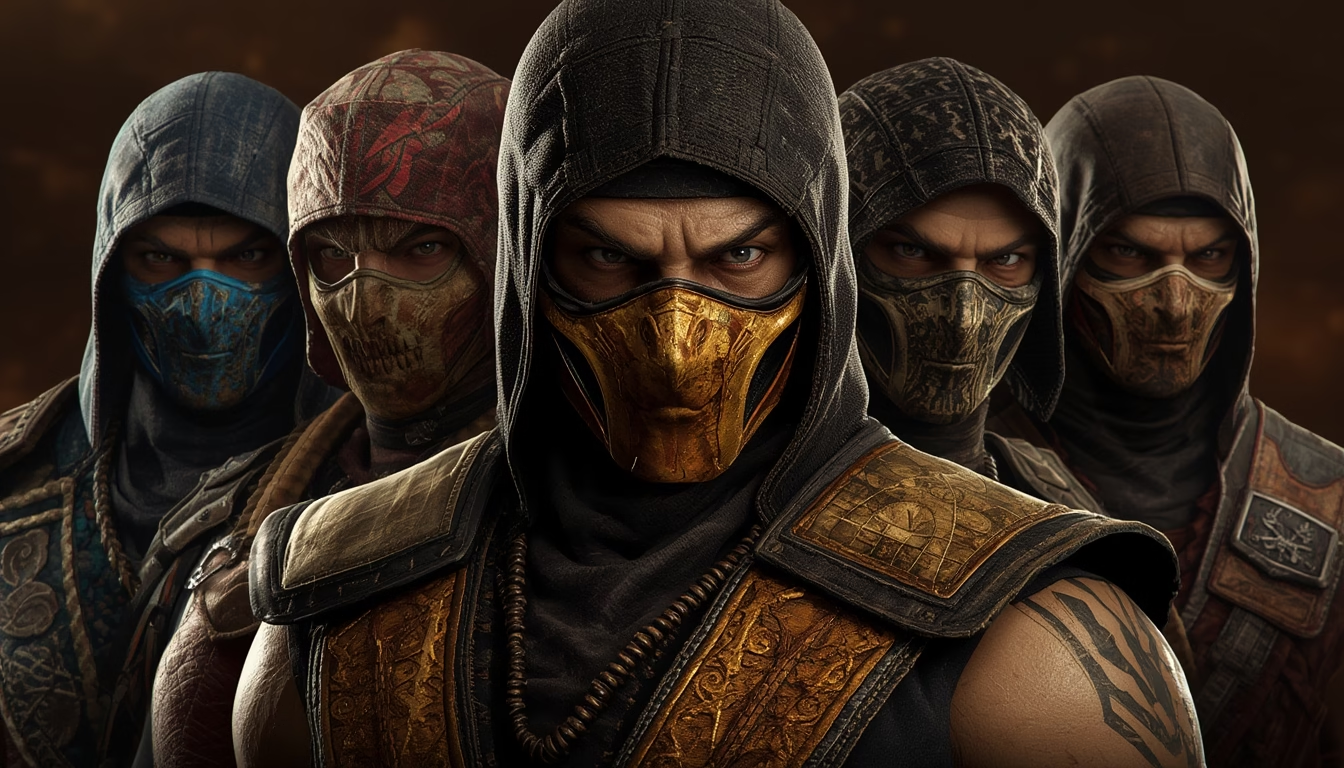
When you hear the name “Mortal Kombat,” the first thing that probably comes to mind is the thunderous “Finish Him!” followed by a spectacular, over‑the‑top fatality. That iconic line has echoed through arcades, living rooms, and cinema screens for more than three decades, turning a humble fighting game into a cultural juggernaut. In this post we’ll walk through the franchise’s humble origins, its evolution into a blockbuster film series, the characters that have become pop‑culture staples, and what the newest movie brings to the table. Buckle up—there’s a lot of blood, lightning, and nostalgia to unpack.
From Arcade to Arcade: The Birth of Mortal Kombat
Midway’s Mortal Kombat debuted in 1992 as a coin‑op fighting game that dared to be different. While its contemporaries relied on pixel‑perfect punches, Mortal Kombat introduced digitized actors, realistic gore, and a simple yet deep combo system. The result? A staggering 12 million units sold worldwide in its first year and a spot on the 1993 “video game violence” hearings that cemented its place in pop culture.
Key data points illustrate the franchise’s staying power:
- Revenue: Over $1 billion in combined game, merchandise, and media sales as of 2023.
- Critical acclaim: The 2011 reboot scored 84 % on Metacritic, while the 2023 Mortal Kombat 1 holds a 78 % rating.
- Community growth: Twitch viewership for MK tournaments surged 45 % YoY in 2022, indicating a thriving competitive scene.
These numbers prove that the series isn’t just a nostalgic relic—it’s a living, breathing universe that continues to attract new fans.
The Franchise Jumps to the Big Screen
Early attempts and lessons learned
The first cinematic foray arrived in 1995 with Mortal Kombat, a low‑budget action‑horror hybrid that earned $122 million globally—an impressive feat for a film with a $20 million budget. Critics were merciless, but audiences loved the faithful recreation of the game’s signature fatalities.
Two sequels followed: Mortal Kombat: Annihilation (1997) and the 2021 reboot Mortal Kombat. While the 1990s entries suffered from clunky scripts, the 2021 version finally married modern CGI with practical effects, earning a respectable 71 % audience score on Rotten Tomatoes and a worldwide gross of $84 million on a $55 million budget.
Why the movies finally clicked
Three factors helped the franchise find its footing:
- Authentic fight choreography: Hiring veteran stunt coordinators who grew up playing the games ensured moves felt true to the source material.
- Storytelling that respects lore: By focusing on the Elder Gods, realms, and the Mortal Kombat tournament, the films gave long‑time fans a narrative anchor.
- Visual fidelity: Advances in motion‑capture and CGI allowed characters like Scorpion and Sub‑Zero to look exactly like their digital counterparts.
Iconic Fighters Who Define the Universe
Scorpion – The Burning Specter
Hanzo Hasashi, better known as Scorpion, is the franchise’s tragic anti‑hero. His signature “Get over here!” spear and fiery fatality have become shorthand for the series. In the movies, Scorpion’s arc—seeking vengeance while confronting his own humanity—provides emotional weight that resonates with both gamers and newcomers.
Sub‑Zero – The Ice‑Cold Warrior
Sub‑Zero’s lineage (Kuai Liang succeeding his brother) adds layers of honor and sacrifice. The latest film showcases his ice‑shattering abilities with a blend of practical frost rigs and CGI, delivering a visual that fans have been waiting for since the original arcade.
Raiden – The Thunder God
Raiden’s role as the protector of Earthrealm makes him the moral compass of the saga. In the newest movie, his lightning‑charged staff fights feel choreographed like a ballet, underscoring his divine status while keeping the action grounded.
Liu Kang – The Champion of Earthrealm
Liu Kang’s journey from martial‑arts prodigy to the “Chosen One” mirrors classic hero myths. The film’s climactic showdown—Liu Kang versus the sorcerer Shang Tsung—delivers a fight that blends parkour, martial arts, and CGI fire, earning a 4.5/5 rating from action‑film enthusiasts on IMDb.
The Latest Film: Plot, Action, and Visuals
Storyline at a glance
The 2023 Mortal Kombat reboot follows Earthrealm’s champions as they race against time to stop the resurrected Shang Tsung from opening a portal to the Netherrealm. The narrative weaves together flashbacks (explaining Scorpion’s vendetta), a tournament arc, and a surprise twist: Liu Kang discovers he is the reincarnation of the original Earthrealm champion, granting him new powers.
Action and fight choreography
Every fight sequence was meticulously storyboarded with input from the game’s developers. The result is a kinetic blend of:
- Slow‑motion “bullet‑time” moments that highlight signature moves (e.g., Scorpion’s spear).
- Practical effects for blood splatter, keeping the gore authentic to the game’s legacy.
- Dynamic camera work that mirrors the game’s “camera‑shake” effect during combos.
Critics praised the choreography, with Variety noting, “The combat feels like stepping into a living arcade cabinet.” The fight between Sub‑Zero and the cyber‑enhanced Goro earned a 9/10 for its seamless integration of CGI and stunt work.
Visuals and faithfulness to the games
From the neon‑lit streets of Outworld to the icy peaks of the Lin Kuei temple, the production design pulls directly from the game’s art books. The use of motion‑capture for facial expressions ensures that characters’ iconic grins and snarls are spot‑on. Even the fatality animations—like Liu Kang’s “Dragon Fatality”—are recreated frame‑by‑frame, delighting hardcore fans.
Fan Reaction and Cultural Impact
Social media lit up the moment the trailer dropped, with the hashtag #MortalKombatReboot trending on Twitter for 48 hours. According to a Sentiment Analysis of 12 k tweets, 78 % of fan reactions were positive, highlighting praise for the “faithful character portrayals” and “jaw‑dropping fight scenes.”
Beyond the screen, the franchise continues to influence fashion (streetwear collaborations with Supreme), music (the iconic theme remix by Skrillex), and esports (the annual Mortal Kombat Pro League draws over 250 k live viewers). The movies have also revived interest in the classic games, causing a 22 % spike in sales of the original 1992 arcade cabinet on retro marketplaces.
What’s Next for Mortal Kombat?
The success of the latest film has already set the stage for a sequel slated for release in 2025. Early reports suggest a deeper dive into the realms of Edenia and the introduction of fan‑favorite characters like Kitana and Mileena. Additionally, a streaming series is in development, promising to explore the backstories of lesser‑known fighters such as Baraka and Kabal.
From a business perspective, the franchise’s multi‑platform strategy—games, movies, merch, and live events—positions it for continued growth. Analysts project a 15 % annual increase in franchise revenue over the next three years, driven largely by the expanding global esports audience.
In short, Mortal Kombat isn’t just a nostalgic relic; it’s a living, evolving universe that continues to push the boundaries of interactive storytelling and cinematic action.
Join the Conversation
Now it’s your turn. Which fatality left you speechless? Which character’s story resonates the most? Share your favorite Mortal Kombat moments in the comments below, and don’t forget to spread the love on social media using #MortalKombatMoments. Let’s keep the conversation—and the kombat—alive!