
When the iconic “Finish Him!” roar echoes from the arcade cabinets of the early ’90s, it’s hard not to feel a rush of nostalgia. Cole Young Mortal Kombat has taken that electric energy and turned it into a modern cinematic experience that both honors the franchise’s roots and pushes it into new territory. Whether you’re a lifelong fan who spent countless nights mastering combos or a newcomer drawn in by the recent blockbuster, this deep dive will walk you through the evolution of Mortal Kombat, the key players who define its universe, and why the latest film is a must‑watch.
From Arcade Legend to Global Phenomenon
The story begins in 1992 when Midway Games released the first Mortal Kombat arcade cabinet. With its groundbreaking digitized graphics, bone‑crunching fatalities, and a roster of characters that felt like living myths, the game quickly became a cultural touchstone. It sparked debates about video‑game violence, inspired a line of action figures, and laid the groundwork for a franchise that would span consoles, comics, and eventually, the big screen.
The Transition to Film: A Rough Road to Redemption
Early attempts to adapt Mortal Kombat for cinema were, let’s say, “experimental.” The 1995 live‑action movie, while beloved for its campy charm, struggled with budget constraints and uneven storytelling. A sequel in 1997 tried to recapture the magic but fell short of fan expectations. It wasn’t until the 2021 reboot that the franchise found its footing, thanks to a combination of higher production values, a reverence for the source material, and a fresh cast led by Cole Young—portrayed by Lewis Tan.
Enter Cole Young: The Every‑Man Hero
Unlike previous protagonists who were often seasoned warriors, Cole Young is an ordinary teenager thrust into an extraordinary world. This narrative choice resonates with audiences because it mirrors the player’s journey: an ordinary person learning to harness incredible power. Tan’s performance balances vulnerability with fierce determination, making Cole a relatable anchor amid the chaos of gods and assassins.
Key Characters Who Define the Kombat Universe
Every Mortal Kombat fan can name at least three of the iconic fighters, and the film does a solid job of bringing them to life.
Scorpion – The Vengeful Specter
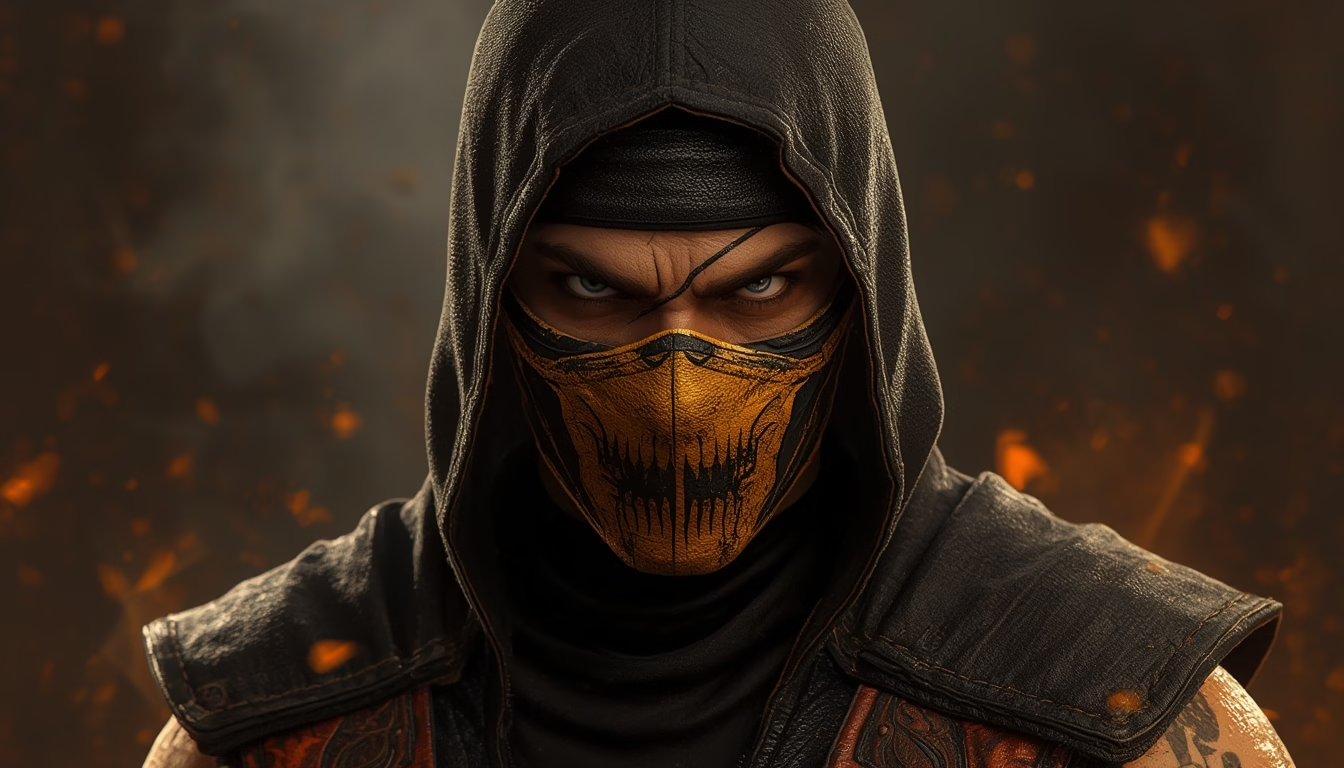
Played by Hiroyuki Sanada, Scorpion’s flaming spear and iconic “Get over here!” line are faithfully recreated. The film captures his tragic backstory—revenge for his clan’s massacre—while delivering jaw‑dropping visual effects that make his Hellfire attacks feel truly infernal.
Sub‑Zero – The Cryogenic Warrior
With his icy powers and stoic demeanor, Sub‑Zero (Joe Taslim) serves as both foil and ally to Scorpion. The choreography showcases his ability to freeze opponents mid‑air, creating moments that are as visually striking as they are strategically clever.
Raiden – The Thunder God
James Remar’s Raiden brings gravitas to the role of the elder deity guiding Earthrealm’s defenders. His thunderous presence and wise counsel echo the game’s lore, and his electrifying fight scenes add a divine spectacle to the battlefield.
Liu Kang – The Dragon’s Soul
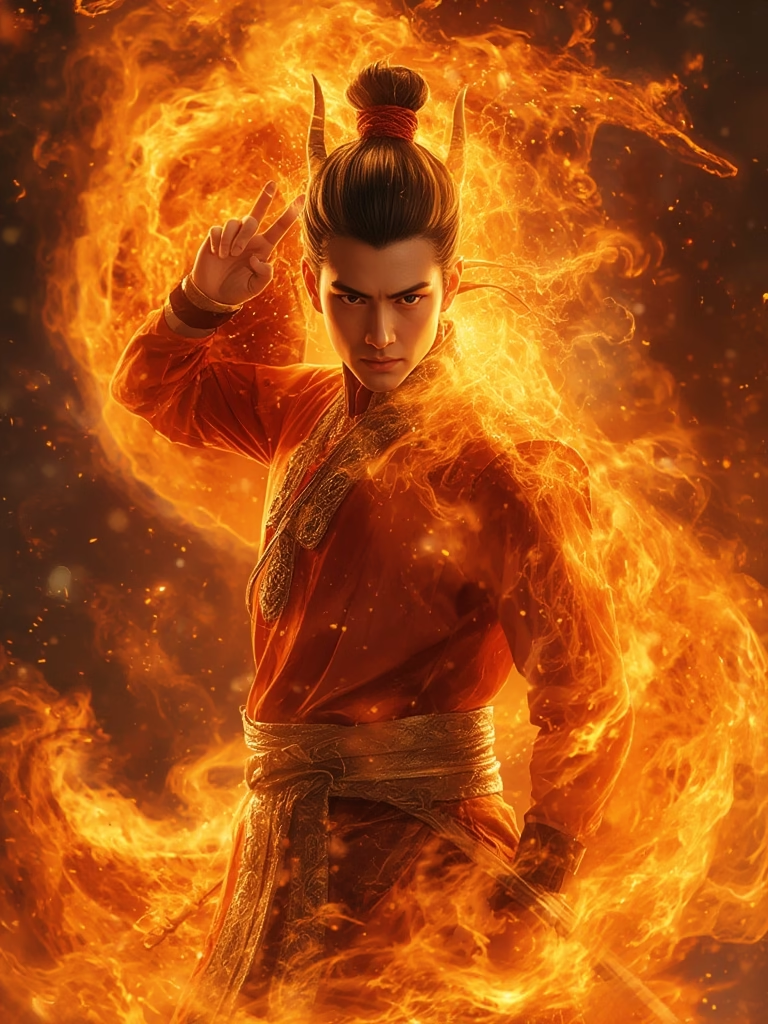
Liu Kang (Ludi Lin) remains the franchise’s heroic heart. His martial arts prowess and fiery dragon transformations are executed with fluid choreography that honors his status as the series’ ultimate champion.
The Latest Movie: Plot, Action, and Visuals
The 2021 Mortal Kombat film thrusts Cole Young into the secretive tournament that determines the fate of Earthrealm. After a mysterious invitation, Cole discovers his hidden lineage—he is the son of a legendary Kombat master—forcing him to train under the tutelage of Raiden and join forces with Scorpion, Sub‑Zero, Liu Kang, and others. The tournament’s stakes rise as the sorcerer Shang Tsung (Chin Han) manipulates the fighters, seeking to merge realms and unleash chaos.
Action and Fight Choreography
The fight sequences are the film’s crown jewel. Each character’s signature moves—Scorpion’s spear, Sub‑Zero’s ice blast, Liu Kang’s dragon fire—are woven into meticulously staged battles that feel both cinematic and true to the game’s mechanics. The choreography balances brutal realism with the over‑the‑top spectacle fans expect, delivering moments like Cole’s first “Fatality” that blend shock value with narrative payoff.
Visuals and Cinematography
From the neon‑lit streets of Outworld to the ancient temples of Earthrealm, the production design immerses viewers in a richly textured world. The use of practical effects—real fire, ice, and prosthetic makeup—combined with cutting‑edge CGI creates a tactile realism that makes each fatality feel consequential. The color palette leans heavily on reds, blues, and electric yellows, echoing the game’s iconic UI and reinforcing the franchise’s visual identity.
Faithfulness to the Games
Fans will appreciate the countless Easter eggs: the iconic “Test Your Might” mini‑games appear as training sequences, the “Kombat Kodes” are subtly referenced in background signage, and the fatality moves are executed with the same brutal precision that made the arcade cabinets legendary. While the narrative introduces new elements—like Cole’s backstory—the core themes of honor, rivalry, and destiny remain intact.
Fan Reactions and Cultural Impact
Social media exploded with reactions after the trailer dropped, with hashtags like #ColeYoungMortalKombat trending worldwide. Long‑time fans praised the film’s dedication to lore, while newcomers lauded its accessibility. Critics highlighted the film’s ability to balance nostalgia with fresh storytelling, noting that it revitalized interest in the franchise’s upcoming video game releases and upcoming comic arcs.
Beyond entertainment, Mortal Kombat has cemented itself as a cultural touchstone. Its catchphrases have entered everyday language, its characters appear in cross‑overs with other media, and its iconic fatalities have inspired countless memes and fan art. The franchise’s influence extends to fashion, with streetwear brands releasing limited‑edition “Fatality” collections, and to esports, where Mortal Kombat tournaments draw thousands of viewers each year.
The Future of Mortal Kombat: What’s Next?
With the success of the latest film, the franchise looks poised for an expanded universe. Rumors suggest a sequel focusing on the rise of Shao Kahn, while a spin‑off series could explore the origins of the Lin Kuei clan. On the gaming side, the next mainline title promises deeper storytelling, enhanced graphics, and a robust online mode that could bring the cinematic experience full circle.
Moreover, the integration of augmented reality (AR) experiences at theme parks and immersive escape rooms is on the horizon, allowing fans to step directly into the Kombat arena. As technology evolves, Mortal Kombat is set to remain at the intersection of gaming, film, and pop culture.
Join the Conversation
Now that you’ve explored the legacy of Mortal Kombat, from its arcade origins to the electrifying performance of Cole Young on the big screen, we want to hear from you! What’s your favorite Mortal Kombat moment—be it a classic fatality, an unforgettable fight scene, or a personal memory of playing the game with friends? Share your stories in the comments below, and let’s keep the Kombat spirit alive together.