
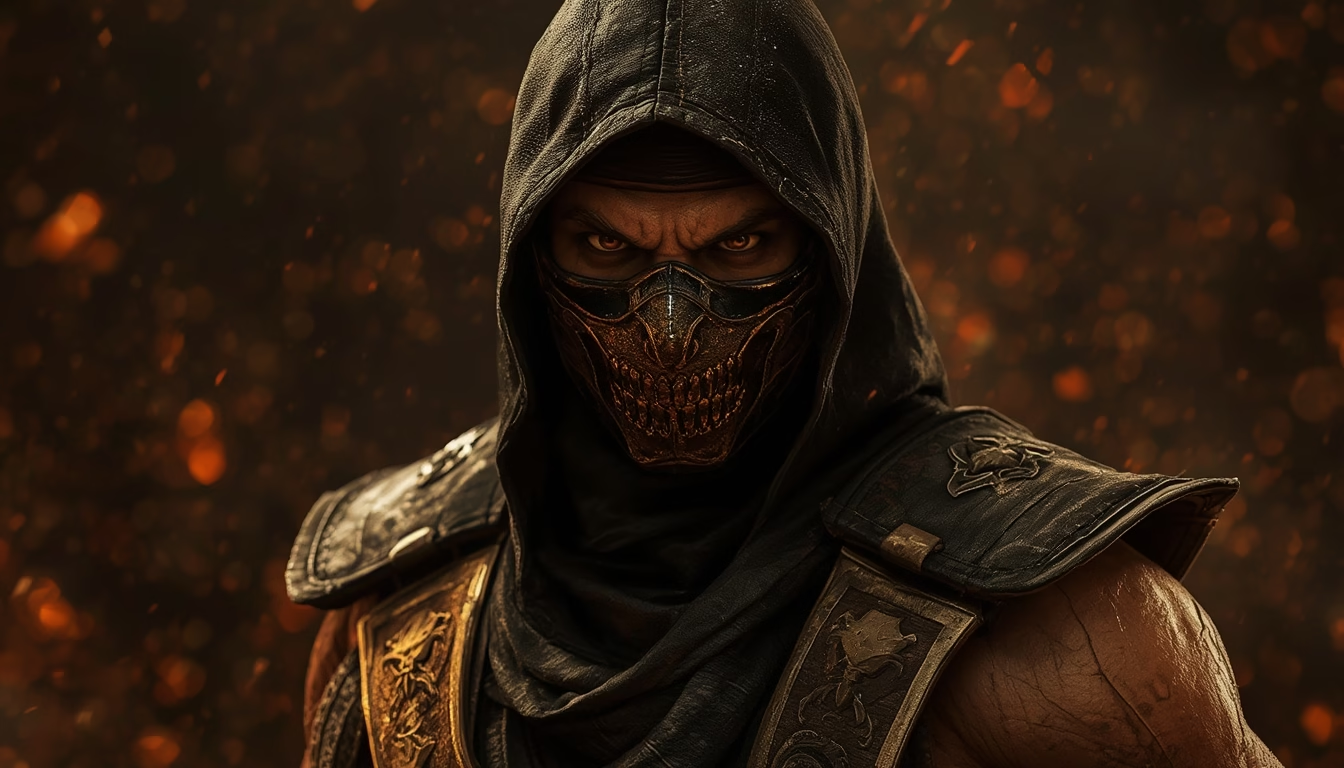
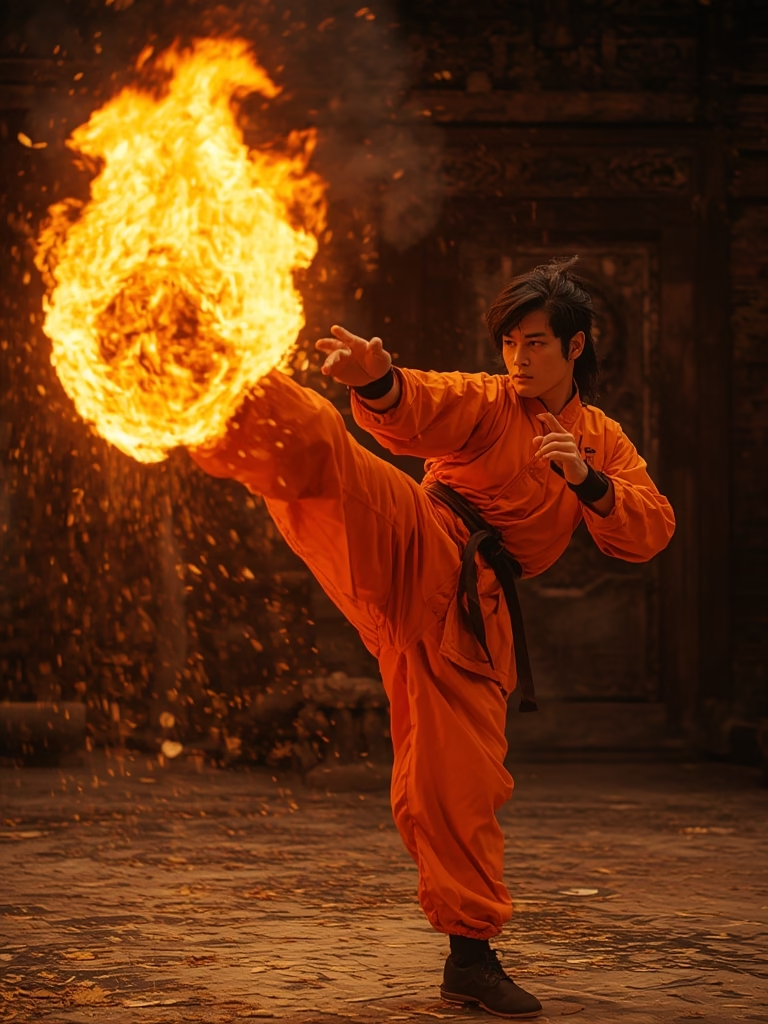
When you hear the name “Mortal Kombat,” you probably picture a thunderous roar, a flash of fire, and the unmistakable “Finish Him!” line echoing through a dimly lit arena. What started as a groundbreaking arcade fighting game in 1992 has morphed into a cultural juggernaut that spans consoles, comics, television, and most recently, a high‑octane Hollywood adaptation. In this deep‑dive, we’ll explore the franchise’s roots, its cinematic evolution, the iconic fighters who define it, and why the latest movie feels both nostalgic and fresh.
From Arcade Cabinets to Global Phenomenon
The original Mortal Kombat was born in a small Midwestern studio, Midway Games, and quickly distinguished itself with digitized actors, brutal fatalities, and a dark, martial‑arts‑infused mythology. Its success sparked sequels, spin‑offs, and a competitive scene that still thrives today. The core premise—earth’s greatest warriors battling interdimensional foes for the fate of humanity—provided a flexible narrative canvas that game designers have expanded across multiple timelines and realms.
Turning Pixels into Pictures: The Film Journey
Adapting a game that thrives on player agency is no easy feat, yet Mortal Kombat has attempted the leap to the silver screen three times. The 1995 Mortal Kombat directed by Paul W.S. Anderson introduced mainstream audiences to Scorpion’s flaming spear and Sub‑Zero’s ice blast, delivering a surprisingly faithful recreation of the arcade’s iconic stages. A sequel, Mortal Kombat: Annihilation (1997), aimed for grander set pieces but stumbled under a rushed script and uneven pacing.
Fast forward to 2021, when director Simon McQuoid rebooted the franchise with a gritty, R‑rated vision. This latest entry, simply titled Mortal Kombat, embraces the series’ signature gore while modernizing its storytelling. The film’s success—both at the box office and on streaming platforms—proved that a well‑crafted adaptation can satisfy die‑hard fans and attract newcomers.
Key Characters That Define the Kombat Universe
Scorpion (Hanzo Hasashi)
Scorpion is the embodiment of vengeance. After his clan is massacred, he returns from the Netherrealm with a burning desire for retribution, wielding a kunai attached to a chain and the signature line, “Get over here!” His tragic backstory and fiery abilities make him a fan favorite and a central figure in every adaptation.
Sub‑Zero (Kuai Liang)
Unlike his older brother, the original Sub‑Zero, who was killed in the first game, Kuai Liang carries the mantle with a cooler demeanor—literally. His cryogenic powers allow him to freeze opponents, create ice weapons, and even form protective barriers. The rivalry between Scorpion and Sub‑Zero fuels much of the franchise’s drama, both in games and on screen.
Raiden, the Thunder God
Raiden serves as the wise, lightning‑wielding mentor who guides Earthrealm’s champions. His iconic hat, white beard, and electrifying attacks have become visual shorthand for the series’ mythic stakes. In the 2021 film, Raiden’s role expands as he grapples with the moral weight of unleashing the “Kombat” tournament.
Liu Kang, The Champion
Liu Kang is the series’ heroic heart—a Shaolin monk turned martial‑arts legend who embodies honor and perseverance. Known for his fireball and bicycle kick, Liu Kang’s journey from reluctant fighter to savior of Earthrealm anchors the narrative arc across games and movies alike.
The Storyline of the 2021 Adaptation
The 2021 Mortal Kombat opens with a brutal tournament hosted by the sorcerer Shang Tsung, who seeks to claim Earthrealm’s souls. Our heroes—Liu Kang, Kung Lao, and newcomer Cole Young—are thrust into the arena, each with personal stakes. Scorpion, resurrected by the sorcerer’s dark magic, seeks vengeance against Sub‑Zero, who is forced to confront his own past.
Mid‑film, the plot thickens as Raiden reveals the true purpose of the Kombat: to prevent the Outworld’s tyrant, Emperor Shao Kahn, from conquering Earth. The final showdown pits the Earthrealm fighters against Shang Tsung and his monstrous allies, culminating in a visually stunning battle where Liu Kang finally embraces his destiny as the champion.
Action, Visuals, and Fight Choreography: A Critical Review
The film’s action sequences are its strongest asset. Director Simon McQuoid enlisted seasoned martial‑arts choreographers who blended traditional kung fu with the series’ supernatural flair. Each fight feels distinct: Scorpion’s fiery spear, Sub‑Zero’s ice shatter, and Raiden’s lightning bursts are not just visual effects but integral to the combat rhythm.
Visually, the movie leans into a gritty, hyper‑real aesthetic. The arenas—ranging from a flooded temple to a neon‑lit cyberpunk city—are rendered with meticulous detail, capturing the game’s iconic stage design while adding cinematic depth. The use of practical effects for blood splatter and bone‑crushing fatalities adds a visceral realism that CGI alone could not achieve.
In terms of faithfulness, the adaptation scores high. Signature moves, fatality finishers, and even Easter eggs (like the hidden “Test Your Might” bar in the background) reward longtime fans. However, the film trims some of the lore’s complexity to keep the story accessible, a trade‑off that most viewers will appreciate.
Fan Reactions and Cultural Impact
Social media lit up the moment the trailer dropped, with fans dissecting every frame for hidden references. After the release, Reddit threads and YouTube breakdowns highlighted both praise for the faithful fight choreography and criticism for certain character omissions (e.g., Kitana’s reduced screen time). Overall, the consensus leans positive: the movie respects the source material while delivering a fresh, adrenaline‑pumping experience.
Beyond the screen, Mortal Kombat continues to influence pop culture. Its catchphrases appear in memes, its characters inspire cosplay at conventions worldwide, and its iconic fatalities have been parodied in everything from late‑night talk shows to other video games. The franchise’s ability to stay relevant across generations underscores its status as a cultural touchstone.
What’s Next for the Kombat Franchise?
With the success of the 2021 film, a sequel is already in development, promising to explore the deeper mythology of the Outworld and introduce fan‑favorite characters like Kitana, Mileena, and Shao Kahn. Additionally, the upcoming Mortal Kombat 2 video game promises new fighters, expanded story modes, and enhanced graphics, ensuring the franchise’s momentum continues on both screens and consoles.
Streaming platforms are also eyeing the Kombat universe for a potential series, which could delve into the rich backstories of lesser‑known warriors and flesh out the multiversal lore that games have hinted at for decades.
Join the Conversation
Whether you’re a veteran who spent countless nights mastering Scorpion’s combos or a newcomer who just watched the latest movie, Mortal Kombat offers something for everyone. What’s your favorite Kombat moment? A jaw‑dropping fatality, an epic showdown, or a nostalgic memory from the arcade? Share your story in the comments below, and let’s keep the fire of Earthrealm alive together!