
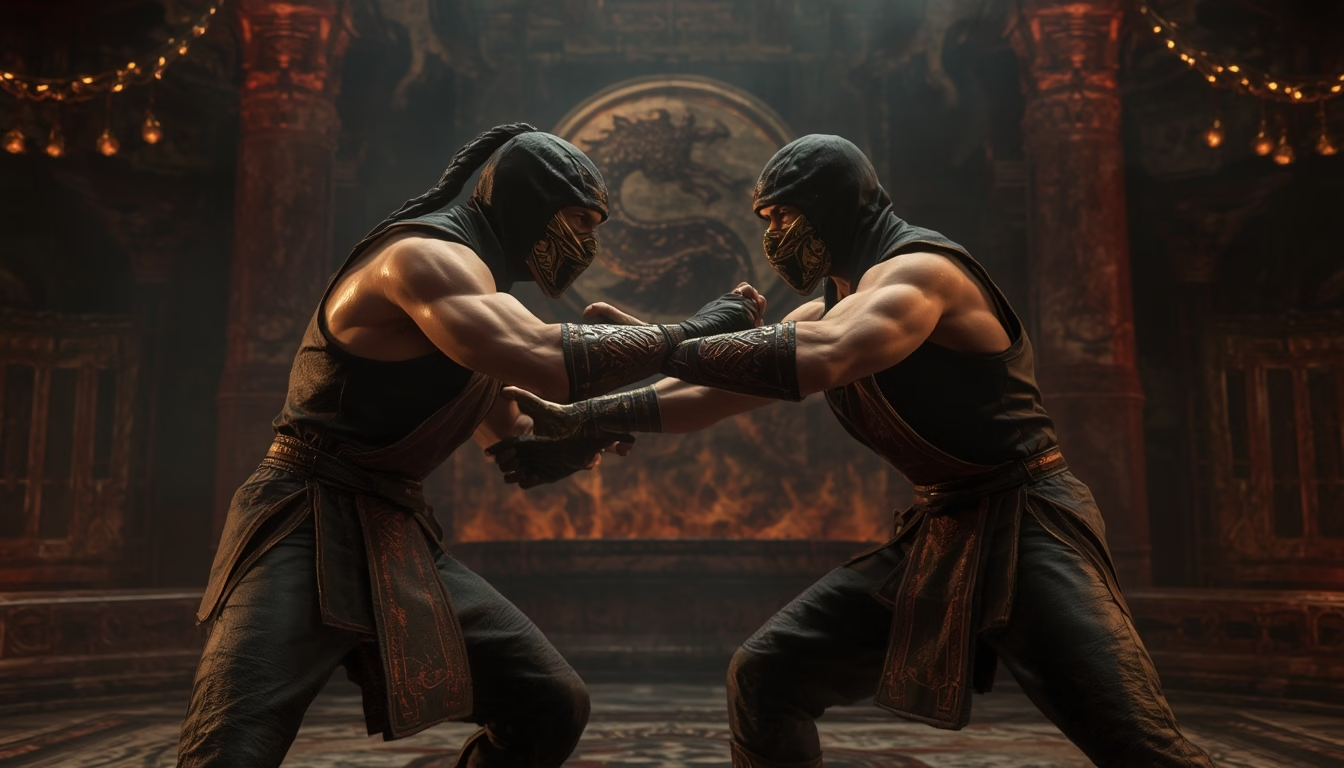
Since its first pixel‑perfect punch in 1992, Mortal Kombat has been more than just a fighting game—it’s a cultural phenomenon that has leapt from arcades onto the big screen, into comic books, and even onto the stage. The franchise’s signature blend of brutal combat, unforgettable characters, and over‑the‑top storytelling has kept fans coming back for more, and the recent movie adaptation has reignited the conversation about how well the series translates into live‑action. In this post, we’ll explore the origins of Mortal Kombat, trace its evolution into film, spotlight iconic fighters like Scorpion, Sub‑Zero, Raiden, and Liu Kang, and break down the choreography that makes the latest movie a visual feast. We’ll also dive into fan reactions, cultural impact, and what the future might hold for this legendary universe.
From Arcade to Icon: The Birth of Mortal Kombat
The original Mortal Kombat burst onto the scene in 1992, created by Ed Boon and John Tobias. Its groundbreaking use of digitized sprites, realistic blood, and the infamous “Fatalities” set it apart from other fighters of the era. The game’s lore—an interdimensional tournament that decides the fate of Earthrealm—gave players a mythic backdrop that was rarely seen in arcade titles at the time.
Key Milestones in the Gaming Franchise
- 1992–1995: The first three games cemented the core roster (Scorpion, Sub‑Zero, Raiden, Liu Kang) and introduced the “Kombat Kode” system.
- 1997–2002: Mortal Kombat 4 and Mortal Kombat: Deadly Alliance transitioned the series to 3D graphics while preserving the brutal combat style.
- 2011–2015: The reboot, Mortal Kombat 9, re‑imagined the original storyline with modern graphics, reigniting interest among a new generation.
- 2023: Mortal Kombat 1 introduced a fresh timeline, expanding the universe with new characters and alternate realities.
Lights, Camera, Kombat: The Film Adaptations
The first live‑action attempt arrived in 1995 with Mortal Kombat, directed by Paul W.S. Anderson. While the movie was criticized for its uneven pacing, it earned a cult following thanks to its faithful recreation of iconic moves and the unforgettable “Test Your Might” segment. A sequel, Mortal Kombat: Annihilation (1997), attempted to push the action further but fell short on narrative cohesion.
Fast forward to 2021, when the franchise finally got a modern reboot. Directed by Simon McQuoid, Mortal Kombat (2021) aimed to blend high‑octane fight choreography with a darker, more faithful tone. The result was a film that, while not perfect, delivered some of the most visceral combat scenes ever captured on a mainstream Hollywood budget.
The Latest Chapter: Mortal Kombat (2024)
The newest installment, released in 2024, picks up after the events of the 2021 film and introduces a multiverse twist that ties together the various timelines explored in the games. Our heroes—Scorpion, Sub‑Zero, Raiden, and Liu Kang—must unite against a resurrected Shang Tsung, who seeks to merge all realms into a single, chaotic arena.
Iconic Characters and Their Signature Moves
Understanding the choreography starts with knowing the fighters. Each character’s fighting style is rooted in a distinct martial art, which the film’s stunt coordinators meticulously studied.
Scorpion (Hanzo Hasashi)
Scorpion’s signature “Spear” (the Get Over Here! move) translates into a high‑flying, rope‑like pull that blends traditional ninjutsu with theatrical flair. In the 2024 film, his chain is rendered with practical effects, allowing the actor to physically yank opponents toward him, creating a visceral sense of impact.
Sub‑Zero (Kuai Liang)
Sub‑Zero’s ice‑based attacks are choreographed using a combination of slow‑motion motion capture and on‑set cryogenic props. The iconic “Ice Clone” sequence showcases a double‑take where the actor fights his own frozen double, emphasizing precision and timing.
Raiden, God of Thunder
Raiden’s electric attacks are amplified by LED‑infused costumes and wire‑work that lets him “levitate” during his thunderclap combos. The choreography emphasizes fluid, almost dance‑like movements that contrast with the raw brutality of his opponents.
Liu Kang, The Champion
Liu Kang’s martial arts are rooted in traditional Chinese kung fu. The film’s fight scenes highlight his signature “Flying Kick” and “Bicycle Kick” using a blend of parkour and wire‑assisted aerials, delivering a dynamic visual rhythm that mirrors his video‑game combos.
Breaking Down the Fight Choreography
The 2024 movie raises the bar for combat realism while staying true to the game’s over‑the‑top aesthetic. Below are the key elements that make the choreography stand out:
1. Hybrid Motion Capture + Practical Stunts
Stunt teams used motion‑capture suits to map out each character’s signature moves, then recreated them with real‑world props. This hybrid approach preserves the fluidity of the games while delivering the weight and impact that audiences crave.
2. Strategic Use of Camera Angles
Rapid cuts are minimized in favor of longer takes that showcase the full arc of a move—especially during “Fatalities.” Directors often employ low‑angle shots to emphasize the power behind a finishing blow, making each fatality feel like a cinematic event.
3. Environmental Interaction
Unlike earlier films, the latest movie integrates the environment into combat. Characters bounce off walls, use broken pillars as weapons, and even manipulate the arena’s lighting to create dramatic shadows—mirroring the dynamic stages of the games.
4. Sound Design Sync
Every punch, kick, and elemental attack is paired with a distinct sound cue, echoing the iconic audio cues from the games. This auditory consistency reinforces the connection between the film and its source material.
Visuals, Action, and Faithfulness to the Games
Visually, the film embraces a gritty, neon‑lit aesthetic reminiscent of the classic arcade cabinets. The color palette—deep reds, electric blues, and stark whites—mirrors the game’s UI, while the costume designs stay faithful to each character’s iconic look.
In terms of faithfulness, the movie nails several beloved game moments: Scorpion’s spear pull, Sub‑Zero’s ice freeze, Raiden’s lightning strike, and Liu Kang’s fiery dragon kick. Even the “Test Your Might” mini‑game appears as a training montage, rewarding viewers with a nostalgic wink.
Fan Reactions and Cultural Impact
Social media buzz exploded after the trailer dropped, with fans praising the authenticity of the fight scenes and the respectful treatment of the franchise’s lore. Reddit threads highlighted the “perfect” execution of Scorpion’s spear, while YouTube breakdowns dissected each Fatality frame‑by‑frame.
Beyond the screen, Mortal Kombat continues to influence pop culture. The franchise’s catchphrases—“Finish Him!” and “Get Over Here!”—have become meme staples, and the iconic “WTF” (What the Fatality?) reaction GIFs still circulate across platforms. The game’s influence extends to fashion, with streetwear brands releasing limited‑edition apparel featuring character silhouettes and iconic symbols.
What’s Next for Mortal Kombat?
Looking ahead, the franchise shows no signs of slowing down. A sequel is already in early development, promising to explore the “multiverse” concept introduced in 2024, potentially bringing together alternate versions of classic characters. Additionally, a new animated series is slated for a streaming platform, aiming to delve deeper into the backstories of lesser‑known fighters.
On the gaming front, the upcoming Mortal Kombat 2 (2025) will introduce a “Kombat Codex” system that lets players unlock alternate endings based on their in‑game choices—an idea that could translate into future film narratives.
Conclusion: Join the Conversation
From pixelated punches to cinematic spectacles, Mortal Kombat’s journey is a testament to the power of unforgettable choreography and relentless fan devotion. Whether you’re a longtime kombatant or a newcomer drawn in by the latest movie’s jaw‑dropping fight scenes, there’s always a new moment to relive and discuss.
What’s your favorite Mortal Kombat moment? Was it Scorpion’s spear, Liu Kang’s dragon fire, or a particular Fatality that left you speechless? Share your thoughts in the comments below, and let’s keep the conversation alive. Don’t forget to hit the share button so fellow fans can join the debate—because when it comes to Mortal Kombat, the fight never truly ends.