
Welcome, Kombat fans! If you’ve ever felt the sting of a fiery spear or the chill of an icy blast, you already know why the Mortal Kombat universe has such a magnetic pull. From its humble arcade roots to blockbuster screens, the franchise has grown into a cultural juggernaut. In this deep dive we’ll explore the origins of Mortal Kombat, trace its evolution into film, spotlight iconic fighters like Scorpion, Sub‑Zero, Raiden, and Liu Kang, and break down the storyline and execution of the latest movie. Grab your controller, settle in, and let’s get Kombat‑ready.
From Arcade Cabinets to Global Phenomenon
The story begins in 1992 when Midway Games released the first Mortal Kombat arcade cabinet. Designed to stand out from the smiling mascots of the era, the game embraced gritty realism, digitized actors, and a controversial “Fatality” finishing move that sparked both fascination and outrage. The blend of fast‑paced fighting mechanics, memorable catch‑phrases, and a dark, martial‑arts‑infused mythology captured the imagination of gamers worldwide.
Success was immediate. By the mid‑1990s, the series had spawned sequels, spin‑offs, and a massive merchandising wave—action figures, comic books, and even a line of branded apparel. Each new entry deepened the lore, introduced new realms (like the Outworld and the Netherrealm), and refined the roster of fighters, cementing Mortal Kombat as a staple of pop culture.
The Leap to the Silver Screen
Translating a video game’s visceral combat to film is no easy task, but Mortal Kombat proved it could be done. The first major adaptation arrived in 1995 with the Mortal Kombat movie, a campy, low‑budget affair that leaned heavily on the game’s iconic one‑liners and over‑the‑top gore. While critics dismissed it, the film earned a cult following for its unapologetic embrace of the source material.
Fast forward to 2021, and the franchise received a serious reboot. Directed by Simon McQuoid, the new Mortal Kombat film combined cutting‑edge visual effects with a tighter, more grounded narrative. It aimed to satisfy longtime fans while welcoming newcomers, and its box‑office performance proved the brand still had a powerful punch.
Key Characters: The Heartbeat of Kombat
Scorpion – The Flaming Specter
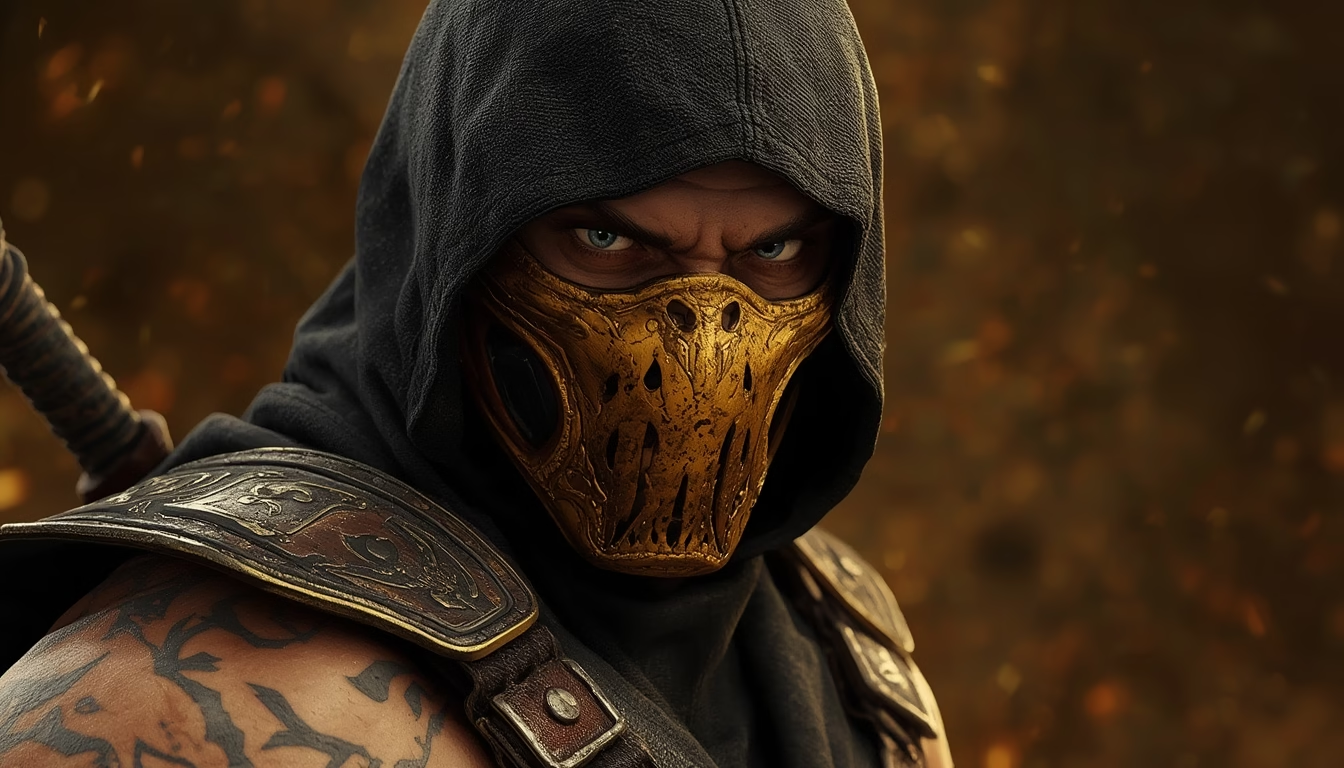
Few characters embody Mortal Kombat’s ethos like Scorpion. Born as Hanzo Hasashi, a Shirai Ryu ninja betrayed and murdered by his rival Sub‑Zero, he returns from the Netherrealm as a vengeful specter. His signature move, “Get over here!”—a chain‑spear that drags opponents into his fiery grasp—has become synonymous with the franchise. Scorpion’s tragic backstory, relentless pursuit of justice (or vengeance), and iconic yellow ninja garb make him a fan favorite and a central figure in every major storyline.
Sub‑Zero – The Icy Avenger
Sub‑Zero’s lineage is a tale of redemption. The original Sub‑Zero, Bi‑Han, was killed by Scorpion, prompting his younger brother Kuai Liang to assume the mantle. Armed with cryogenic powers, Sub‑Zero can freeze opponents, create ice clones, and wield a deadly ice sword. His evolution from a cold‑blooded assassin to a heroic protector of Earthrealm adds emotional depth to his rivalry with Scorpion.
Raiden – The Thunder God
Raiden, the eternal protector of Earthrealm, serves as both mentor and combatant. As the god of thunder, he commands lightning, teleports across battlefields, and offers guidance to fighters like Liu Kang. Raiden’s stoic demeanor and willingness to sacrifice for the greater good make him a moral compass within the chaotic Kombat universe.
Liu Kang – The Champion of Earthrealm
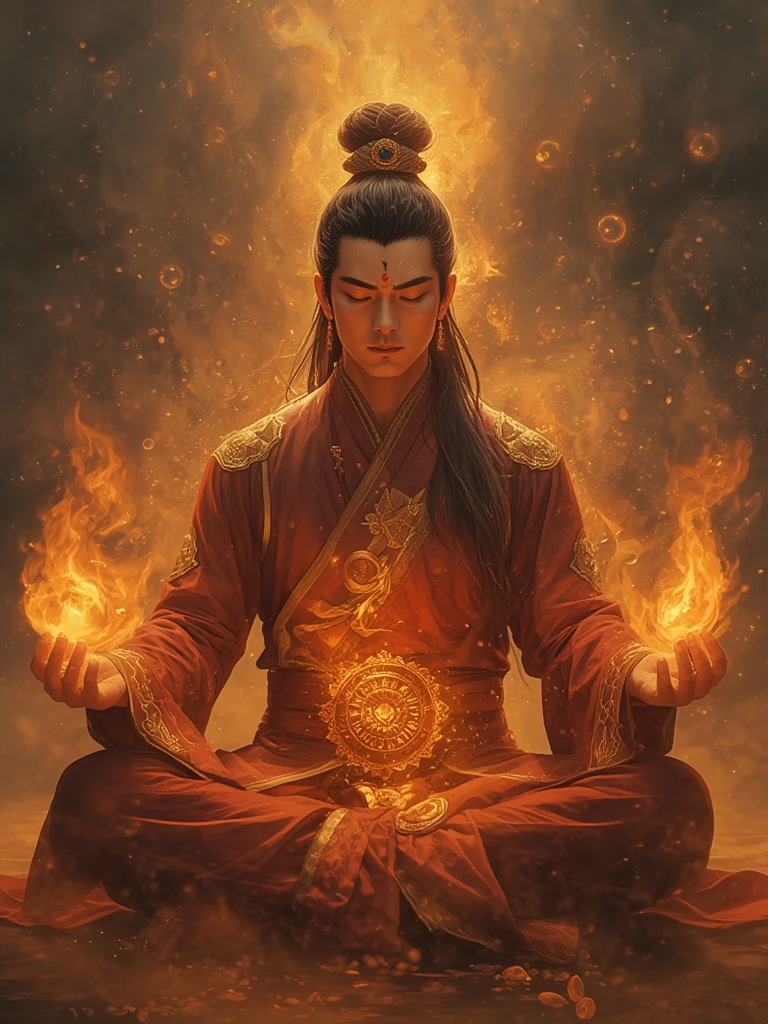
Liu Kang, a Shaolin monk turned champion, is the franchise’s quintessential hero. With his blazing kicks, fireball attacks, and unwavering dedication to protecting Earthrealm, Liu Kang has repeatedly risen to claim the title of Mortal Kombat champion. His journey—from a youthful martial artist to a god‑like figure in later games—mirrors the series’ own growth.
The Latest Movie: Plot at a Glance
The 2021 Mortal Kombat film opens with a high‑stakes tournament hosted by the sorcerer Shang Tsung, who seeks to merge Earthrealm with the Outworld. Our story follows a diverse group of fighters: Scorpion, now a vengeful revenant seeking redemption; Sub‑Zero, determined to stop the cycle of bloodshed; Raiden, who returns to guide the new generation; and Liu Kang, a street‑wise fighter thrust into the role of Earthrealm’s defender.
As the tournament progresses, alliances shift. Scorpion discovers that his former clan, the Shirai Ryu, has been manipulated by Shang Tsung, prompting him to confront his own darkness. Sub‑Zero teams up with Liu Kang to protect a hidden portal that could seal the realms forever. The climax culminates in an epic showdown on the fiery cliffs of the Netherrealm, where Scorpion’s “Hellfire” move finally meets Sub‑Zero’s “Ice‑Storm” in a visually stunning clash of elements.
Action, Visuals, and Fight Choreography: A Critical Review
The film’s action sequences are its strongest asset. Director Simon McQuoid enlisted martial‑arts experts and stunt coordinators who meticulously studied the game’s move sets. The result? Fight scenes that feel both cinematic and authentically “Kombat‑like.” Scorpion’s spear throw, Sub‑Zero’s ice blast, and Liu Kang’s dragon kick are executed with precise timing, allowing fans to recognize the signature moves while enjoying fresh, dynamic camera work.
Visually, the movie blends gritty realism with stylized fantasy. The Netherrealm’s lava‑filled vistas, the icy chambers of Sub‑Zero’s realm, and the neon‑glow of Shang Tsung’s arena are rendered with high‑definition CGI that respects the game’s aesthetic without descending into cartoonish excess. The color palette—fiery reds for Scorpion, icy blues for Sub‑Zero—reinforces each character’s elemental identity.
Choreography shines especially in the final battle. The choreography balances hand‑to‑hand combat with supernatural abilities, creating a rhythm that mirrors the game’s combo system. The use of slow‑motion during critical “Fatality” moments gives the audience a visceral sense of impact, while the sound design—crackling fire, shattering ice—enhances immersion.
Regarding faithfulness to the games, the film scores high marks. Iconic catch‑phrases (“Finish him!”), classic Fatalities, and the tournament structure are all present. However, the narrative takes creative liberties—most notably the deeper exploration of Scorpion’s redemption arc and the introduction of new characters like the cyber‑enhanced Kano. These additions broaden the story without alienating purists.
Fan Reactions and Cultural Impact
Since its release, the movie has sparked lively discussions across forums, Reddit threads, and social media platforms. Longtime fans praised the respectful treatment of beloved characters, especially Scorpion’s nuanced portrayal. Newer audiences appreciated the accessible storyline that didn’t require extensive gaming knowledge.
Critics, meanwhile, highlighted the film’s ability to balance nostalgia with fresh storytelling. The “Scorpion vs. Sub‑Zero” duel, in particular, became a viral moment, spawning countless memes, reaction videos, and fan‑made edits. The franchise’s influence extends beyond cinema; it continues to inspire fashion (think Scorpion‑themed streetwear), music (remixes of the iconic theme), and even esports, where Mortal Kombat tournaments draw thousands of viewers.
The Future of Mortal Kombat
Looking ahead, the franchise shows no signs of slowing down. With a sequel already green‑lit, fans can anticipate deeper dives into the realms—perhaps exploring the mystic origins of Raiden or the tragic backstory of the new cyber‑warrior, Kano. The upcoming games promise expanded rosters, refined mechanics, and cross‑platform play, ensuring the brand remains at the forefront of competitive gaming.
On the cinematic front, speculation abounds about potential spin‑offs focusing on individual characters. A Scorpion‑centered film could explore his journey from the Netherrealm back to Earthrealm, while a Sub‑Zero prequel might reveal the hidden history of the Lin Kuei clan. Whatever direction the creators choose, the core elements—high‑octane combat, elemental powers, and moral conflict—will continue to drive the narrative.
Join the Conversation
Now it’s your turn! Which Mortal Kombat moment still gives you chills? Was it Scorpion’s fiery comeback, Sub‑Zero’s ice‑shattered finish, or Liu Kang’s triumphant roar? Share your favorite scenes in the comments below, and let’s keep the Kombat spirit alive. Don’t forget to subscribe for the latest updates on upcoming movies, game releases, and exclusive behind‑the‑scenes content. The arena awaits—see you there!