
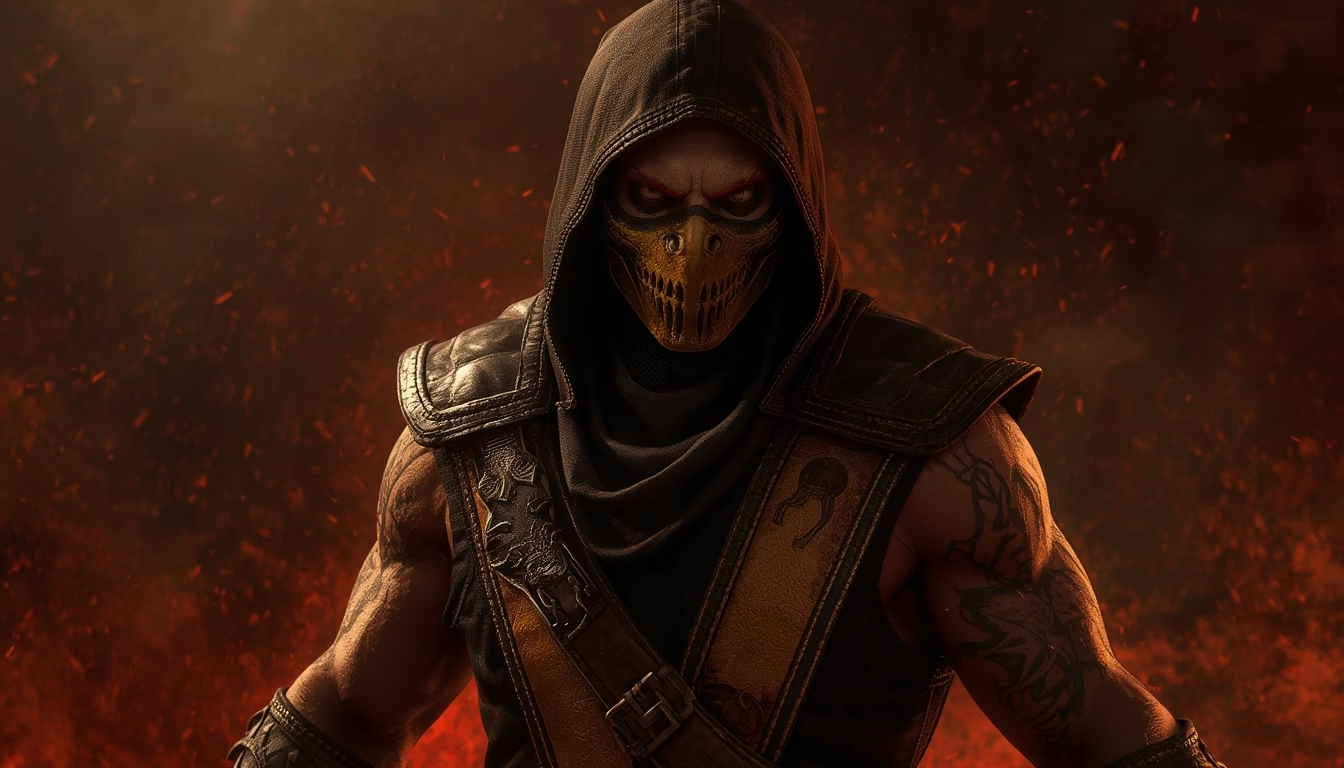
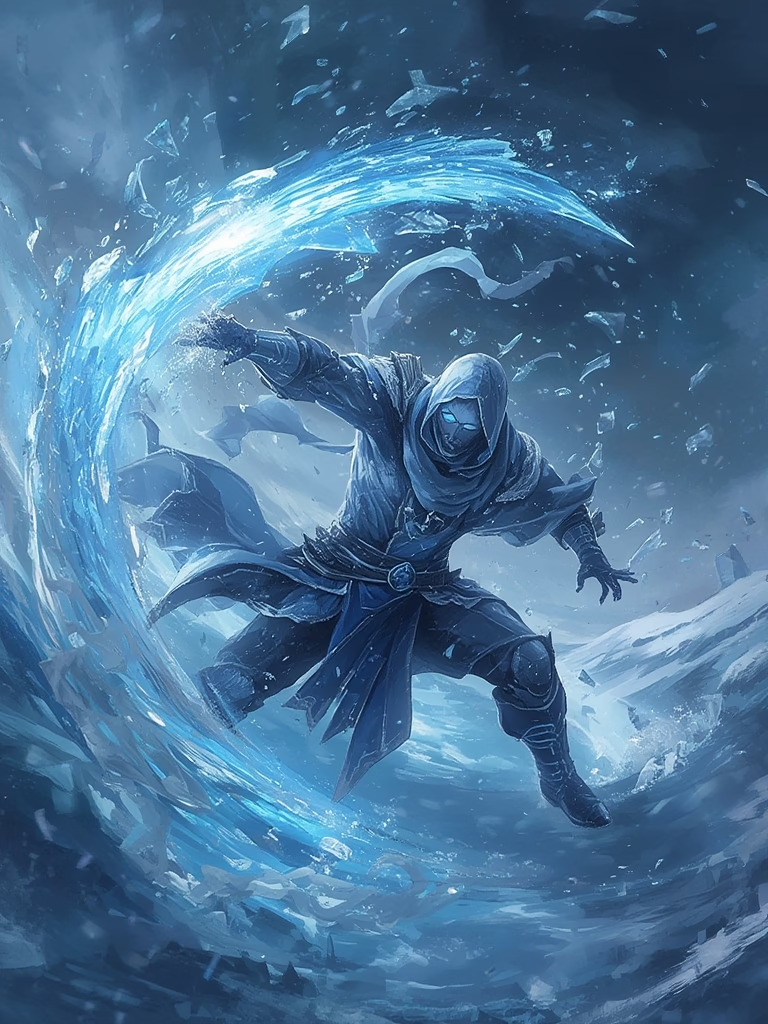
Welcome, Kombat fans! If you’ve ever wondered how a classic arcade brawler turned into a global pop‑culture phenomenon, you’re in the right place. From pixelated blood‑splatter to blockbuster cinema, the Mortal Kombat universe has evolved into a multi‑dimensional saga that still packs a punch. Let’s dive into the story behind the games, the movies, the iconic fighters, and what the future might hold for this legendary franchise.
From Arcade Cabinets to Global Gaming Icon
The journey began in 1992 when Midway Games released the original Mortal Kombat arcade machine. With its groundbreaking digitized graphics, over‑the‑top fatalities, and a roster of unforgettable characters, the game quickly became a cultural touchstone. Players were drawn to the simple yet deep combat system: a blend of strategic combos, special moves, and the infamous “Finish Him!” moments that turned every match into a mini‑spectacle.
What set the series apart was its willingness to push boundaries. The controversy over graphic violence sparked congressional hearings, but it also cemented the brand’s rebellious edge. Over the years, sequels like Mortal Kombat II, III, and the 2011 reboot expanded the lore, introduced new realms, and refined the fighting mechanics, keeping both casual gamers and competitive players hooked.
Transitioning to the Silver Screen
When the first Mortal Kombat film hit theaters in 1995, fans were skeptical—could a game known for its fast‑paced fights translate into a coherent movie? Director Paul W.S. Anderson proved otherwise. The film captured the gritty aesthetic of the games, delivering iconic moments like Scorpion’s “Get over here!” spear and Sub‑Zero’s ice‑shatter finish. Though the plot was simple—a tournament to save Earth from the Outworld—the movie’s visual flair and faithful character portrayals earned it a cult following.
The sequel, Mortal Kombat: Annihilation (1997), struggled with budget constraints and uneven storytelling, but it still contributed memorable set pieces and expanded the universe’s mythology. After a long hiatus, the franchise resurfaced in 2021 with a fresh reboot that aimed to blend modern CGI with the gritty, practical effects that fans love.
Key Characters Who Define the Kombat Universe
Scorpion (Hanzo Hasashi)
Scorpion is the burning soul of revenge. After his clan is massacred, he returns from the Netherrealm with a flaming spear, shouting “Get over here!” His rivalry with Sub‑Zero is the heart of the series, and his tragic backstory adds depth to his relentless fury.
Sub‑Zero (Kuai Liang)
Originally the younger brother of the original Sub‑Zero, Kuai Liang carries the mantle of the Lin Kuei clan. His ice‑based powers—freezing opponents and creating deadly weapons—contrast perfectly with Scorpion’s fire, making their clashes a fan favorite.
Raiden
The thunder god and protector of Earthrealm, Raiden serves as the wise mentor guiding the heroes. His ability to manipulate electricity and teleport, combined with his stoic demeanor, makes him the moral compass of the tournament.
Liu Kang
Often dubbed the “Chosen One,” Liu Kang is the heroic monk who embodies the spirit of martial arts. His fiery kicks, dragon fire, and unwavering dedication to defending Earthrealm have made him a central figure across games and movies.
Plot Overview of the Latest Film (2021)
The 2021 reboot reimagines the classic tournament with a darker, more grounded tone. The story follows a group of Earthrealm fighters—Liu Kang, Kung Lao, and newcomer Cole Young—who are recruited by Raiden to stop the sorcerer Shang Tsung from opening a portal to Outworld. Along the way, we see the origins of Scorpion’s vengeance and Sub‑Zero’s internal conflict as he grapples with his clan’s betrayal.
The film balances multiple arcs: the personal vendettas of Scorpion and Sub‑Zero, the political intrigue of the Lin Kuei, and the looming threat of the Elder Gods. By the climax, the heroes confront Shang Tsung in a high‑stakes showdown that blends supernatural powers with brutal hand‑to‑hand combat, culminating in a cliffhanger that hints at a larger war to come.
Action, Visuals, and Fight Choreography: A Critical Review
Visually, the movie excels in marrying practical effects with modern CGI. The iconic fatalities—like Scorpion’s spear and Sub‑Zero’s ice blast—are rendered with a tactile realism that feels true to the games. The use of practical blood rigs and prosthetics adds a gritty texture, while the CGI enhances the supernatural abilities without overwhelming the fight scenes.
The choreography deserves a standing ovation. Fight director Jeff Imada, a veteran of martial arts cinema, crafted sequences that feel both cinematic and faithful to the source material. Each character’s signature moves are highlighted: Liu Kang’s flying kicks, Raiden’s lightning strikes, and Scorpion’s spear thrusts are executed with precision and flair. The camera work—quick cuts interspersed with slow‑motion moments—captures the intensity without sacrificing clarity, allowing viewers to appreciate the complexity of each combo.
In terms of faithfulness, the film hits most of the high notes that fans cherish. The tournament structure, the mystical realms, and the moral stakes align with the games’ lore. However, some purists might gripe about creative liberties—such as the introduction of new characters like Cole Young—but these additions serve to broaden the narrative and set up future installments.
Fan Reactions and Cultural Impact
Social media erupted after the trailer dropped, with fans dissecting every frame for Easter eggs. The hashtag #MortalKombatMovie trended across Twitter and TikTok, spawning countless reaction videos, cosplay showcases, and fan‑made memes. While some longtime fans praised the respectful nods to classic moments, others expressed disappointment over certain plot choices, sparking lively debates in forums like Reddit’s r/MortalKombat.
Beyond the screen, the franchise continues to influence pop culture. From the iconic “Finish Him!” phrase appearing in TV shows to the series’ impact on esports—where Mortal Kombat remains a staple in fighting game tournaments—the brand’s reach is undeniable. The recent movie has reignited interest in the games, leading to a surge in sales for the latest console releases and a spike in streaming numbers for classic titles on platforms like Nintendo Switch Online.
What’s Next for the Mortal Kombat Franchise?
Looking ahead, the future looks fiery. The cliffhanger ending of the 2021 film sets the stage for a sequel that could explore the Outworld’s sprawling landscapes and introduce fan‑favorite villains like Shao Kahn and Kitana. In the gaming world, the upcoming Mortal Kombat 1 reboot promises a refreshed timeline, new character designs, and deeper storytelling, which could dovetail nicely with the cinematic universe.
There’s also talk of expanding the franchise into streaming series—a format that would allow for deeper character development and exploration of the multiverse’s lore. Imagine a limited series focusing on the origins of the Elder Gods or a spin‑off following the rise of the Lin Kuei clan. The possibilities are endless, and the fanbase is eager for more content that respects the franchise’s roots while pushing creative boundaries.
Join the Conversation
Now it’s your turn! What’s your favorite Mortal Kombat moment—whether it’s a jaw‑dropping fatality, a nostalgic game memory, or a scene from the latest movie that left you cheering? Drop your thoughts in the comments below, share the post with fellow Kombat enthusiasts, and let’s keep the conversation alive. The universe is ever‑expanding, and every fan’s voice adds to its legacy.