
When you hear the name “Sub‑Zero,” you probably picture a frosty warrior gliding across a battlefield, his icy powers leaving a trail of shattered enemies. That iconic image is just one piece of the larger Mortal Kombat universe—a franchise that has evolved from a groundbreaking arcade game into a multi‑media phenomenon, complete with blockbuster movies, comic books, and a thriving esports scene. In this post we’ll dive deep into the origins of Mortal Kombat, trace its cinematic journey, spotlight its most beloved characters, dissect the latest film’s storyline and production values, and explore what fans are saying about the series today. Ready? Let’s get started.
From Arcade Cabinets to Global Phenomenon
The story begins in 1992, when Midway Games released the original Mortal Kombat arcade cabinet. Unlike other fighters of the era, it featured digitized actors, brutal “Fatalities,” and a dark, martial‑arts‑infused mythology. The game’s success was immediate—players were hooked on the visceral combat and the mysterious realm of Outworld. By the mid‑1990s, the franchise had expanded to consoles, handhelds, and even a line of action figures.
Key to the brand’s longevity has been its ability to adapt while staying true to its core DNA: high‑octane fighting, a rich lore, and unforgettable characters. Each new installment introduced fresh mechanics (like the “Kombat Kodes” and “Krypt”) and deeper story arcs, keeping both casual players and hardcore fans engaged.
The Leap to the Silver Screen
In 1995, Mortal Kombat made its first cinematic appearance. The low‑budget film captured the game’s iconic look—bright neon lights, over‑the‑top gore, and a soundtrack that pulsed like a fighting arena. While critics were harsh, fans appreciated the faithful recreation of the Fatalities and the inclusion of fan‑favorite fighters.
Fast forward to 2021, and the franchise returned with a modern reboot. This time, the filmmakers leveraged cutting‑edge visual effects, a star‑studded cast, and a more coherent narrative that finally gave depth to the characters we’ve loved for decades. The result? A box‑office hit that sparked renewed interest in the games and set the stage for future installments.
Iconic Characters That Define the Franchise
Scorpion – The Vengeful Specter
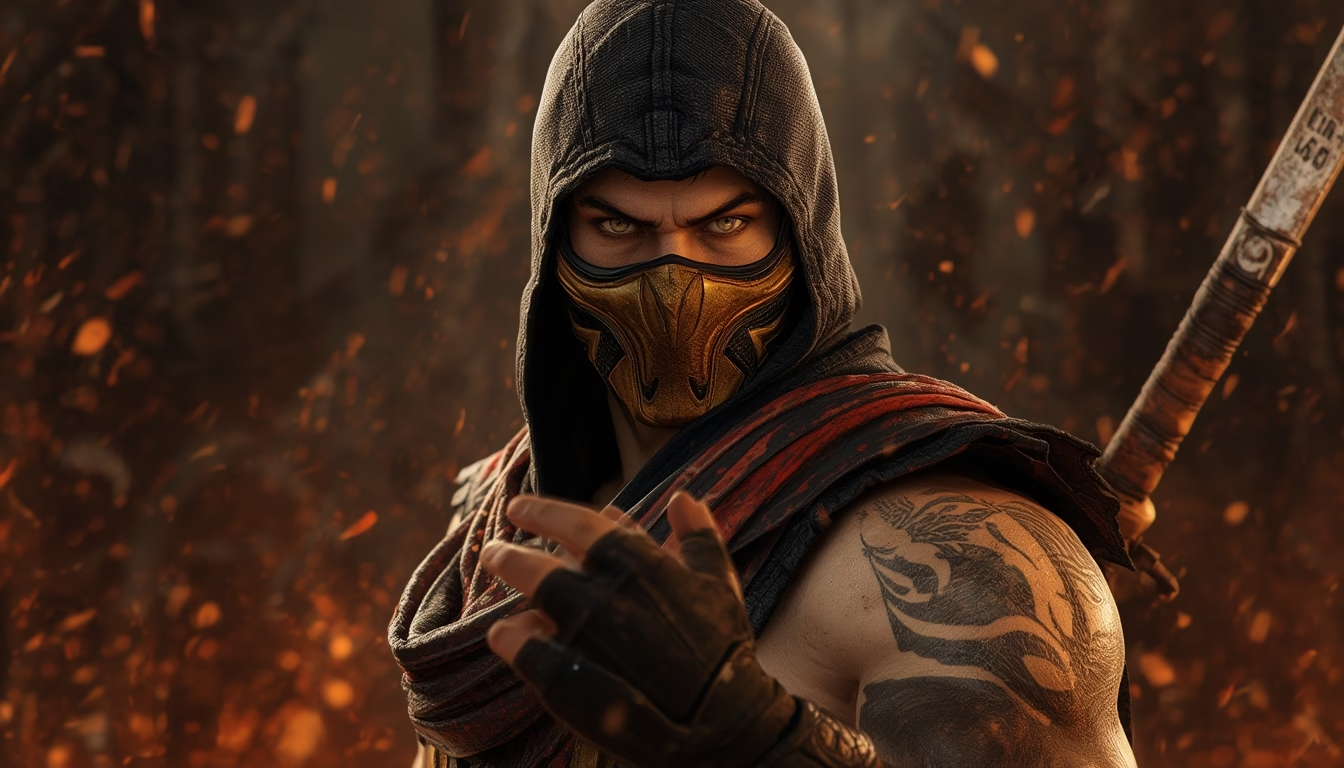
Scorpion, aka Hanzo Hasashi, is the embodiment of revenge. After his clan is massacred, he returns from the Netherrealm with a flaming skull and a signature spear (“Get over here!”). His rivalry with Sub‑Zero is the emotional core of the series, and his fiery Fatalities have become cultural shorthand for the franchise’s over‑the‑top style.
Sub‑Zero – The Ice‑Cold Assassin
There are actually two Sub‑Zero warriors: the original, Bi‑Han, and his younger brother, Kuai Liang, who took up the mantle after the first’s death. Both wield cryomancy—freezing opponents, creating ice clones, and summoning blizzards. Sub‑Zero’s signature move, the “Ice Ball,” is instantly recognizable, and his blue armor has become a staple of cosplay at conventions worldwide.
Raiden – The Thunder God
As the protector of Earthrealm, Raiden serves as both mentor and combatant. His electric attacks and ability to teleport make him a versatile fighter, while his stoic wisdom adds gravitas to the storyline. Raiden’s iconic “I have no choice” monologue in the 2021 film resonated with audiences, underscoring his role as the reluctant hero.
Liu Kang – The Dragon Warrior
Liu Kang is the franchise’s answer to the classic martial‑arts hero. A Shaolin monk with a fiery spirit, he combines high‑flying kicks with dragon fire. In the latest movie, Liu Kang’s journey from reluctant fighter to Earthrealm’s champion is a central thread, highlighting his evolution from a simple “good guy” to a complex, battle‑scarred leader.
The Latest Movie: Plot, Action, and Visuals
The 2021 Mortal Kombat reboot follows a group of Earthrealm warriors—Liu Kang, Kung Lao, and newcomer Cole Young—who are thrust into a deadly tournament against Outworld’s champions. Sub‑Zero (Kuai Liang) is recruited by Raiden after a brutal encounter with the sorcerer Shang Tsung, who seeks to merge the realms and claim ultimate power.
Key plot points include:
- Raiden’s desperate gamble to bring Sub‑Zero into the fight, showcasing his willingness to bend the rules of time and space.
- The revelation that Cole’s mother is a hidden member of the Lin Kuei, giving him a personal stake in Sub‑Zero’s storyline.
- A climactic showdown where Scorpion and Sub‑Zero finally settle their ancient feud, delivering a visually stunning “fire‑and‑ice” duel that fans have been waiting for since the early ’90s.
From a technical standpoint, the film excels in three areas:
Action & Fight Choreography
The fight scenes blend practical stunt work with CGI enhancements, creating a seamless experience that feels both grounded and fantastical. The choreography respects each character’s unique fighting style—Scorpion’s acrobatic spear throws, Sub‑Zero’s ice‑based combos, and Liu Kang’s martial‑arts kicks—while delivering high‑impact moments that mirror the game’s fast‑paced combat.
Visuals & Production Design
Outworld is rendered with a neon‑lit, cyber‑punk aesthetic that feels fresh yet familiar. The use of practical lighting on set, combined with digital post‑production, gives the arenas a tactile realism. Sub‑Zero’s ice effects, in particular, were praised for their attention to detail—crystalline shards that reflect the environment, making his powers feel tangible.
Faithfulness to the Games
Longtime fans will appreciate the numerous Easter eggs: the “Fatality” menu appears as a hidden UI element, classic stage names like “The Pit” and “Kombat Tomb” are recreated, and the iconic “Test Your Might” mini‑game is referenced in a bar scene. While the plot takes liberties—especially with Cole’s backstory—the core themes of honor, rivalry, and destiny remain intact.
Fan Reactions & Cultural Impact
Social media lit up after the film’s release, with hashtags like #SubZeroIce and #MortalKombatReboot trending worldwide. Fans praised the faithful character portrayals, especially the emotional depth given to Sub‑Zero’s internal conflict between his Lin Kuei duties and his newfound alliance with Earthrealm.
Critics, however, were divided. Some argued the film leaned too heavily on nostalgia, while others felt the narrative was surprisingly nuanced for a franchise known for its “just fight” approach. Regardless, the movie reignited interest in the video games, leading to a 27% spike in sales of the latest Mortal Kombat 11 DLC within the first week of release.
Beyond the screen, Mortal Kombat’s influence can be seen in fashion (ice‑blue jackets inspired by Sub‑Zero), music (remixes of the classic “Techno Syndrome” track), and even competitive esports, where the franchise remains a staple at major tournaments like EVO.
What’s Next for Mortal Kombat?
Looking ahead, the franchise shows no signs of slowing down. Upcoming projects include:
- A sequel film already green‑lit, promising to explore the origins of the Lin Kuei and delve deeper into Sub‑Zero’s lineage.
- A Netflix animated series that will expand the lore of Outworld’s realms, giving fans a chance to see characters like Kitana and Shao Kahn in greater detail.
- New game expansions focusing on “Ice‑Age” story arcs, where Sub‑Zero’s powers evolve to manipulate weather on a planetary scale.
These developments suggest a strategic push to blend narrative depth with the franchise’s signature high‑octane action, ensuring that both veteran fans and newcomers have fresh entry points into the Mortal Kombat universe.
Join the Conversation
Now that you’ve explored the icy legacy of Sub‑Zero, the fiery rivalry with Scorpion, and the cinematic triumphs of the latest movie, it’s your turn to weigh in. What’s your favorite Mortal Kombat moment? Is it a classic Fatality, a jaw‑dropping fight scene, or a hidden Easter egg that only true fans notice? Share your memories in the comments below, and let’s keep the conversation blazing—just like a perfect fire‑and‑ice showdown.