
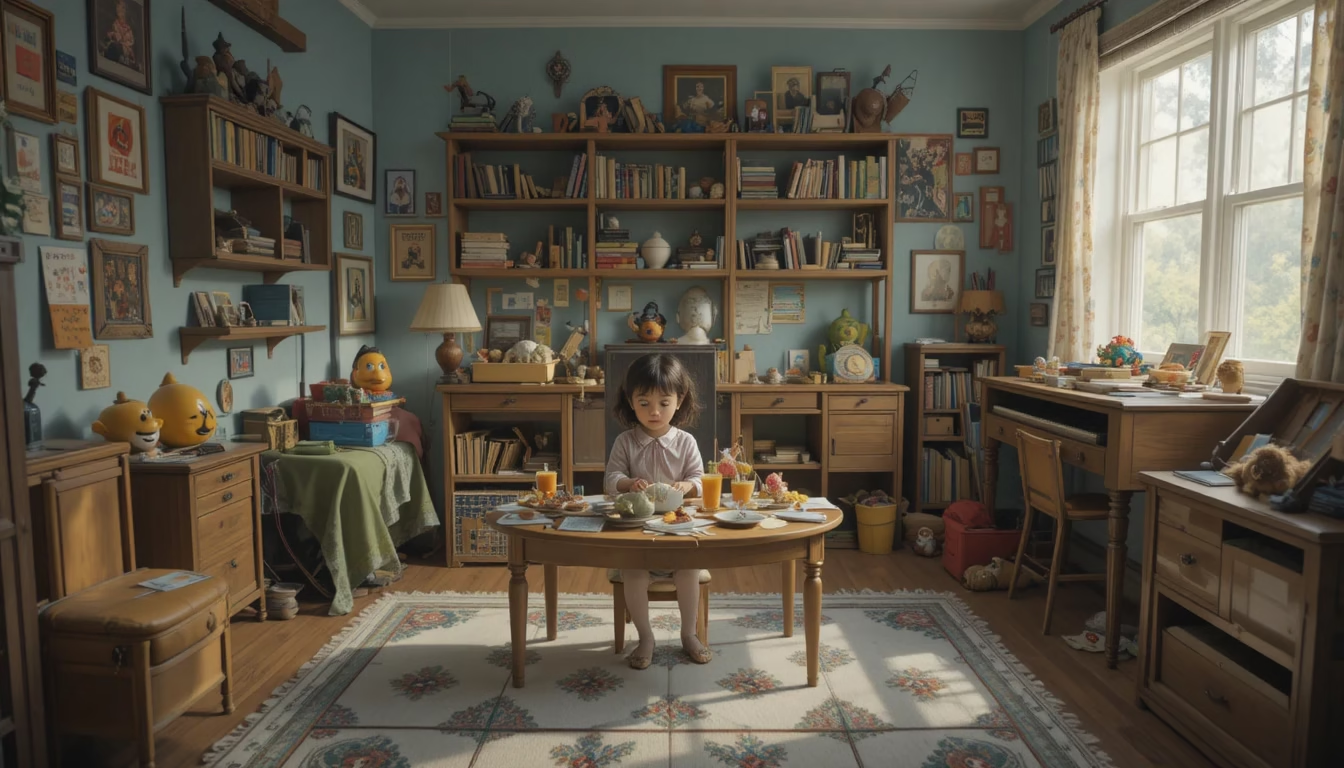
The Conditions of An Analog Universe
Before memory, there was physics. Before culture, there was constraint. The childhood of the 1970s was forged not merely by trends, but by the fundamental material and temporal limitations of the era. Information traveled at the speed of a thrown newspaper. Communication required a fixed location and a copper wire. Entertainment was bound to specific times and heavy, immobile objects. This was not a deprivation, but a defining framework. Within these boundaries, an entire civilization of childhood flourished—rich, complex, and self-governing. This document aims to be its atlas.
BOOK ONE: THE SOCIAL ARCHITECTURE OF FREEDOM
Chapter 1: The Unwritten Constitution of the Neighborhood
The neighborhood was a sovereign state with its own laws, geography, and hierarchies. Parental jurisdiction ended at the property line; beyond that, the kid-led commonwealth began.
Article I: The Territorial Framework
- The Yard: Domestic space. For younger children, the realm of plastic wading pools, Tonka trucks in dirt piles, and games of Mother, May I?
- The Sidewalk/Street: The primary thoroughfare for wheeled transport (bikes, skateboards, Big Wheels). This was public space where games spilled over and negotiations with neighboring kids occurred.
- The “Vacant Lot”: The frontier. A patch of ignored earth filled with weeds, broken glass, and infinite potential. It was a battlefield, a construction site, a desert island.
- The “Creek” or “Woods”: The wilderness. These areas represented true adventure, requiring expeditions and carrying the faint whiff of real danger (getting lost, encountering animals).
- The Commercial Hub: The 7-Eleven, the local corner store, the drugstore with its comic book rack. This was the economic center, accessible once one had mastered the bicycle.
Article II: The Chronometric Code
Time was not told by digits, but by environmental cues and broadcast schedules.
- The Solar Clock: Your day was framed by light. Home for lunch when the sun was high. Home for dinner as shadows lengthened.
- The Streetlight Statute: The universal, non-negotiable curfew. The moment those orange sodium-vapor lamps buzzed to life, a diaspora began. Its power was absolute.
- The Broadcast Schedule: Time was segmented by TV programming. “It’s 4:30, Gilligan’s Island is on.” “Saturday morning starts at 7 AM with Super Friends.”
Article III: The Systems of Governance
- Rule-Making: Games were democratic. Rules for kickball, tag, or makeshift obstacle courses were debated and agreed upon collectively. “Ghosts in the Graveyard” had local amendments.
- Conflict Resolution: Disputes were settled peer-to-peer. The concepts of “fairness,” “do-overs,” and “counting to ten-Mississippi” were the judicial standards. Adult intervention was seen as a failure, rendering you a “tattletale.”
- Hierarchy: Status was earned, not given. It was conferred by: Skill (the best skateboarder), Bravery (who would jump the highest ramp), Resource Ownership (who had the best backyard or pool), or Narrative Power (the best storyteller or idea-generator).
Chapter 2: The Anthropology of Play: A Taxonomy
Play was the central work of childhood, a complex culture with deep traditions.
Subsection A: Locomotive Play
- The Bicycle: More than a toy, it was an identity. The Schwinn Sting-Ray (ape hanger handles, banana seat, sissy bar) was the cruiser. The Raleigh Chopper (gearshift, giant back tire) was the hot rod. Elaborate rituals surrounded them: applying spoke beads, clipping baseball cards to the frame, polishing chrome. “Bike gangs” would roam territories.
- Skateboarding’s Primitive Era: Pre-polyurethane wheels. These were clay or metal wheels on a wooden board, often homemade, that provided a deafening roar and zero traction. A death trap that taught physics through pain.
- The Big Wheel: The low-rider of plastic trikes. Its wide, plastic front wheel allowed for epic, skidding “spin-outs,” wearing down the wheel to a smooth nub.
Subsection B: Constructive Play
- Fort Building: An exercise in architecture and scavenging. Materials included: discarded lumber, old blankets, refrigerator boxes (the holy grail), hay bales, and branches. These were temporal sovereign nations with strict membership rules.
- Model Kits: Patience lessons in polystyrene. Gluing together Revell models of WWII planes, Monogram cars, or the Millennium Falcon, then painting them with Testors enamels, breathing in the potent, dizzying fumes.
- Erector Sets & Lincoln Logs: Primitive engineering. The satisfying click of steel beams bolted together, the stacking of notched wooden logs to create cabins.
Subsection C: Organized Game Play
- Street Sports: Kickball (the red rubber ball), Wiffle Ball (the dancing, perforated sphere), Street Hockey (with a Mylec ball and nets made from scrap wood). Bases were manhole covers, lawns, or parked cars.
- Tag Variants: Freeze Tag, TV Tag (saved by shouting a TV show title), Flashlight Tag (the nocturnal, epic version).
- The Chanting Games: Jump Rope rhymes (“Cinderella, dressed in yella…”), Hand-Clap Games (“Miss Mary Mack, Mack, Mack”), often passed down with cryptic, folkloric lyrics.
BOOK TWO: THE MEDIA ECOSYSTEM – A SCHEDULED REALITY
Chapter 3: The Television Dial: A Tripartite Civilization
TV was not a stream; it was a geography you visited at appointed times.
The Saturday Morning Nation (7 AM – 12 PM):
This was a child’s exclusive cultural preserve. The lineup was a carefully paced journey:
- 7:00 AM: Gentle start with Schoolhouse Rock! Interstitial learning that felt like a reward.
- 8:00 AM: Superhero ascendancy. Super Friends (with its Hall of Justice), Spider-Man and His Amazing Friends, The New Adventures of Batman.
- 9:00 AM: Comedy and Mystery. Scooby-Doo, The Bugs Bunny/Road Runner Hour, Josie and the Pussycats.
- 10:00 AM: Adventure and Fantasy. Land of the Lost (with its Sleestaks), Star Trek: The Animated Series, The Jackson 5ive.
- The Commercials: An integral part of the experience. Ads for Wham-O Air Blaster, Johnny Lightning cars, Sea-Monkeys, and sugary cereals (Quisp, Count Chocula) were mini-narratives as compelling as the shows.
The After-School Archipelago (3:30 PM – 5:00 PM):
Syndicated comfort food. The Brady Bunch, Gilligan’s Island, I Dream of Jeannie, Happy Days. These shows presented a sanitized, moral universe where problems were neat and solvable.
The Primetime Continent (8:00 PM – 11:00 PM):
Family gathering territory. Often watched with parents, this was where you absorbed adult culture through sitcoms (All in the Family, MAS*H, Three’s Company), variety shows (Sonny & Cher, The Carol Burnett Show), and event television like The Wonderful World of Disney on Sundays or the annual airing of The Wizard of Oz.
The “Very Special Episode” Phenomenon: Sitcoms and After-School Specials would tackle social issues—drugs, divorce, racism, drunk driving—with a heavy-handed, moralistic tone. They were the era’s awkward, earnest attempt at social pedagogy.
Chapter 4: The Sonic Landscape: From Cracking Vinyl to AM Static
The AM Radio Frontier: The transistor radio was a lifeline. You hunted for clear signals through a storm of static. Recording a song off the radio onto a cassette was a high-stakes maneuver, requiring you to hit “record” the millisecond the DJ stopped talking and to remain preternaturally silent. Top 40 countdowns with Casey Kasem were weekly rituals, blending pop music with his poignant long-distance dedications.
The LP as Sacred Object: An album was a physical, artistic totality. You engaged with the gatefold artwork (the dystopian cityscape of Kansas’s Leftoverture, the surrealism of Pink Floyd’s Wish You Were Here), read the liner notes, and followed the lyric sheet. The ritual—cleaning the vinyl, lowering the needle, flipping the record—demanded a focus antithetical to today’s shuffling.
The 8-Track Tape (A Brief, Flawed Interlude): The car-based format. Infamous for its “click” and pause mid-song as it changed tracks, and its tendency to “eat” tapes, spewing miles of brown magnetic ribbon.
The Rise of the Mixtape (Late 70s): With the advent of affordable cassette decks, the mixtape became the ultimate act of teenage curation and emotional expression. A carefully sequenced 90-minute tape was a love letter, a friendship manifesto, or a personal statement.
BOOK THREE: THE MATERIAL CULTURE – A TACTILE WORLD
Chapter 5: The Toy Chest as a Cultural Artifact
Toys were not just diversions; they were artifacts of the era’s manufacturing, marketing, and imagination.
The Action Figure Epoch:
- GI Joe (The 12″ Adventure Team): Not a soldier, but an “adventurer” with “kung-fu grip” and “eagle eyes.” He had scuba gear, a helicopter, and a fuzzy beard.
- The Star Wars Revolution (Post-1977): This changed everything. Figures were smaller (3.75″), cheaper, and spawned an entire universe of vehicles and playsets. The Millennium Falcon playset was the ultimate status symbol.
- Mego World’s Greatest Super Heroes: The definitive 8″ superhero line. Their cloth costumes and detailed likenesses defined Batman, Superman, and Spider-Man for a generation.
The Doll Domain:
- Barbie’s Glamorous Expansion: Malibu Barbie, Superstar Barbie, and an ever-growing roster of friends, cars, and the iconic Dreamhouse.
- The Crushable, Adorable Rival: The Strawberry Shortcake franchise, with its scented figures and lore centered on “Strawberryland.”
Electro-Mechanical Wonders:
- Simon: The memory game that sounded like a disco from another planet. Its four colored panels and electronic chirps were hypnotic.
- The Atari 2600 (1977): The dawn of the home console. The wood-grain veneer, the joystick with a single red button. Combat, Adventure, Pitfall!—these blocky, beeping worlds were gateways to digital frontiers.
Chapter 6: Fashion: The Fabric of Identity
Clothing was durable, often uncomfortable, and unapologetically bold.
The Boy’s Uniform:
- Bottoms: Corduroy pants (with their distinctive swish-swish), Toughskin jeans from Sears (guaranteed for life, with iron-on patches for the knees), OP shorts (for the preppy set).
- Tops: T-shirts with iron-on decals (often of rock bands or monsters), polyester striped shirts with massive collars, turtlenecks (often under a V-neck sweater).
- Footwear: Converse Chuck Taylors, Puma Clydes, Earth Shoes (with their negative heel), and in winter, Sorel boots.
The Girl’s Landscape:
- Dresses & Tops: The Gunne Sax prairie dress (for special occasions), halter tops, tube tops, and smocked sundresses.
- Bottoms: Bell-bottom jeans, gauchos, polyester pantsuits.
- Footwear: Candies sandals, platform shoes (adding inches of peril), roller skates with pom-poms on the laces.
Unisex Icons:
- The Terry Clash Short Set: Often in rainbow stripes.
- The Poncho: A fad of epic proportions.
- The Mood Ring & Puka Shell Necklace: Pseudo-mystical accessories.
- The Winter “Snowsuit”: A monolithic, puffy, one-piece garment that rendered the wearer essentially immobile and, if they fell over, helpless.
Chapter 7: The Gastronomy of an Unregulated Era
Food was brightly colored, highly processed, and marketed directly to kids with cartoonish zeal.
The Breakfast Doctrine: Cereal was less about nutrition and more about entertainment and collectibles. Franken Berry, Boo Berry, Cap’n Crunch, Lucky Charms. The prize in the box was critical. Drinking Tang (“the drink of astronauts”) or Yoo-hoo completed the meal.
The Lunchbox Lexicon: The metal lunchbox (featuring KISS, Star Wars, or Charlie’s Angels) contained a predictable inventory: a sandwich in wax paper, a Hostess product (Ding Dong, HoHo, Fruit Pie), a piece of fruit, and a thermos that usually contained Kool-Aid (and usually leaked).
Dinner Table Dynamics: The rise of convenience. Swanson TV Dinners (eaten on a TV tray in front of the set), Hamburger Helper, Shake ‘n Bake, and the eternal casserole (tuna, chicken, hamburger) bound by Campbell’s Cream of Mushroom Soup.
The Snack Food Pantheon:
- Sweet: Pop Rocks, Pixy Stix, Wax Lips/Bottles, Jolly Rancher Sticks.
- Savory: Space Food Sticks, Planters Cheez Balls (in the giant tin), Bugles (worn on fingertips).
- Frozen: The Dixie Cup (with the wooden spoon and joke on the lid), the It’s-It ice cream sandwich (regional treasure), the Push-Up.
BOOK FOUR: THE EXTERNAL WORLD – CULTURE AND CURRENT EVENTS
Chapter 8: The Events That Seeped Through
Childhood was not hermetically sealed. The decade’s tumult filtered in.
- The Bicentennial (1976): A year-long, red-white-and-blue pageant. A simplified patriotism expressed through parades, crafts, and a sense of being part of a 200-year-old story.
- The Energy Crisis & “The Odd/Even Rule”: A tangible lesson in geopolitics and scarcity. The sight of long lines at gas stations, the lowered thermostats, the talk of “OPEC.”
- The Hostage Crisis (1979): A 444-day national trauma played out on the nightly news, with yellow ribbons and a palpable sense of helplessness.
- The Rise of the Blockbuster & Spectacle: Star Wars was a cultural reset. Jaws created fear. Close Encounters inspired wonder. Movies became events that consumed all aspects of kid culture.
- The Cold War’s Shadow: “Duck and Cover” drills, the grim TV movie “The Day After,” the ever-present awareness of “The Russians” as a distant, ominous threat.
BOOK FIVE: THE PSYCHOLOGICAL LEGACY – THE MAKING OF A GENERATION
The 1970s childhood environment was a developmental crucible that forged a specific set of traits in what would become Generation X and the eldest Millennials.
- Resourcefulness & Autodidacticism: With no Google, you became your own reference library. You learned to fix things through trial and error, navigate with physical maps, and seek information from books or knowledgeable adults.
- Social Intelligence & Peer-Based Negotiation: You learned to read rooms, de-escalate conflicts, and build consensus. Social failure had immediate, face-to-face consequences.
- High Tolerance for Ambiguity and Boredom: Not every moment was filled with stimulus. Staring at the ceiling, watching clouds, or simply “hanging out” were accepted states. This boredom was the incubator for deep creativity and self-reflection.
- Intrinsic Motivation and Project Management: Play required initiation, planning, and execution. Building a fort or organizing a neighborhood game was a tiny startup venture.
- Latchkey Independence: For many, coming home to an empty house was the norm. This bred a pragmatic, watchful self-reliance and a capacity for solitude.
- A Media Literacy Forged Through Scarcity: You understood that media was a scheduled commodity. You learned patience (waiting for next week’s episode) and developed deep, repetitive engagement with the artifacts you had (watching a favorite movie dozens of times, listening to an album until the grooves wore out).
CODA: THE ECHO IN THE DIGITAL NOISE
The world that created the 1970s childhood is extinct. It was dismantled by the microprocessor, the internet, the smartphone, and a new culture of risk-aversion and structured scheduling. Yet, its legacy is not merely sentimental.
It persists as a cultural memory of a different developmental path. It is referenced in the stranger-things nostalgia, the vinyl revival, the maker movement, and the pervasive anxiety about screen time and “over-parenting.”
The 1970s child was the last native citizen of the physical, analog world. Their childhood was a unique and irreplicable experiment in low-tech, high-freedom development. To study it is to understand not just a bygone era, but a set of human competencies—patience, resourcefulness, social negotiation, imaginative deep-dive—that are becoming endangered in our optimized, connected age.
This archive stands as a record of that experiment: a testament to the muddy-kneed, streetlight-chasing, imagination-powered civilization of children that thrived in the spaces between appointments, in the static between stations, in the glorious, unmonitored freedom of a Saturday afternoon with nothing to do but everything that could be invented.