
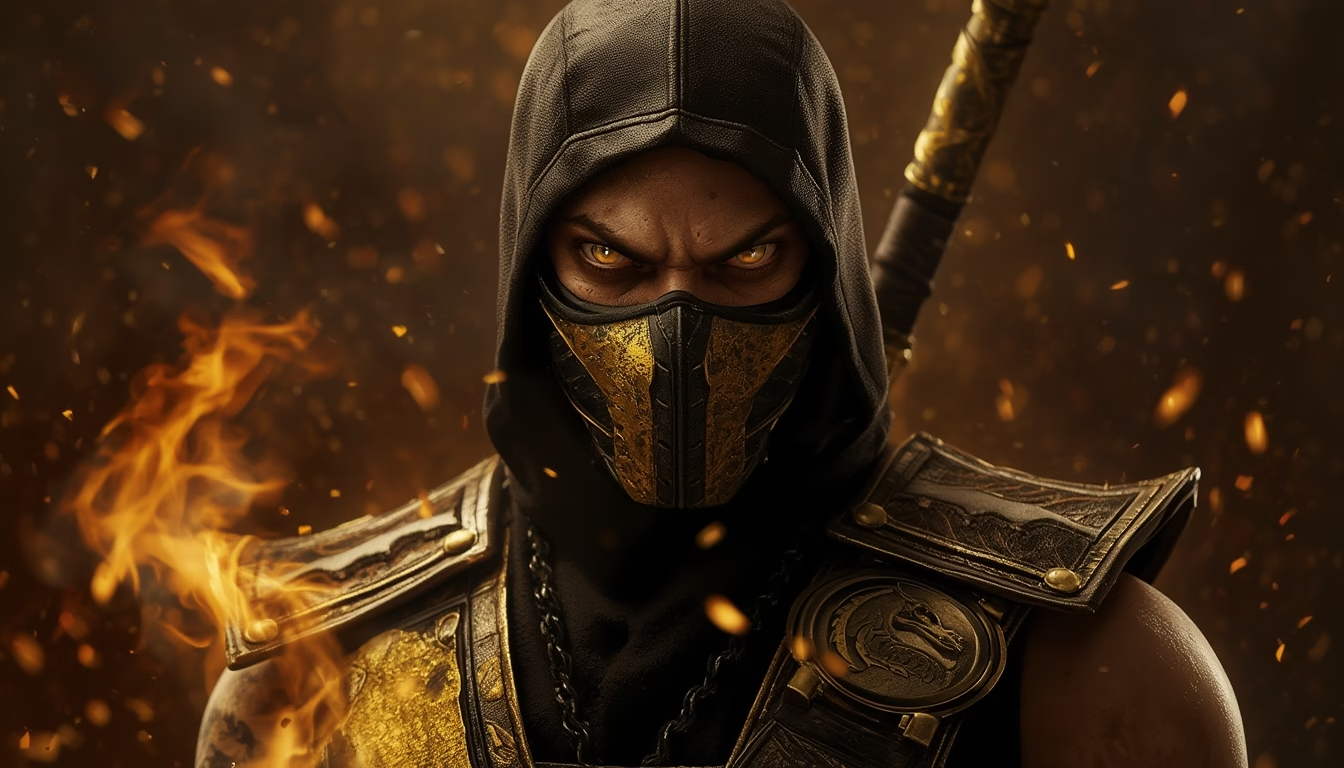

When the thunderous gong of a Mortal Kombat match echoes across a theater, fans instantly recognize the iconic “Finish Him!” that has defined a generation of gamers. The franchise’s leap from pixel‑perfect arcades to big‑screen spectacle has been a wild ride, and the newest Mortal Kombat adaptation movie brings the blood‑pumping action, unforgettable characters, and brutal lore to a whole new audience. Let’s dive into the origins of this legendary series, trace its cinematic evolution, meet the fighters who have become pop‑culture icons, and break down why the latest film is turning heads.
The Birth of Mortal Kombat
Created by Ed Boon and John Tobias, Mortal Kombat debuted in 1992 as an arcade fighting game that dared to push the boundaries of violence in gaming. Its signature “fatalities,” over‑the‑top special moves, and a roster of distinct fighters set it apart from rivals like Street Fighter. The game’s lore—an interdimensional tournament that decides the fate of Earthrealm—gave players a mythic backdrop that felt both ancient and futuristic.
From Arcade to Silver Screen
The first cinematic attempt arrived in 1995 with Mortal Kombat, a low‑budget film that leaned heavily on practical effects and campy dialogue. Though critics panned it, the movie cultivated a cult following thanks to its faithful recreation of classic fatalities and its earnest love for the source material.
Two decades later, the franchise resurfaced with Mortal Kombat (2021), a reboot that combined modern CGI with gritty realism. This version aimed to satisfy both die‑hard fans and newcomers by delivering a darker tone, tighter storytelling, and fight sequences that felt ripped straight from the games.
Iconic Characters Who Define the Franchise
Scorpion
“Get over here!”—the battle cry of Scorpion (Hanzo Hasashi) is instantly recognizable. A vengeful specter wielding a kunai attached to a rope, Scorpion’s tragic backstory—his family murdered by the Lin Kuei—makes him a sympathetic anti‑hero. In every adaptation, his fiery attacks and relentless pursuit of revenge drive the narrative forward.
Sub‑Zero
Sub‑Zero (originally Bi‑Han, later his brother Kuai‑Li) is the ice‑wielding ninja whose chilling powers contrast perfectly with Scorpion’s flames. Their rivalry, rooted in betrayal and redemption, provides the emotional core of many Mortal Kombat storylines.
Raiden
The Thunder God Raiden serves as both mentor and protector of Earthrealm. His ability to teleport, summon lightning, and manipulate time makes him a strategic powerhouse, while his moral compass keeps the tournament’s stakes grounded in a fight for humanity.
Liu Kang
Often hailed as the franchise’s hero, Liu Kang is a Shaolin monk turned champion. His fiery kicks, dragon fire, and unwavering dedication to protecting Earthrealm make him the natural leader of the Earthrealm warriors.
The Latest Adaptation: Plot Overview
The newest Mortal Kombat movie opens with a mysterious portal opening over a bustling city, unleashing a wave of Outworld soldiers. As the portal expands, Earth’s best fighters—Scorpion, Sub‑Zero, Raiden, Liu Kang, and newcomer Jade—are summoned to a secret underground arena.
Guided by Raiden’s cryptic warnings, the heroes learn that the tournament’s outcome will decide whether Earthrealm is consumed by Outworld’s tyrant, Shao Kahn. The film interweaves flashbacks that reveal Scorpion’s tragic past, Sub‑Zero’s struggle with his brother’s legacy, and Liu Kang’s training under the guidance of the Elder Gods.
Midway through the movie, alliances shift when the sorceress Shang Tsung manipulates the fighters, forcing them into brutal one‑on‑one battles that showcase each character’s signature moves. The climax erupts in a thunderous showdown atop a crumbling temple, where Liu Kang and Scorpion combine forces to deliver a final, cinematic fatality that seals Shao Kahn’s fate—at least for now.
Action, Visuals, and Fight Choreography
The film’s action sequences are its most compelling asset. Director Simon McQuoid (who helmed the 2021 reboot) enlisted veteran stunt coordinator Jesse Horne to craft fights that feel both authentic to the games and fresh for cinema. Each battle is meticulously storyboarded to highlight signature moves—Scorpion’s spear, Sub‑Zero’s ice slide, Liu Kang’s dragon fire—while integrating dynamic camera work that mimics the fast‑paced perspective of a player.
Visually, the movie balances gritty realism with stylized fantasy. The Outworld landscapes are rendered with high‑contrast lighting, giving the arenas a neon‑sick feel reminiscent of the game’s “Netherrealm” stages. Practical effects—like real pyrotechnics for Scorpion’s flames—are blended with CGI to keep the combat grounded yet spectacular.
One standout sequence is the “Temple of the Elements” duel, where Liu Kang and Sub‑Zero clash amid swirling elemental effects. The choreography seamlessly transitions from hand‑to‑hand combat to acrobatic flips, delivering a rhythm that feels like a live‑action version of a combo chain.
Staying True to the Game
Fans often judge adaptations by how faithfully they honor the source material, and this movie earns high marks. Classic fatalities—such as Scorpion’s “Toasty!” and Sub‑Zero’s “Spine Rip”—are recreated with painstaking detail, complete with the iconic announcer’s voice. Even the soundtrack nods to the original arcade beats, featuring a modern remix of the legendary “Mortal Kombat” theme.
Beyond the visual callbacks, the narrative respects the games’ mythology. The concept of realms, the Elder Gods, and the balance between order and chaos are woven into the plot without resorting to heavy exposition. Characters speak in the same terse, purposeful dialogue that fans recognize from the games, preserving the franchise’s distinct tone.
Fan Reactions and Cultural Impact
Social media lit up the moment the trailer dropped, with hashtags like #MortalKombatMovie trending across Twitter and TikTok. Longtime fans praised the film’s dedication to the “fatality” culture, while newcomers appreciated the accessible storyline that didn’t require deep gaming knowledge.
Critics have noted the movie’s role in re‑energizing the fighting‑game genre in mainstream media. By delivering a blockbuster that respects its roots, Mortal Kombat has solidified its place alongside other video‑game adaptations such as Detective Pikachu and Godzilla vs. Kong as a cultural touchstone that transcends gaming circles.
Cosplay conventions have already seen a surge in Scorpion and Sub‑Zero outfits, and streaming platforms report a spike in viewership for the original 1992 game and its sequels. The franchise’s influence extends beyond entertainment, inspiring fashion lines, graphic novels, and even a limited‑edition sneaker collaboration with a major sports brand.
What’s Next for Mortal Kombat?
With the latest film’s ending hinting at a possible resurgence of Shao Kahn, the door is wide open for sequels, spin‑offs, or even a TV series exploring the backstories of lesser‑known fighters like Kitana or Nightwolf. Rumors suggest that the studio is negotiating rights for an expanded “Mortal Kombat: Legacy” series, which could delve deeper into the lore of the Outworld and the Elder Gods.
On the gaming front, the franchise continues to evolve with new titles like Mortal Kombat 1, promising fresh characters, updated mechanics, and a storyline that could feed directly into future cinematic adaptations. The synergy between game releases and film productions creates a feedback loop that keeps the fanbase engaged and hungry for more.
Join the Conversation
Whether you’re a veteran of the arcade era or a first‑time viewer, Mortal Kombat’s blend of brutal combat, mythic storytelling, and unforgettable characters offers something for everyone. What’s your favorite Mortal Kombat moment—Scorpion’s fiery spear, Sub‑Zero’s ice‑cloned clone, or a jaw‑dropping fatality that left you speechless? Share your memories in the comments below, and let’s keep the conversation raging as fiercely as a Kombat arena showdown.
