
Since its first pixel‑perfect punch in 1992, Mortal Kombat has been more than just a fighting game—it’s a cultural phenomenon that has leapt from arcade cabinets to the silver screen, and into the living rooms of millions of fans worldwide. The franchise’s signature blend of brutal combat, iconic characters, and over‑the‑top storytelling has kept audiences coming back for more, and the latest movie proves that the magic is still very much alive. In this post we’ll explore the origins of Mortal Kombat, trace its evolution into film, dive deep into the fight choreography that makes the series a visual feast, and look at what the future might hold for this legendary universe.
From Arcade to Icon: The Birth of Mortal Kombat
The story begins in 1992 when Midway Games released the original Mortal Kombat arcade cabinet. Designed by Ed Boon and John Tobias, the game set itself apart with digitized actors, realistic blood, and a roster of unforgettable fighters. Characters like Scorpion, Sub‑Zero, Raiden, and Liu Kang quickly became household names, each with a distinct backstory and signature moves that fans could memorize and emulate.
What truly propelled the series forward was its emphasis on “fatalities”—gory finishing moves that turned a simple victory into a cinematic moment. These set‑pieces weren’t just about shock value; they introduced a storytelling layer that made each fight feel like a mini‑narrative, a concept that would later influence the franchise’s approach to film.
Transition to the Big Screen
The Early Attempts
Before the 2021 reboot, Mortal Kombat tried its hand at cinema twice. The 1995 Mortal Kombat movie, directed by Paul W. S. Anderson, leaned heavily on the game’s visual flair and delivered a surprisingly faithful adaptation for its time. While the special effects were dated by today’s standards, the film’s commitment to the source material—especially the iconic fatalities—won over many fans.
The sequel, Mortal Kombat: Annihilation (1997), attempted to expand the universe but suffered from a rushed production and uneven pacing. Although it introduced new characters and deeper lore, the lackluster fight choreography and over‑reliance on cheap CGI left audiences disappointed.
The 2021 Reboot
The most recent incarnation, directed by Simon McQuoid, finally married modern filmmaking technology with the franchise’s core DNA. By focusing on a tight, character‑driven storyline and leveraging cutting‑edge motion capture, the film delivers a fresh yet familiar experience that resonates with both longtime fans and newcomers.
Key Characters and Their Signature Moves
Scorpion – The Burning Specter
Scorpion (Hanzo Hasashi) remains the face of Mortal Kombat. His signature “Get Over Here!” spear and fiery “Hellfire” combos are choreographed with a blend of martial arts and theatrical pyrotechnics, creating a visceral sense of danger that translates perfectly to the screen.
Sub‑Zero – The Ice‑Cold Assassin
Sub‑Zero (Kuai Liang) offers a stark contrast with his ice‑based attacks. In the latest film, his frozen projectiles are rendered with slow‑motion precision, allowing the audience to appreciate the crisp, crystalline visual effects while the choreography emphasizes his disciplined, precise strikes.
Raiden – The Thunder God
Raiden’s electric powers are a visual treat. The film’s fight scenes use a combination of practical stunts and CGI to depict his lightning‑charged punches, making each encounter feel like a storm of energy that’s both awe‑inspiring and grounded in the character’s mythos.
Liu Kang – The Dragon Warrior
Liu Kang’s martial arts background shines through in his fluid, high‑kick combos and the iconic “Bicycle Kick.” The choreography here leans heavily on traditional kung fu techniques, giving his fights a rhythmic, almost dance‑like quality that balances the more brutal styles of his opponents.
The Latest Movie: Storyline and Fight Choreography
The 2021 Mortal Kombat reboot follows a group of Earthrealm warriors—Liu Kang, Kung Lao, and newcomer Cole Young—who are thrust into a deadly tournament orchestrated by the sorcerer Shang Tsung. The narrative weaves together classic lore (the battle between Earthrealm and Outworld) with fresh twists, such as Cole’s hidden lineage and the introduction of a new villain, the cyber‑enhanced Kotal Kahn.
What truly sets the film apart is its fight choreography. Director Simon McQuoid collaborated with veteran stunt coordinator Chad Stahelski (known for the John Wick series) to design combat sequences that feel both authentic and hyper‑stylized. Each fight is treated as a set piece, with:
- Dynamic camera work: Low‑angle shots emphasize the power behind each strike, while rapid cuts highlight the speed of combos.
- Practical effects: Real blood packs and pyrotechnics give the fatalities a gritty, tactile feel that CGI alone can’t replicate.
- Motion capture integration: Actors performed their moves in full costume, allowing the CGI to enhance—rather than replace—the physical performance.
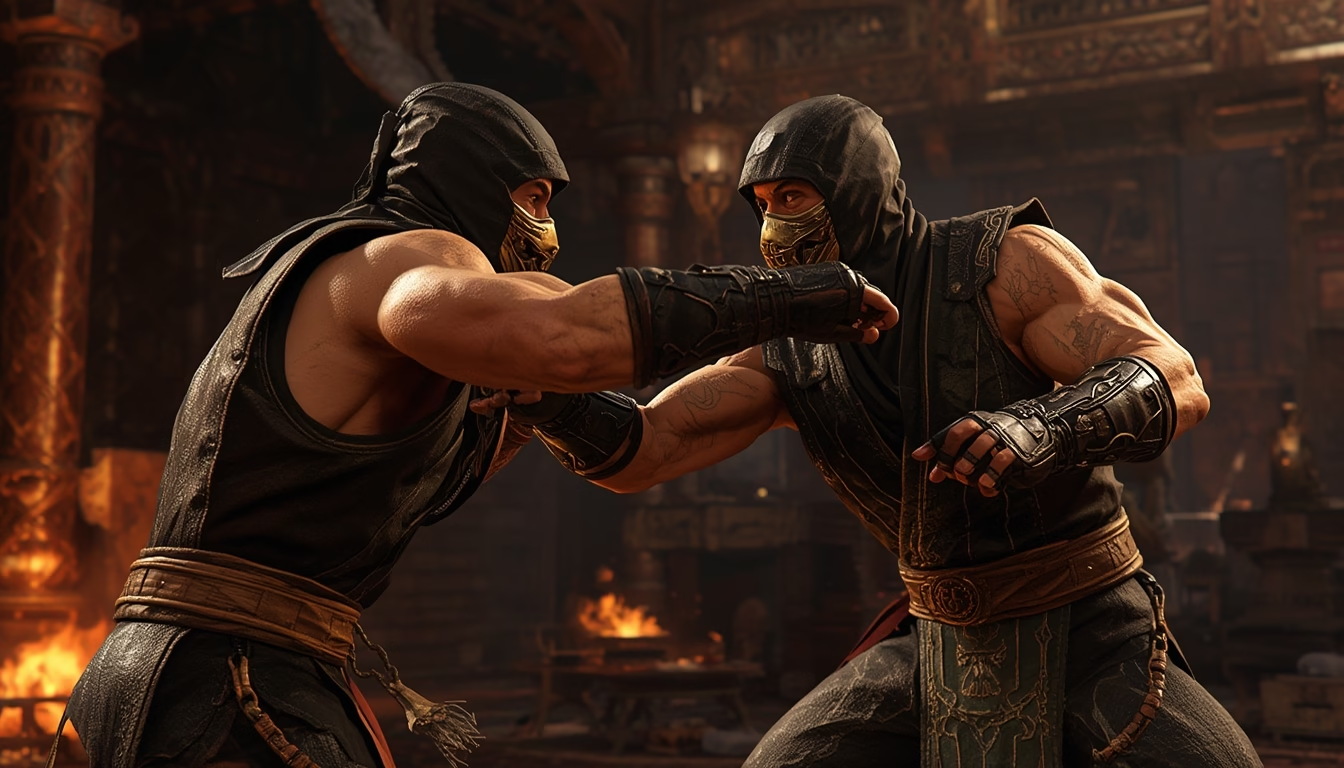
One standout sequence pits Scorpion against Sub‑Zero in a duel that mirrors their classic rivalry. The choreography blends traditional martial arts with the characters’ supernatural abilities, creating a seamless dance of fire and ice that feels both nostalgic and fresh.
Visuals, Action, and Faithfulness to the Games
Visually, the film captures the neon‑lit arenas and brutal arenas that fans recognize from the games. The iconic “Kombat arena” is rendered with meticulous detail, from the blood‑splattered walls to the towering statues of ancient deities. The color palette—deep reds, electric blues, and ominous purples—mirrors the game’s aesthetic while allowing the cinematography to breathe.
In terms of action, the film stays true to the source material by preserving each character’s signature moves. The “Fatality” moments are given full screen time, and the choreography respects the timing and execution fans have come to expect. Even the subtle nods—like the hidden “Test Your Might” mini‑game appearing as a background challenge—reward attentive viewers.
Fan Reactions and Cultural Impact
Since its release, the movie has sparked a wave of fan discussions across Reddit, Twitter, and YouTube. Longtime fans praised the faithful representation of classic characters and the high‑octane fight scenes, while newer audiences appreciated the streamlined storyline that didn’t require deep knowledge of the franchise.
Critics highlighted the film’s ability to balance nostalgia with modern storytelling, noting that the fight choreography set a new benchmark for video‑game adaptations. The cultural impact extends beyond cinema; the movie has reignited interest in the game’s competitive scene, leading to a surge in tournament participation and a spike in sales for the latest game releases.
The Future of Mortal Kombat
With the success of the 2021 reboot, the franchise looks poised for expansion. A sequel is already in development, promising to explore the aftermath of the tournament and introduce new realms like the Netherrealm. Additionally, the studio has hinted at a possible TV series that could delve deeper into the backstories of secondary characters such as Kitana and Johnny Cage.
On the gaming front, the upcoming Mortal Kombat 1 (the next mainline title) aims to blend classic mechanics with fresh storytelling, ensuring that the synergy between the games and their cinematic counterparts continues to thrive.
Join the Conversation
Whether you’re a die‑hard fan who lives for the roar of a perfect Fatality or a newcomer just discovering the world of Kombat, there’s never been a better time to dive into the franchise. Share your favorite Mortal Kombat moments in the comments below—be it an unforgettable fight, a nostalgic game memory, or a scene from the latest movie that left you breathless. Let’s keep the conversation alive and celebrate the brutal beauty of Mortal Kombat together!