
Step into the arena and feel the thunderous roar of the crowd, the crackle of lightning, and the unmistakable “Get over here!” that has echoed through arcades, living rooms, and cinemas for decades. Mortal Kombat isn’t just a fighting game; it’s a cultural juggernaut that has morphed from pixel‑perfect punches into a full‑blown cinematic experience. In this deep‑dive, we’ll trace the franchise’s origins, spotlight the legends that define it, break down the latest movie’s storyline, and examine why the series still packs a punch in today’s pop‑culture landscape.
From Arcade Origins to Global Phenomenon
When Midway released the original Mortal Kombat in 1992, the world was ready for something raw, gritty, and unapologetically brutal. The game’s signature features—digitized actors, bone‑crunching fatalities, and a simple yet addictive 2‑button combo system—set it apart from the cartoonish fighters of the era. The controversy over its graphic content even sparked congressional hearings, cementing its place in gaming history.
Success bred sequels, spin‑offs, and a relentless stream of new characters. By the late ’90s, Mortal Kombat had become a household name, spawning comic books, action figures, and, of course, the first cinematic venture: Mortal Kombat (1995). The film captured the game’s essence with practical effects, iconic catchphrases, and a surprisingly faithful storyline that introduced a wider audience to the realms of Earthrealm, Outworld, and the Netherrealm.
Key Characters That Define the Kombat Universe
Scorpion – The Vengeful Specter
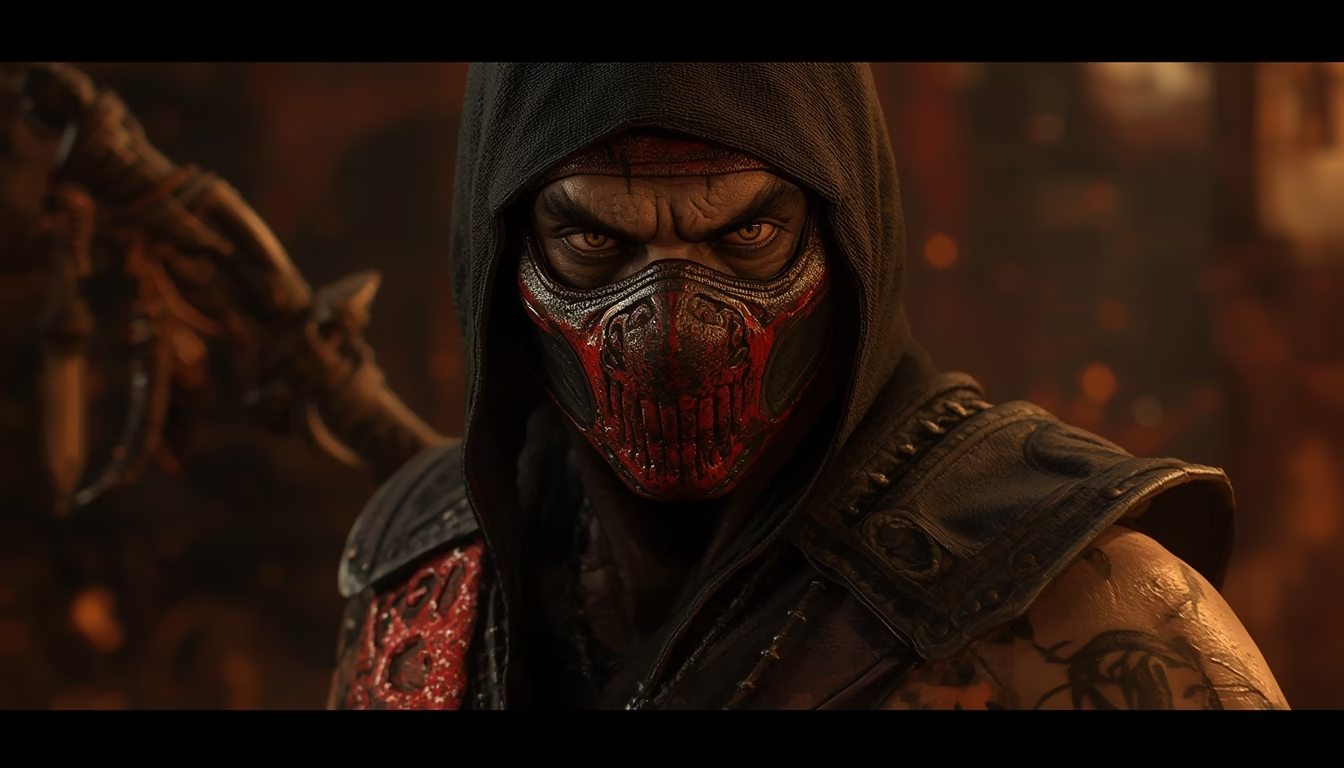
Hanzo Hasashi, better known as Scorpion, is the embodiment of revenge. After his clan is massacred, he returns from the dead with a flaming skull mask and the signature “Get over here!” spear. Scorpion’s tragic backstory and relentless drive make him a fan favorite, and his fiery fatalities have become a visual shorthand for the series.
Sub‑Zero – The Cryogenic Warrior
There are actually two Sub‑Zeros—Bi‑Han and his younger brother Kuai Liang. Both wield ice powers that can freeze opponents in an instant, creating a stark visual contrast to Scorpion’s flames. The rivalry between the two is a cornerstone of Kombat lore, and their icy fatalities have become as iconic as any fire‑based move.
Raiden – The Thunder God
As the protector of Earthrealm, Raiden’s electric aura and god‑like presence bring a mythic quality to the roster. His role as mentor and occasional combatant adds depth to the narrative, while his lightning‑fast attacks keep him relevant in both gameplay and cinematic adaptations.
Liu Kang – The Champion of Earthrealm
Liu Kang’s journey from a Shaolin monk to the champion of the tournament mirrors classic hero arcs. His fiery kicks, dragon fire, and unwavering dedication to protecting Earthrealm make him the moral compass of the series. In the latest film, Liu Kang’s evolution takes center stage, bridging the old guard with a new generation of fighters.
The Latest Movie: Plot, Action, and Visuals
Storyline Overview
The most recent Mortal Kombat film thrusts us into a multiverse where the realms are colliding faster than ever. Earthrealm’s heroes—Liu Kang, Kung Lao, and newcomer Cole Young—must unite with classic veterans like Scorpion and Sonya Blade to stop the sorcerer Shang Tsung from merging the realms and unleashing an unstoppable army of Netherrealm demons.
What sets this installment apart is its focus on legacy. Liu Kang, now a seasoned fighter, mentors Cole, a fresh face with a mysterious bloodline tied to the ancient Kombat lineage. The narrative weaves flashbacks to the original tournament, giving longtime fans nostalgic touchstones while introducing fresh stakes for newcomers.
Action & Fight Choreography
The fight scenes are a masterclass in kinetic storytelling. Director Simon McQuoid blends high‑octane CGI with practical effects to preserve the tactile feel of classic Kombat combat. Each character’s signature moves—Scorpion’s spear, Sub‑Zero’s ice blast, Raiden’s lightning bolt—are rendered with a cinematic flair that feels both familiar and elevated.
Notably, the film’s choreography respects the game’s “combo” mentality. Sequences flow seamlessly from one strike to the next, mirroring the player’s experience of chaining attacks. The climactic showdown between Liu Kang and Shang Tsung is a ballet of fire and sorcery, punctuated by slow‑motion beats that let the audience savor every fatality.
Visuals & Cinematic Style
Visually, the movie embraces a gritty, neon‑saturated aesthetic reminiscent of the 1995 film but updated for modern audiences. The realms are distinct: Earthrealm glistens with realistic textures, Outworld bursts with volcanic reds, and the Netherrealm drips with eldritch darkness. The use of practical lighting—especially during Raiden’s thunderous entrances—adds authenticity, while CGI enhances the supernatural elements without overwhelming the human performances.
Faithfulness to the Games
Fans will appreciate the countless Easter eggs: the iconic “Test Your Might” bar appears as a holographic interface, the “Fatality” menu pops up during critical moments, and classic stage backgrounds like the Shaolin Temple and the Living Forest are recreated in stunning detail. Even the dialogue nods to the source material, with lines like “I’m not a hero. I’m a fighter” echoing Liu Kang’s original game monologue.
Fan Reactions & Cultural Impact
Since its release, the film has ignited a wave of conversation across Reddit, Twitter, and gaming forums. Longtime fans praise the respect shown to the franchise’s lore, while newcomers commend the accessible storytelling. The iconic fatalities have sparked countless reaction videos, and memes featuring Scorpion’s “Get over here!” have resurfaced on TikTok, proving the franchise’s meme‑ability remains as potent as ever.
Beyond the screen, Mortal Kombat continues to influence fashion, music, and even esports. Limited‑edition sneaker collaborations, soundtrack remixes featuring heavy metal and synthwave, and a thriving competitive scene keep the brand alive in everyday culture. The franchise’s ability to adapt—whether through a live‑action series on streaming platforms or a new wave of mobile games—demonstrates its enduring relevance.
The Future of Mortal Kombat
Looking ahead, the roadmap is as ambitious as a final‑round combo. Upcoming projects include a sequel that promises to explore the origins of the Elder Gods, a spin‑off series focusing on the enigmatic female warriors like Kitana and Mileena, and a potential crossover with other iconic fighting franchises. Moreover, advances in motion‑capture technology hint at even more realistic fight choreography, while virtual‑reality experiences could let fans step inside the arena themselves.
From a business standpoint, the franchise’s partnership with streaming giants ensures a steady flow of content, while the continued release of new games—each pushing the boundaries of graphics and storytelling—keeps the core fanbase engaged. In short, Mortal Kombat isn’t just surviving; it’s evolving, ready to dominate the next generation of gamers and moviegoers.
Join the Conversation
Now it’s your turn to step into the arena. Which fatality left you breathless? Who’s your favorite Kombatant, and why does their story resonate with you? Share your most epic Mortal Kombat moments in the comments below, and let’s keep the fire burning—because the next round is always just a click away.