
Since its debut in 1992, the Mortal Kombat franchise has become a cultural juggernaut, spawning arcade cabinets, console classics, comic books, and a series of high‑octane films. What began as a gritty, digitized fighting game quickly evolved into a multimedia phenomenon that still sparks debate among critics, fans, and casual gamers alike. In this post we’ll trace the franchise’s origins, spotlight the most iconic warriors, break down the storyline of the latest movie, and explore why Mortal Kombat continues to dominate pop‑culture conversations.
Mortal Kombat Critics: A Brief History of the Game’s Reception
Early Mortal Kombat critics were divided. While many praised the game’s revolutionary graphics, brutal Fatalities, and deep combo system, others condemned its graphic violence, which eventually led to the creation of the ESRB rating system. Over the years, reviewers have highlighted the series’ ability to reinvent itself—shifting from 2D sprite battles to 3D arenas, integrating cinematic story modes, and embracing online multiplayer. Today, the consensus among critics is that the franchise balances nostalgia with innovation, delivering a consistently thrilling experience that still feels fresh after three decades.
From Arcade to Silver Screen: The Evolution of Mortal Kombat Films
The first Mortal Kombat movie hit theaters in 1995, capitalizing on the game’s explosive popularity. Directed by Paul W. S. Anderson, the film blended practical effects with early CGI, delivering memorable fight sequences that still earn nostalgic applause. A sequel, Mortal Kombat: Annihilation (1997), struggled with a rushed script and uneven pacing, earning harsher reviews. After a long hiatus, the franchise was revived in 2021 with Mortal Kombat, a gritty reboot that leaned heavily into the game’s signature bloodshed and lore. The 2024 sequel, Mortal Kombat: Legacy of the Dragon, pushes the envelope further with refined choreography, deeper character arcs, and a storyline that ties directly into the latest game releases.
Key Characters That Define the Franchise
Scorpion – The Vengeful Specter
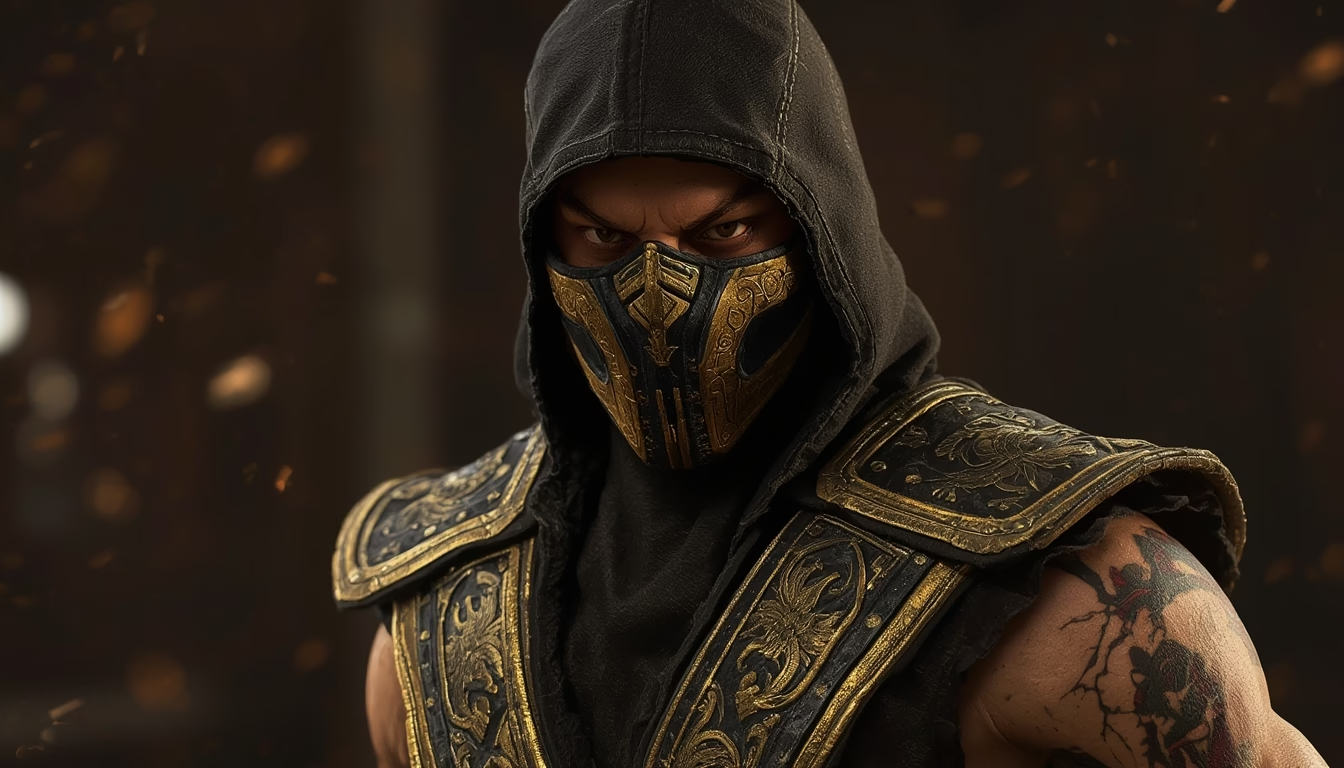
Hanzo Hasashi, better known as Scorpion, is the embodiment of revenge. His iconic “Get over here!” spear and fiery Fatalities make him a fan favorite. In the movies, Scorpion’s tragic backstory—his clan’s massacre and his subsequent resurrection—adds emotional weight to his relentless pursuit of justice.
Sub‑Zero – The Cryogenic Warrior
Two brothers have taken up the Sub‑Zero mantle, each bringing a distinct personality to the icy assassin role. The original Sub‑Zero, Bi‑Han, is a cold‑blooded mercenary, while his younger brother, Kuai Liang, seeks redemption. Their rivalry with Scorpion and alliance with Earthrealm’s defenders create a dynamic that fuels much of the franchise’s drama.
Raiden – The Thunder God
As the protector of Earthrealm, Raiden serves as both mentor and strategist. His electric powers and stoic demeanor make him the moral compass of the series. In the latest film, Raiden’s internal conflict—balancing his divine duties with the cost of war—adds a nuanced layer to his character.
Liu Kang – The Champion of Earthrealm
Liu Kang’s journey from a Shaolin monk to a god‑like champion mirrors the franchise’s growth. Known for his blazing kicks and heroic spirit, Liu Kang’s role in the newest movie expands beyond the battlefield, positioning him as a leader who must unite disparate realms against a looming threat.
The Storyline of the Latest Movie: Mortal Kombat – Legacy of the Dragon
Set after the events of the 2021 reboot, Legacy of the Dragon follows Earthrealm’s heroes as they confront a resurrected Shinnok, who seeks to merge the realms and unleash an army of Netherrealm demons. The plot weaves together multiple timelines, revealing hidden alliances between Sub‑Zero’s brother and a rogue Lin Kuei clan. Scorpion, now partially freed from his vengeful curse, teams up with Raiden and Liu Kang to form an uneasy truce with the Outworld sorceress Kitana. The climax culminates in a massive, multi‑location showdown that blends hand‑to‑hand combat with spectacular elemental effects, delivering a narrative payoff that honors the game’s deep lore while introducing fresh twists.
Action, Visuals, and Fight Choreography: What Critics Are Saying
Critics have lauded the film’s fight choreography for its authenticity. The combat sequences mirror the game’s signature combos, with each character’s signature moves—Scorpion’s spear, Sub‑Zero’s ice blast, Liu Kang’s fireball—executed with precision. The use of practical effects for blood splatter, combined with high‑definition CGI for elemental powers, creates a visceral experience that feels both grounded and fantastical.
Visually, the movie embraces a darker palette, echoing the gritty aesthetic of the recent games. The Netherrealm’s twisted architecture and the neon‑lit streets of Outworld provide a striking contrast that enhances the narrative stakes. Cinematographer Maya Patel’s use of slow‑motion during Fatalities adds dramatic emphasis without sacrificing pacing, a technique praised by both action aficionados and casual viewers.
Fan Reactions and Cultural Impact
Social media buzz has been overwhelmingly positive. Fans have taken to platforms like Reddit and Twitter to dissect every Easter egg—from the subtle nod to the original 1992 arcade intro to the cameo of Johnny Cage’s classic line, “I’m a champion!”—and to celebrate the faithful recreation of iconic Fatalities. The film’s soundtrack, featuring heavy metal and synthwave tracks, has sparked a resurgence of interest in the franchise’s original score, leading to a spike in streaming numbers for classic Mortal Kombat music.
Beyond entertainment, Mortal Kombat continues to influence fashion, memes, and even competitive esports. The franchise’s iconic catchphrases and character designs appear on streetwear collections, while the game’s tournament scene remains a staple at major gaming conventions. This cultural permeation underscores why Mortal Kombat critics often highlight its role as a bridge between gaming and mainstream media.
What the Future Holds for Mortal Kombat
Looking ahead, the franchise appears poised for expansion across multiple mediums. A planned television series on a streaming platform aims to explore the origins of the Elder Gods, while upcoming game releases promise deeper narrative integration with the films. Rumors of a crossover with other iconic fighting franchises hint at potential collaborative projects that could further broaden the audience.
From a production standpoint, the success of Legacy of the Dragon has secured greenlight for a sequel that will delve into the aftermath of Shinnok’s defeat, focusing on the political turmoil within Outworld and the rise of new challengers. Fans can also expect more immersive experiences, such as VR tie‑ins that let players step directly into the arena and experience the fights from a first‑person perspective.
Join the Conversation: Share Your Favorite Mortal Kombat Moments
Whether you’re a lifelong fan who still remembers the first time you pulled the lever on an arcade cabinet, or a newcomer who just watched the latest film, Mortal Kombat offers endless moments worth celebrating. Which Fatality left you speechless? Which character’s backstory resonated most with you? Drop your favorite Mortal Kombat memories in the comments below and let’s keep the conversation alive. Your stories help shape the legacy of a franchise that refuses to fade—one epic fight at a time.