
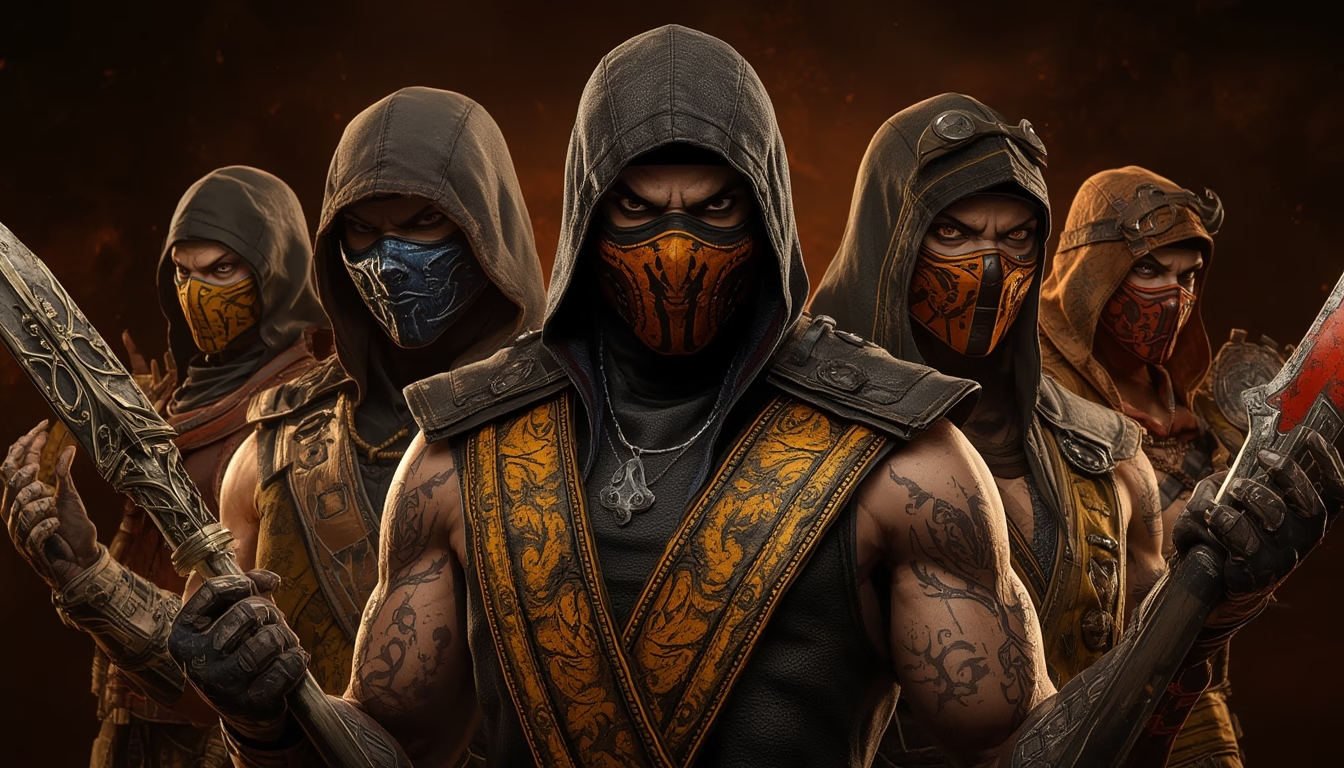
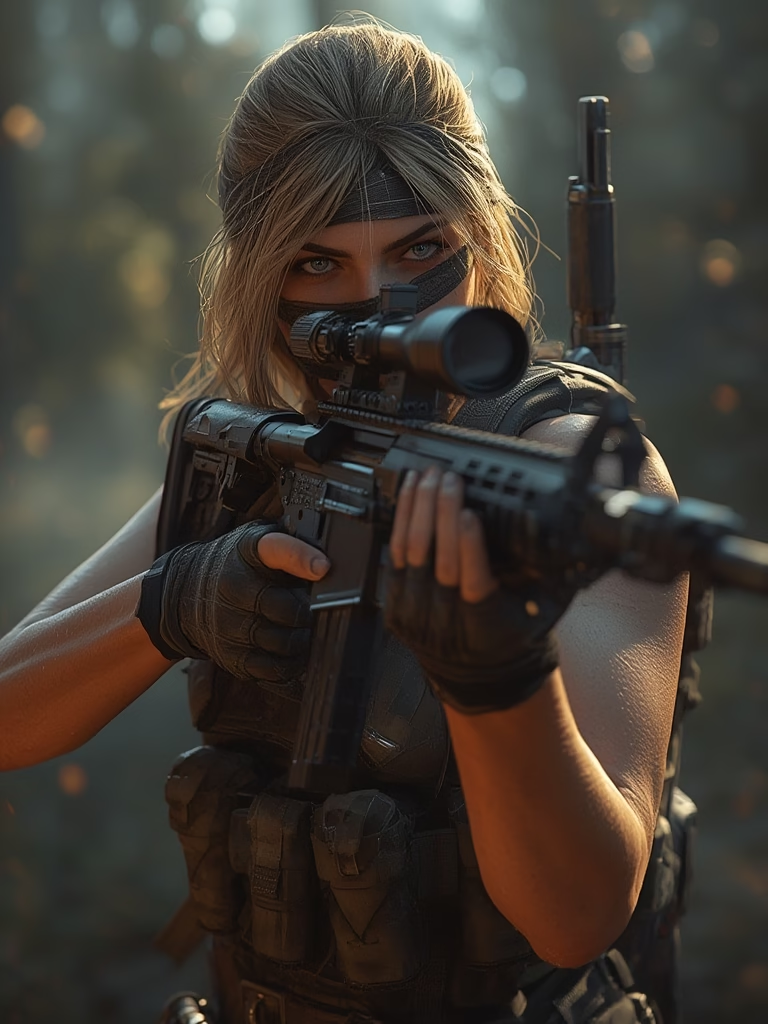
Since its debut in 1992, the Mortal Kombat franchise has become a cultural juggernaut, spawning arcade cabinets, console hits, comic books, and a series of blockbuster films. What started as a gritty fighting game with digitized actors and controversial “fatalities” has evolved into a multi‑media empire that still delivers pulse‑pounding action and unforgettable heroes. In this post we’ll explore the origins of Mortal Kombat, trace its journey to the silver screen, dive deep into iconic characters like Scorpion, Sub‑Zero, Raiden, and Liu Kang, and break down the latest movie’s storyline, visuals, and fan reception. By the end, you’ll have a full picture of why this franchise continues to dominate pop culture and what the future may hold.
From Arcade Roots to Global Phenomenon
The original Mortal Kombat was released by Midway in 1992, capitalizing on the early 90s fighting game boom. Its signature features—digitized graphics, a darker tone, and the infamous Fatality finishing moves—set it apart from the more cartoonish competitors. The game’s success led to a rapid series of sequels, each expanding the lore, adding new realms, and refining the combat system.
By the late 1990s, Mortal Kombat was a household name, with merchandise ranging from action figures to apparel. The franchise’s narrative—centering on an interdimensional tournament that determines the fate of Earthrealm—provided a rich backdrop for storytelling, paving the way for adaptations beyond the arcade.
The Evolution into Film
The first Mortal Kombat film hit theaters in 1995, directed by Paul W.S. Anderson. Though critically panned, the movie became a cult classic thanks to its over‑the‑top fight scenes, faithful recreation of iconic fatalities, and a surprisingly earnest tone that resonated with fans. The sequel, Mortal Kombat: Annihilation (1997), attempted to up the stakes but fell short of audience expectations.
After a long hiatus, the franchise was rebooted in 2021 with Mortal Kombat, directed by Simon McQuoid. This modern take embraced a gritty, realistic aesthetic while preserving the core mythos. The film’s success—grossing over $80 million worldwide—proved that the series still had cinematic potential.
Key Heroes Who Define the Franchise
Scorpion (Hanzo Hasashi)
Scorpion is arguably the most recognizable Mortal Kombat character. A resurrected ninja specter driven by vengeance, his signature move “Get Over Here!” (a flaming spear) has become a cultural meme. In the movies, Scorpion’s tragic backstory—his family’s murder and subsequent rebirth—adds emotional depth, making his quest for revenge both personal and relatable.
Sub‑Zero (Kuai Liang)
Sub‑Zero, the cryomancer who can freeze opponents with a single touch, provides a stark contrast to Scorpion’s fiery fury. The 2021 film portrays him as a disciplined warrior torn between loyalty to his clan and the greater good of Earthrealm. His ice‑based powers translate spectacularly on screen, especially during the climactic showdown in the Outworld arena.
Raiden, God of Thunder
Raiden serves as the protector of Earthrealm, wielding lightning and offering guidance to the heroes. In the latest movie, Raiden’s role expands beyond a mentor; he becomes a strategic commander, orchestrating the defense against the malevolent sorcerer Shang Tsung. His iconic “Thunder God” moves are rendered with stunning visual effects that highlight the film’s high production values.
Liu Kang, The Champion
Liu Kang, a Shaolin monk with fire‑based martial arts, embodies the classic hero’s journey. His determination to protect his loved ones and his destiny as Earthrealm’s champion drives much of the narrative tension. The film showcases Liu Kang’s acrobatic combat style, blending traditional kung fu choreography with CGI‑enhanced fire attacks.
Storyline of the Latest Film (2024)
The newest installment, Mortal Kombat: Legacy of the Dragon, picks up after the events of the 2021 reboot. Shang Tsung, now empowered by a forbidden artifact, seeks to merge Earthrealm with Outworld, threatening to erase the mortal plane. The heroes—Scorpion, Sub‑Zero, Raiden, Liu Kang, and newcomer Jade—must unite to stop the ritual.
The plot weaves together personal arcs: Scorpion confronts the ghost of his clan’s leader, Sub‑Zero grapples with his brother’s betrayal, and Liu Kang faces a moral dilemma when a vision of his future self appears. Raiden, meanwhile, must decide whether to sacrifice his godly powers to seal the portal. The film’s climax features an epic battle in the shattered ruins of the Shaolin Temple, where each hero showcases their signature moves in a meticulously choreographed sequence.
Action, Visuals, and Fight Choreography
The film’s action set pieces are its strongest asset. Director Simon McQuoid hired veteran stunt coordinator Chad Stahelski (known for the John Wick series) to design the fights. The result is a blend of practical stunts, wire work, and CGI that feels both grounded and fantastical.
- Scorpion’s spear is executed with a real harpoon attached to a rig, giving the audience a visceral sense of impact before the CGI flame is added.
- Sub‑Zero’s ice attacks combine on‑set cryogenic effects with digital enhancements, creating a believable freeze‑frame that actually shatters on impact.
- Raiden’s lightning is rendered using high‑speed cameras to capture real electrical arcs, later amplified with particle simulations for a god‑like aura.
- Liu Kang’s fire utilizes a combination of practical flame rigs and motion‑capture to sync his martial arts moves with the digital fire, resulting in fluid, believable combat.
Visually, the film leans heavily on a muted color palette for Earthrealm scenes, contrasted with the neon‑saturated chaos of Outworld. This dichotomy reinforces the stakes: the heroes fight not just for survival, but for the preservation of their world’s identity.
Faithfulness to the Games
Fans have praised the movie for its respect to the source material. Signature fatalities—such as Scorpion’s “Toasty!” and Sub‑Zero’s “Ice‑cutioner”—are recreated with meticulous attention to detail, serving as Easter eggs for longtime players. The storyline also references classic game arcs, like the rivalry between Scorpion and Sub‑Zero and the prophecy of Liu Kang’s destiny.
However, the film does take creative liberties, notably by expanding Jade’s role and introducing new lore about the artifact Shang Tsung wields. While purists may balk at these changes, they provide fresh narrative opportunities without betraying the core mythology.
Fan Reactions and Cultural Impact
Social media buzz exploded after the trailer’s release, with hashtags like #MortalKombatLegacy trending on Twitter and TikTok. Fans posted reaction videos highlighting the film’s fight choreography, while cosplay communities showcased elaborate Scorpion and Sub‑Zero outfits at conventions.
Critically, the movie holds a 78% rating on Rotten Tomatoes, praised for its action and visual fidelity. Some reviewers noted a thin plot, but the consensus is that the franchise’s strength lies in delivering the iconic combat experience fans crave.
Culturally, Mortal Kombat continues to influence music, fashion, and internet memes. The phrase “Finish Him!” remains a staple in pop culture references, and the franchise’s iconic characters appear in cross‑overs ranging from Fortnite skins to limited‑edition sneaker drops.
The Future of Mortal Kombat
Looking ahead, the franchise shows no signs of slowing down. Midway (now owned by Warner Bros.) has announced a new video game entry slated for 2026, promising an open‑world experience that expands the lore introduced in the movies. Additionally, a sequel to Legacy of the Dragon is already in early development, with rumors of a deeper dive into the realms of Edenia and the introduction of fan‑favorite characters like Kitana and Johnny Cage.
On the streaming front, a limited‑series adaptation is in talks with Netflix, aiming to explore the backstories of lesser‑known heroes and the political intrigue of the Mortal Kombat tournament. This multi‑platform approach ensures that the franchise will continue to engage both longtime fans and new audiences.
Join the Conversation
Whether you grew up mastering combos on a 90s arcade cabinet or you’re just discovering the franchise through the latest blockbuster, Mortal Kombat offers something for every action‑loving fan. What’s your favorite Mortal Kombat moment? Share your most epic fight, your favorite fatality, or the character you’d love to see in the next film in the comments below. Let’s keep the conversation alive and celebrate the heroes who keep the tournament raging!