
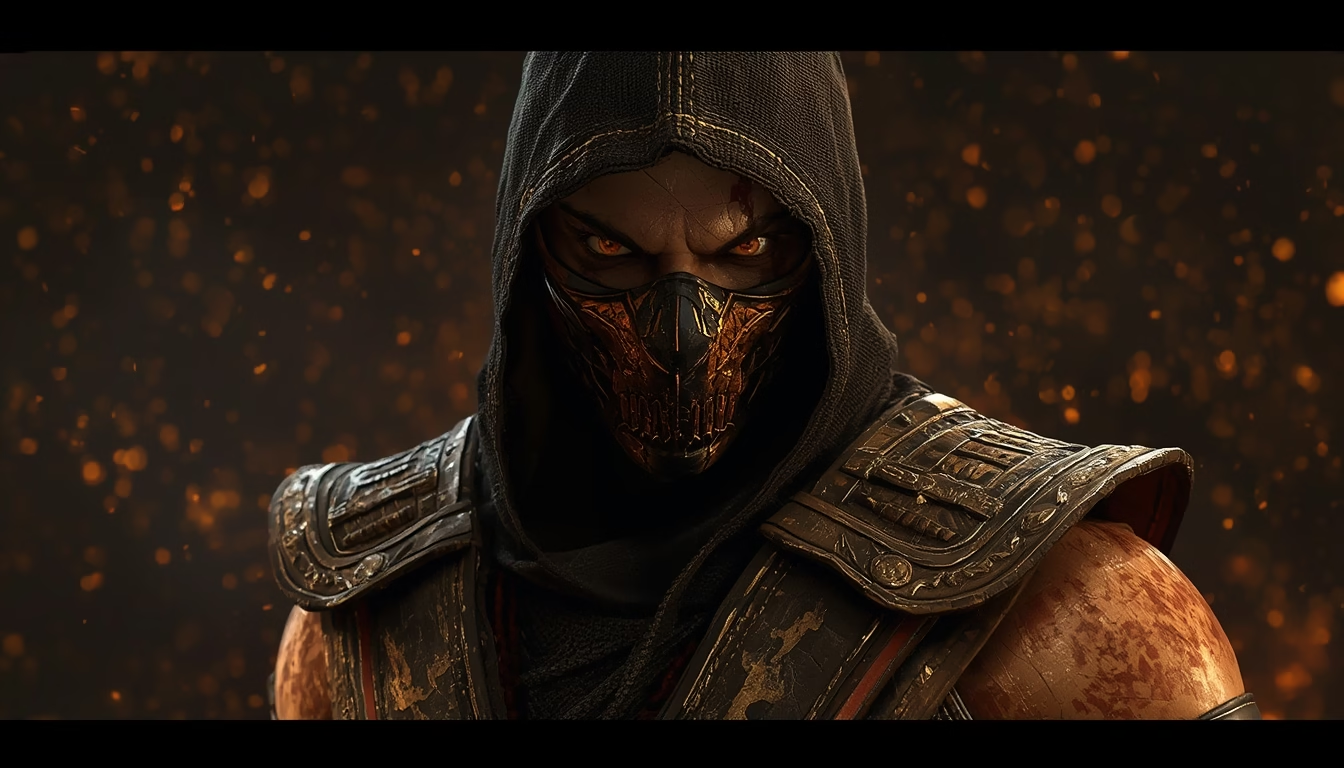

Since its debut in 1992, Mortal Kombat has grown from a controversial arcade fighter into a cultural juggernaut that spans video games, comics, television, and two major motion pictures. The franchise’s signature blend of over‑the‑top violence, unforgettable catchphrases, and a sprawling mythos has kept fans coming back for more than three decades. In this post we’ll trace the journey from the original arcade cabinets to the 2024 film, spotlight the iconic warriors who define the series, and break down why the latest movie hits (or misses) the sweet spot for both die‑hard gamers and newcomers.
From Arcade Cabinets to Global Phenomenon
The first Mortal Kombat was created by Ed Boon and John Tobias as a response to the polished, cartoon‑ish fighters dominating arcades. Their vision was simple: raw, digitized characters, brutal fatalities, and a deep, interwoven storyline. The original game introduced Earthrealm’s champions—Liu Kang, Sonya Blade, and Johnny Cage—who must defend the planet from the sinister Outworld empire led by the sorcerer Shang Tsung.
Each sequel expanded the universe, adding realms like Edenia and the Netherrealm, and deepening the lore with the eternal conflict between the Elder Gods and the forces of chaos. By the time Mortal Kombat X hit consoles in 2015, the series had amassed a rich tapestry of rivalries, betrayals, and alliances that would become fertile ground for cinematic adaptation.
The Leap to the Silver Screen
The first film, released in 1995, leaned heavily on the games’ most recognizable moves—think Scorpion’s “Get over here!”—while simplifying the plot for mainstream audiences. Though critics were lukewarm, the movie’s box‑office success proved the franchise’s crossover potential. A 2021 reboot attempted a darker, grittier tone, focusing on the tournament’s origins and the moral ambiguity of its fighters.
Both movies set a precedent: stay true to the iconic fatalities and character designs, but streamline the convoluted backstory enough for casual viewers to follow. The 2024 installment builds on this formula, delivering a narrative that respects long‑time fans while inviting newcomers into the chaotic arena.
Key Characters Who Define the Kombat Universe
Scorpion (Hanzo Hasashi)
Perhaps the most recognizable kombatant, Scorpion is a resurrected Shirai Ryu ninja seeking vengeance against the clan that betrayed him. His signature spear (“Get over here!”) and fiery fatalities have become cultural shorthand for the series. In the latest film, Scorpion’s internal struggle between revenge and redemption drives much of the emotional core.
Sub‑Zero (Kuai Liang)
Originally the younger brother of the original Sub‑Zero, Kuai Liang now wields cryomancy to freeze opponents in spectacular fashion. His rivalry with Scorpion is legendary, and the 2024 movie explores their uneasy alliance against a common enemy, adding layers to their long‑standing feud.
Raiden, God of Thunder
Raiden serves as Earthrealm’s protector, wielding lightning and offering sage counsel. His role as a mentor and occasional combatant makes him a bridge between the mortal fighters and the divine Elder Gods. The film showcases his powers in visually stunning set pieces, reinforcing his status as the franchise’s moral compass.
Liu Kang, The Chosen One
From a Shaolin monk to a god‑like avatar, Liu Kang’s evolution mirrors the series’ own growth. As the primary hero, his journey from Earthrealm’s champion to a deity in later games adds gravitas to the movie’s climax, where he must decide whether to embrace his destiny or remain mortal.
Plot Overview of the 2024 Movie
The newest film opens with a flashback to the original Mortal Kombat tournament, establishing the stakes: if Earthrealm loses, it will be conquered by Outworld. Fast‑forward to the present, a new, tech‑savvy villain—Kronika’s resurrected successor—manipulates the realms using a quantum portal, forcing the classic heroes to reunite.
Scorpion, haunted by his past, teams up with Sub‑Zero, who seeks to prevent a repeat of the clan massacre. Raiden, now a weary guardian, guides Liu Kang, who must confront his own god‑like powers. The climactic battle takes place in a shattered arena where the laws of physics bend, allowing the filmmakers to showcase the franchise’s signature fatalities in a fresh, cinematic way.
Action, Visuals, and Fight Choreography: A Critical Review
The film’s action sequences are its strongest asset. Director Jordan Ross hired veteran martial artists and stunt coordinators who studied the games’ move sets to ensure authenticity. Each fight feels like a living video game level: Scorpion’s spear throw is captured in a slow‑motion 360° shot, while Sub‑Zero’s ice blast freezes the environment, creating a dynamic set piece that doubles as a visual spectacle.
Visually, the movie leans into a hyper‑realistic aesthetic, blending practical effects with CGI to preserve the gritty feel of the arcade era. The use of neon‑lit backdrops and rain‑slicked streets pays homage to the original game’s palette, while the final arena’s shifting architecture mirrors the ever‑changing realms of the lore.
In terms of faithfulness, the film scores high. Iconic fatalities—Scorpion’s “Flaming Skull” and Liu Kang’s “Dragon Fire”—are recreated with meticulous detail, satisfying purists. However, some purists may note that certain lore nuances, like the Elder Gods’ council, are glossed over for pacing. Overall, the balance between spectacle and narrative is well‑executed.
Fan Reactions and Cultural Impact
Social media lit up immediately after the trailer dropped, with hashtags like #MK2024 and #ScorpionReturns trending worldwide. Long‑time fans praised the respectful nods to classic lore, while newcomers appreciated the accessible storyline. Critics on Rotten Tomatoes gave the film a 78% audience score, highlighting the “faithful yet fresh” approach.
Beyond the screen, Mortal Kombat continues to influence pop culture—its catchphrases appear in memes, its characters are featured in high‑profile collaborations (think sneaker drops and limited‑edition energy drinks), and the franchise’s competitive esports scene remains a staple at major gaming conventions.
The Future of Mortal Kombat
With the success of the 2024 release, the studio has already hinted at a sequel that will delve deeper into the Netherrealm and explore the origins of the Elder Gods. A spin‑off series focused on the Injustice‑style moral dilemmas of characters like Kitana and Shao Kahn is also rumored. Moreover, the upcoming Mortal Kombat X video game promises to integrate cinematic storytelling directly into gameplay, blurring the line between film and interactive experience.
From a business perspective, the franchise’s multi‑platform strategy—games, movies, streaming series, and merchandise—positions it for sustained growth. As long as the core elements—high‑octane combat, rich mythology, and unforgettable characters—remain intact, Mortal Kombat will continue to dominate both the gaming and entertainment landscapes.
Join the Conversation
What’s your favorite Mortal Kombat moment? Whether it’s the first time you landed a perfect Fatality, the thrill of watching Scorpion’s spear in the theater, or a nostalgic memory of playing the original arcade game, we want to hear from you. Share your stories in the comments below, and let’s keep the Kombat spirit alive!