
Since its debut in arcades back in 1992, Mortal Kombat has grown from a groundbreaking fighting game into a cultural juggernaut that spans consoles, comics, television, and the big screen. The franchise’s signature blend of over‑the‑top violence, unforgettable characters, and an iconic soundtrack has kept fans coming back for more—whether they’re pressing buttons or buying tickets. In this post we’ll dive deep into the origins of the series, trace its cinematic evolution, spotlight the legends that define the roster, break down the storyline of the latest movie, and explore why the Mortal Kombat soundtrack remains a pulse‑pounding backdrop to every fight.
From Arcade to Legend: The Video‑Game Roots
The original Mortal Kombat was created by Ed Boon and John Tobias as a response to the popularity of Street Fighter II. What set it apart? A gritty realism achieved through digitized actors, a brutal “Fatality” finishing move, and a soundtrack that mixed synth‑heavy beats with tribal drums. The music, composed by Dan Forden, used haunting melodies and percussive rhythms that instantly became synonymous with the series’ dark, otherworldly vibe.
Each subsequent title—Mortal Kombat II, Deception, Armageddon, and the rebooted 2011 Mortal Kombat—expanded the lore while preserving the core audio identity. The soundtrack’s heavy bass lines and eerie chimes cue players for epic battles, making the music an integral storytelling tool.
The Leap to the Silver Screen
It wasn’t long before Hollywood took notice. The first Mortal Kombat film hit theaters in 1995, directed by Paul W.S. Anderson. While the movie took liberties with the plot, it captured the game’s spirit, especially through its faithful recreation of iconic Fatalities and a soundtrack that blended industrial rock with the original score.
A sequel, Mortal Kombat: Annihilation (1997), attempted to push the action envelope but fell short on narrative cohesion. Nevertheless, both films cemented the franchise’s visual language—high‑contrast lighting, exaggerated blood splatter, and a soundtrack that never let the adrenaline dip.
Key Characters That Define the Franchise
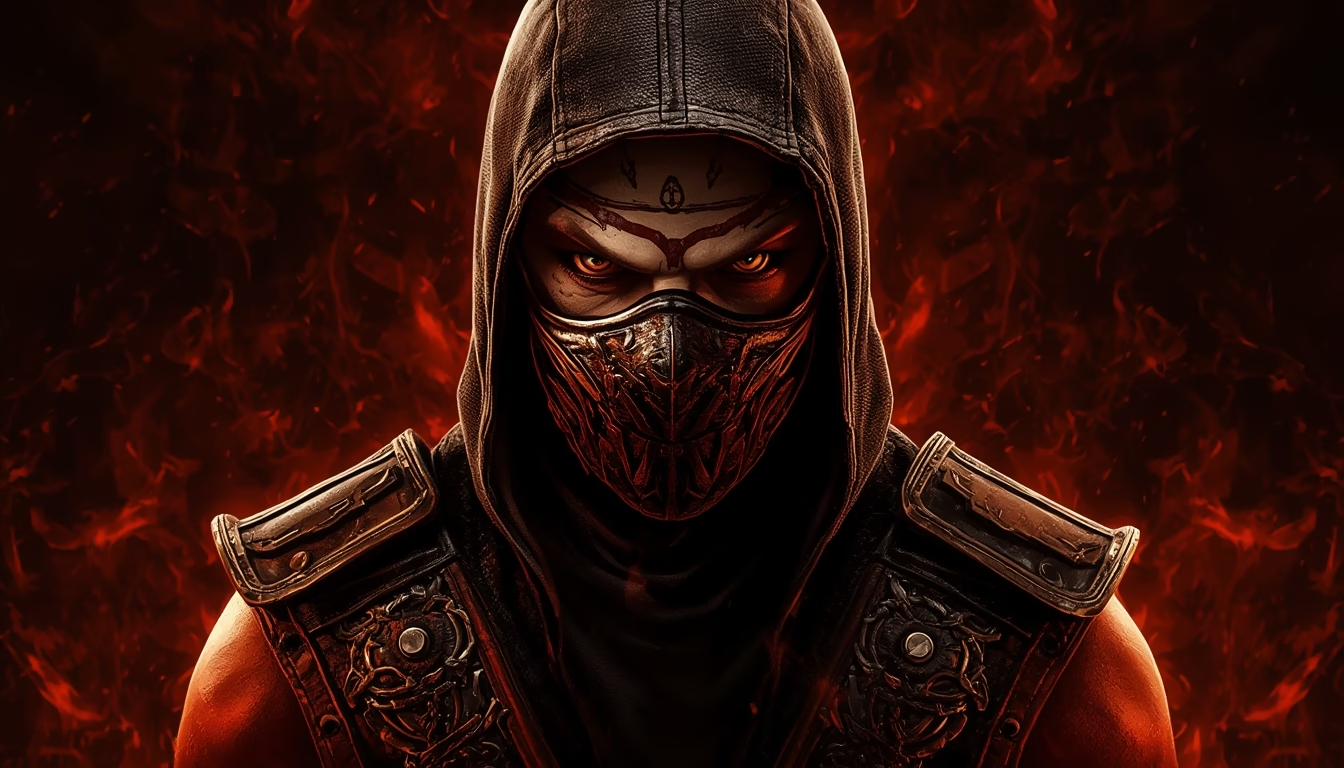
- Scorpion (Hanzo Hasashi) – The resurrected ninja who screams “Get over here!” and summons fiery hellfire. His tragic backstory and relentless vengeance make him a fan favorite.
- Sub‑Zero (Kuai Liang) – The ice‑wielding warrior whose cool demeanor hides a deep sense of honor. His rivalry with Scorpion is the heart of the series.
- Raiden – The thunder god who serves as the protector of Earthrealm. His electric powers and wise counsel guide the heroes through countless battles.
- Liu Kang – The Shaolin monk and champion of Earthrealm, known for his fiery dragon kick and unwavering dedication to defeating evil.
The Latest Film: Plot, Action, and Visuals
The 2021 Mortal Kombat reboot, directed by Simon McQuoid, finally gave fans a movie that feels like a true extension of the games. The story follows a group of Earthrealm warriors—Liu Kang, Kung Lao, and newcomer Cole Young—who are recruited by Raiden to compete in the deadly tournament against the sorcerer Shang Tsung and his emperor, Shao Kahn.
What sets this film apart is its commitment to the source material’s mythology. The plot weaves together the origins of Scorpion’s vengeance, Sub‑Zero’s quest for redemption, and the looming threat of Outworld’s invasion. The narrative is peppered with classic dialogue (“Finish Him!”) and moments that echo the game’s cutscenes.
Action and Fight Choreography
The fight scenes are a masterclass in translating pixelated combos into real‑world combat. Choreographers blended martial arts with CGI enhancements to replicate signature moves—Scorpion’s spear, Sub‑Zero’s ice blast, and Liu Kang’s dragon fire. The choreography feels both brutal and balletic, giving each character a distinct fighting style that mirrors their in‑game movesets.
Crucially, the film doesn’t shy away from gore. Blood splatters in slow motion, and Fatalities are presented with the same theatrical flair fans love. The Mortal Kombat soundtrack underscores these moments, using heavy drums and synths that crescendo as the final blows land.
Visuals and Production Design
Visually, the movie balances gritty realism with fantastical realms. Earthrealm’s gritty cityscapes contrast sharply with Outworld’s neon‑lit, otherworldly arenas. The design team paid homage to classic game stages—like the iconic “The Pit” and “The Living Forest”—while adding fresh details that feel cinematic.
Special effects shine during the supernatural abilities. Lightning crackles around Raiden, ice shards cascade from Sub‑Zero, and Scorpion’s fiery skull glows with an almost tactile heat. The color palette is deliberately saturated, making each fight feel like a living, breathing level from the game.
Faithfulness to the Games
Fans have long demanded a movie that respects the source material, and this reboot delivers. Character arcs follow the games’ lore: Scorpion’s quest for revenge, Sub‑Zero’s brotherly bond, and Liu Kang’s destiny as Earthrealm’s champion. Even the tournament’s rules—no weapons, no external interference—are faithfully reproduced.
The soundtrack further bridges the gap. While new compositions were added, classic motifs from Dan Forden’s original scores reappear, instantly triggering nostalgia. The result is a seamless blend of old and new that feels both fresh and reverent.
Fan Reactions and Cultural Impact
Upon release, the movie sparked a wave of social media buzz. Fans praised the authentic Fatalities, the accurate character portrayals, and the adrenaline‑pumping soundtrack. Memes celebrating the “Get over here!” line flooded platforms like TikTok and Reddit, while YouTube reaction videos amassed millions of views.
Beyond the screen, Mortal Kombat continues to influence pop culture. Its catchphrases have entered everyday slang, its iconic music is sampled in EDM tracks, and the franchise’s aesthetic appears in fashion, from streetwear tees to high‑end designer collaborations.
The Future of Mortal Kombat
With the success of the 2021 film, the door is wide open for sequels, spin‑offs, and even a potential TV series that could explore deeper lore—think pre‑quels about the Elder Gods or a focus on the hidden realms of Netherrealm and Chaosrealm. The franchise’s robust fanbase ensures a steady demand for new content, whether it’s a next‑gen console title or a streaming series.
Game developers have hinted at expanding the universe with cross‑overs, new character rosters, and innovative multiplayer modes. Meanwhile, the film team is reportedly scouting fresh talent to bring new fighters to life, promising even more elaborate fight choreography and immersive sound design.
Conclusion: Join the Conversation
From its humble arcade beginnings to blockbuster cinema, Mortal Kombat has proven that a killer soundtrack, unforgettable characters, and relentless action can create a timeless legacy. Whether you’re a longtime fan who still remembers the first Fatality you pulled off, or a newcomer drawn in by the latest movie’s visual feast, there’s always a reason to celebrate this iconic franchise.
What’s your favorite Mortal Kombat moment? A classic Fatality, a jaw‑dropping fight scene, or a piece of the soundtrack that still gives you chills? Share your memories in the comments below and let’s keep the conversation alive. And don’t forget to spread the word—your story might just inspire the next epic chapter in the Mortal Kombat saga!
