
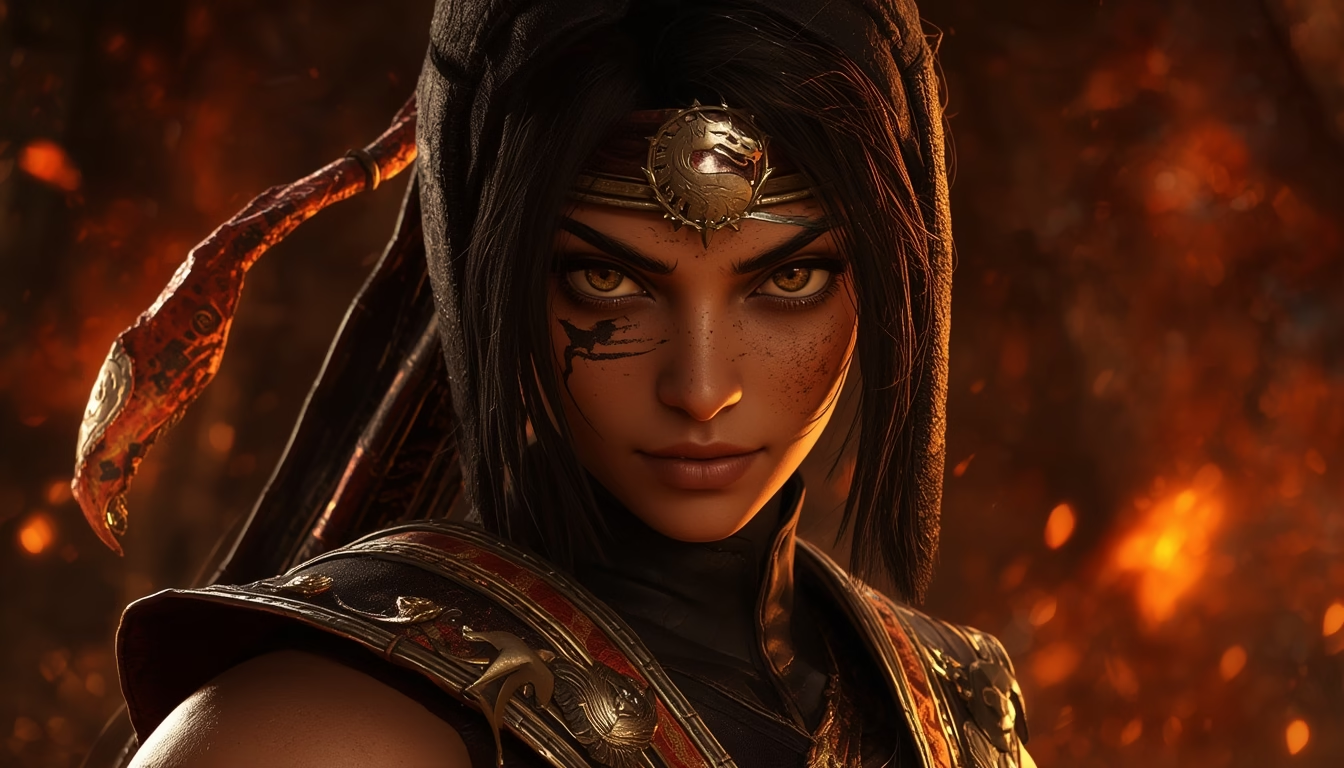

Since its first pixel‑perfect punch in 1992, Mortal Kombat has grown from a controversial arcade cabinet into a cultural juggernaut that spans video games, comics, TV series, and two major motion pictures. If you’ve ever wondered how a game known for “Finish Him!” became a blockbuster franchise, you’re in the right place. Below we’ll walk through the series’ origins, its evolution on screen, the legends that keep fans coming back, and why the latest movie is sparking conversation across the internet.
From Arcade Roots to Global Phenomenon
The original Mortal Kombat was born in a Midwestern basement. Ed Boon and John Tobias wanted a fighting game that felt more visceral than the polished punches of Street Fighter. They gave us digitized actors, brutal fatalities, and a dark, myth‑laden world that blended martial arts with sorcery. The result? A game that sold millions, sparked debates about video‑game violence, and cemented characters like Scorpion and Sub‑Zero into pop‑culture lore.
Key Milestones in Gaming History
- 1992 – Mortal Kombat (Arcade): Introduced the iconic 7‑button layout and the first “Fatality”.
- 1993 – Mortal Kombat II: Added fan‑favorite characters and refined the lore.
- 1995 – Mortal Kombat 3: Expanded the roster and introduced “Run” button.
- 2011 – Mortal Kombat (Reboot): Brought the series back to its roots with a gritty, cinematic style.
- 2023 – Mortal Kombat 1: A timeline reset that reimagines classic characters for a new generation.
The Film Journey: From Cult Classic to Modern Blockbuster
The first Mortal Kombat film hit theaters in 1995, directed by Paul W. S. Anderson. It captured the game’s over‑the‑top energy with practical effects, memorable one‑liners, and a surprisingly faithful storyline that followed Earthrealm’s warriors as they fought to stop Shao Kahn’s invasion. Though critics were lukewarm, fans loved the faithful recreation of iconic moves and the “Fatality” moments that felt straight out of the arcade.
Fast forward to 2021, the franchise returned with Mortal Kombat (directed by Simon McQuoid). This version leaned heavily into graphic realism, delivering blood‑splattered fight sequences that felt like an interactive horror movie. The film’s success proved that the franchise could still draw crowds when it balanced nostalgia with modern visual storytelling.
Iconic Characters Who Define the Kombat Universe
Scorpion – The Vengeful Specter
Born as Hanzo Hasashi, Scorpion’s tragic backstory fuels his relentless quest for revenge against Sub‑Zero. His signature “Get Over Here!” spear and fiery fatalities have become synonymous with the series.
Sub‑Zero – The Ice‑Bound Warrior
Whether it’s the original Bi‑Han or his younger brother Kuai Liang, Sub‑Zero’s cryogenic powers and icy stare have made him a fan favorite. His rivalry with Scorpion is the beating heart of Mortal Kombat’s narrative.
Raiden – The Thunder God
As the protector of Earthrealm, Raiden’s electrifying presence adds a mythic layer to the fights. His role as mentor and occasional combatant bridges the gap between mortals and the divine.
Liu Kang – The Champion of Earthrealm
Liu Kang’s journey from Shaolin monk to the champion who defeats Shao Kahn (and later, the series’ own timeline resets) showcases the franchise’s ability to evolve characters while keeping their core spirit intact.
Nitara Mortal Kombat – A Fan‑Speculated Crossover
While Nitara originally hails from the Vampire: The Masquerade universe, the name “Nitara Mortal Kombat” has sparked countless fan art pieces and speculative discussions online. Some fans imagine a crossover where Nitara’s vampiric abilities clash with the elemental powers of Scorpion and Sub‑Zero, adding a fresh twist to the Kombat mythos. Though not officially part of the canon, the buzz around “Nitara Mortal Kombat” illustrates how the franchise inspires creativity beyond its own borders.
The Latest Movie: Plot, Action, and Visuals
The newest installment (2024) picks up after the 2021 film, thrusting Earthrealm’s heroes into a multiverse crisis. Shao Kahn returns, this time wielding a new artifact that can rewrite reality. Liu Kang, now a god‑like figure, must rally Scorpion, Sub‑Zero, Raiden, and a surprising newcomer—an enigmatic sorceress who hints at a deeper connection to the Netherrealm.
What makes this storyline compelling is its blend of familiar stakes with fresh mythology. The film explores the consequences of altering timelines, a theme that resonates with longtime fans who have watched the series reboot multiple times.
Action & Visuals: A Critical Review
The fight choreography is arguably the film’s strongest asset. Each battle is meticulously staged to showcase each character’s signature moves:
- Scorpion’s spear flies across the screen with a CGI‑enhanced trail of flames that feels both nostalgic and cutting‑edge.
- Sub‑Zero’s ice blast shatters the environment, creating dynamic set pieces that break apart in slow motion.
- Raiden’s thunder is rendered with high‑contrast lighting that makes his electric attacks pop against darker backdrops.
- Liu Kang’s fire kicks are choreographed with a blend of martial arts and parkour, giving his fights a kinetic energy rarely seen in previous adaptations.
Visually, the film leans heavily on practical effects for close‑up combat while using CGI to amplify supernatural powers. The result is a gritty, tactile feel that honors the series’ arcade roots while delivering the spectacle modern audiences expect.
Faithfulness to the Games
Fans will appreciate the numerous Easter eggs peppered throughout:
- Classic “Finish Him!” voice‑overs appear at the climax of each major duel.
- Hidden character skins—like Scorpion’s classic yellow ninja outfit—can be spotted in background crowd scenes.
- The “Kombat Kode” that appears on a digital billboard references the secret cheat codes from the early games.
While the plot takes creative liberties, the core themes—honor, revenge, and the battle for Earthrealm—remain intact, satisfying both purists and newcomers.
Fan Reactions & Cultural Impact
Social media lit up the moment the trailer dropped. Hashtags like #MortalKombat2024 and #NitaraMortalKombat trended on Twitter, with fans debating the plausibility of the multiverse twist. YouTube reaction channels posted breakdowns of every fight, dissecting how closely each move matched the game’s animation frames.
Beyond the screen, Mortal Kombat continues to influence fashion (streetwear collaborations with major brands), music (remixes of the iconic “Techno Syndrome” theme), and even esports, where tournaments draw millions of viewers worldwide. The franchise’s ability to stay relevant for over three decades underscores its deep-rooted cultural footprint.
What the Future Holds for Mortal Kombat
Looking ahead, the franchise appears poised for expansion across multiple platforms:
- Video Games: The upcoming Mortal Kombat 1 reboot promises a refreshed storyline that could tie directly into the film’s multiverse concept.
- Streaming Series: Rumors suggest a live‑action series focusing on the origins of the Lin Kuei clan, potentially exploring Sub‑Zero’s lineage in depth.
- Interactive Experiences: VR arenas are in development, aiming to let players step directly into the Kombat arena and execute their own Fatalities.
These ventures indicate that the brand isn’t just surviving—it’s evolving, constantly finding new ways to engage both veteran fans and a younger audience.
Join the Conversation
Whether you’ve been shouting “Get over here!” since the ’90s or you’re just discovering the franchise through the latest film, Mortal Kombat offers endless moments worth sharing. What’s your favorite Kombat memory? A classic Fatality, a surprising cameo, or perhaps a fan‑made crossover like Nitara Mortal Kombat? Drop your thoughts in the comments, share this post with fellow fans, and let’s keep the conversation alive. The arena is waiting—see you there!
