
When you hear the name Goro, the image of a towering, four‑armed Shokan warrior instantly comes to mind – a staple of the Mortal Kombat universe that has terrified opponents and delighted fans for over three decades. From pixelated arcades to blockbuster cinema, the franchise’s evolution is a masterclass in how a video‑game property can dominate pop culture. In this post we’ll dive deep into the origins of Mortal Kombat, trace its journey to the big screen, spotlight iconic characters like Scorpion, Sub‑Zero, Raiden, Liu Kang and, of course, Goro, and break down the latest film’s action, visuals, and faithfulness to the source material. We’ll also explore fan reactions, cultural impact, and what the future might hold for this ever‑expanding universe.
Origins of Mortal Kombat: From Arcade to Global Phenomenon
The story begins in 1992 when Midway Games released the first Mortal Kombat arcade cabinet. Co‑creators Ed Boon and John Tobias wanted a fighting game that felt more visceral than the competition, so they introduced realistic digitized actors, brutal “Fatalities,” and a dark, martial‑arts‑steeped mythology. Goro made his debut in the original game as the final boss, a four‑armed behemoth whose sheer size and strength set a new bar for challenge and spectacle.
Within a year the title exploded onto home consoles, spawning sequels, spin‑offs, and a massive merchandising wave. The franchise’s lore grew richer with each installment, adding realms like Outworld, Earthrealm, and Netherrealm, and deepening the backstories of heroes and villains alike. This narrative depth gave fans a reason to keep coming back, turning a simple fighting game into a sprawling mythos.
From Arcade to Silver Screen: The Evolution of Mortal Kombat Films
The first cinematic attempt arrived in 1995 with Mortal Kombat, directed by Paul W.S. Anderson. While the movie took liberties with the storyline, it captured the gritty aesthetic and iconic moves that fans loved. Goro’s massive presence was recreated with a combination of practical effects and early CGI, making him a memorable on‑screen monster.
Two decades later, the franchise was revived with Mortal Kombat: Legacy (a web series) and the 2021 reboot, Mortal Kombat, directed by Simon McQuoid. This latest film leaned heavily into the games’ brutal reputation, delivering graphic fatalities and a darker tone that resonated with both longtime fans and newcomers.
Key Characters: Scorpion, Sub‑Zero, Raiden, Liu Kang, and Goro
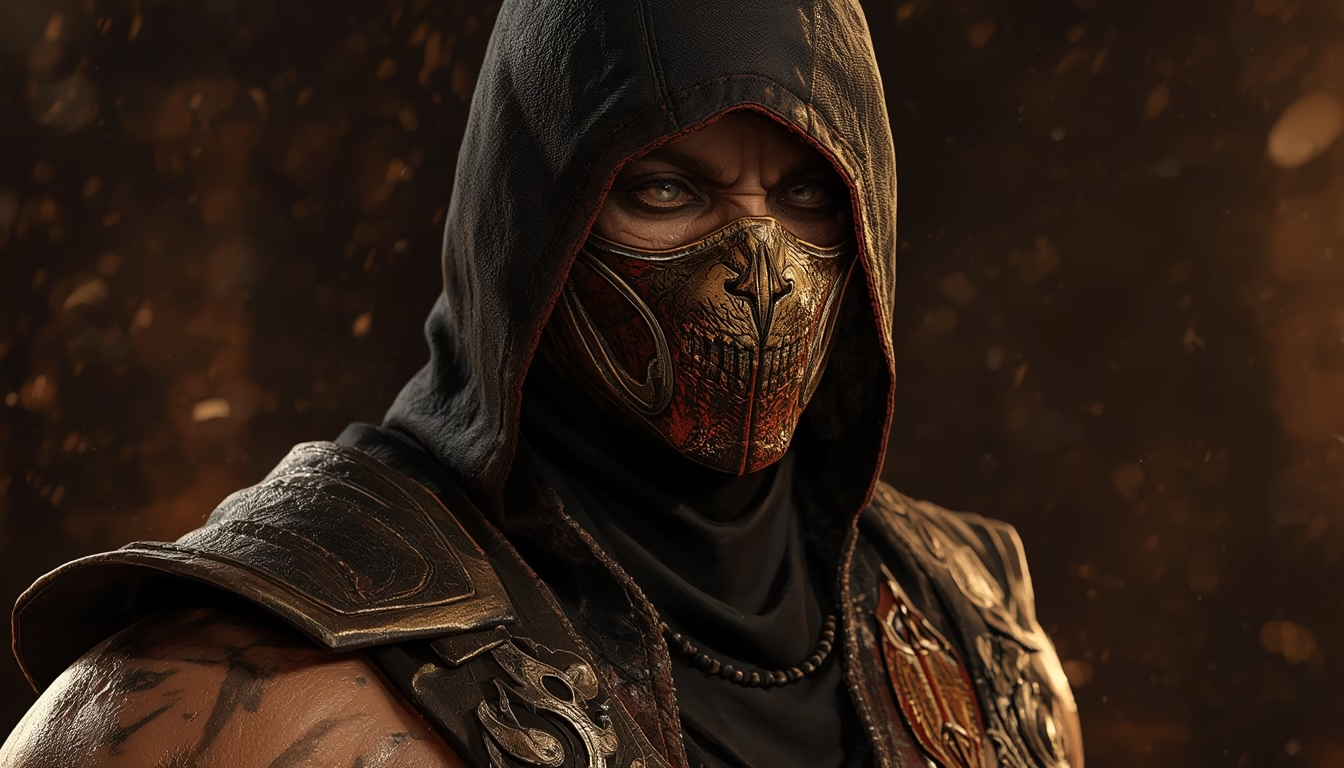
- Scorpion (Hanzo Hasashi) – The vengeful specter with a signature “Get over here!” spear. His tragic backstory and fiery powers make him a fan favorite.
- Sub‑Zero (Kuai Liang) – The icy assassin whose cryomancy can freeze opponents in an instant. The rivalry with Scorpion fuels much of the series’ drama.
- Raiden – The thunder god and protector of Earthrealm, wielding lightning and serving as the moral compass for the heroes.
- Liu Kang – The Shaolin monk turned champion, known for his blazing kicks and unwavering dedication to defending his world.
- Goro – The four‑armed Shokan warlord, son of the legendary sorcerer Goro, whose raw power and intimidating presence have made him an enduring icon.
The Latest Movie: Plot, Action, and Visuals
The 2021 Mortal Kombat film opens with a high‑stakes tournament that pits Earthrealm’s greatest fighters against Outworld’s ruthless champions. The story follows a new protagonist, Cole Young (played by Lewis Tan), a street‑wise fighter who discovers his hidden lineage as a descendant of the ancient Kombat warriors. Guided by Raiden (Tadanobu Asano) and joined by Scorpion, Sub‑Zero, Liu Kang, and a reluctant Goro, Cole must stop Shang Tsung (Chin Han) from resurrecting the sorcerer’s dark empire.
Visually, the movie embraces a hyper‑realistic aesthetic. The fight choreography blends traditional martial arts with the franchise’s signature over‑the‑top moves—flaming swords, ice‑shattered limbs, and lightning‑charged punches. Goro’s fight scenes are a highlight: the creature’s four arms allow for multi‑directional attacks that feel both chaotic and meticulously choreographed. The use of motion‑capture technology gives each fatality a visceral, almost tactile quality, making the gore feel purposeful rather than gratuitous.
Fight Choreography: A Love Letter to the Games
The choreography respects the source material by preserving iconic combos and finishers. Scorpion’s spear and Sub‑Zero’s ice blast are executed with perfect timing, while Liu Kang’s “Bicycle Kick” lands with cinematic flair. Goro’s signature “Four‑Arm Throw” is expanded into a full‑body grapple sequence that showcases his brute strength without sacrificing fluidity. The result is a fight experience that feels both fresh and nostalgically familiar.
Faithfulness to the Games
Fans will appreciate the numerous Easter eggs peppered throughout the film: the hidden “Test Your Might” mini‑game appears as a training montage, the classic “Fatality” announcer voice is heard during each finishing move, and the tournament’s arena mirrors the design of the original arcade stage. Even Goro’s backstory receives a nod, referencing his lineage and the Shokan’s quest for domination.
Fan Reactions and Cultural Impact
Social media erupted after the trailer dropped, with hashtags like #MortalKombat2021 and #GoroReborn trending worldwide. Longtime fans praised the movie’s dedication to the games’ brutal roots, while newcomers lauded the accessible storyline and high production values. Critics highlighted the film’s ability to balance nostalgia with modern storytelling, noting that the inclusion of Goro as a central figure helped bridge the gap between the classic arcade era and today’s cinematic expectations.
Beyond the screen, Mortal Kombat continues to influence fashion, music, and internet memes. Goro’s image appears on streetwear collections, while the franchise’s iconic sound effects—like the “Fatality” cue—have become instantly recognizable audio memes. The series’ impact on fighting‑game design is undeniable; its emphasis on storytelling and character depth paved the way for titles like Street Fighter and Tekken to incorporate richer narratives.
What’s Next for the Mortal Kombat Franchise?
With the success of the 2021 film, a sequel is already in development. Early reports suggest a deeper dive into the Outworld saga, featuring a more prominent role for Goro’s brother Kintaro and an expanded look at the Shokan clan’s politics. Additionally, a new animated series is slated for a streaming platform, promising to explore untold stories from the realms and introduce fresh characters.
On the gaming side, Mortal Kombat 1 (the latest installment) reboots the timeline, offering a fresh narrative canvas for future films and TV adaptations. This synergy between games and media ensures that the franchise will remain a cultural mainstay for years to come.
Conclusion: Join the Conversation
From the pixelated corridors of 1992 arcades to the thunder‑lit arenas of modern cinema, Mortal Kombat—and the towering presence of Goro—has proven that a well‑crafted myth can transcend mediums. Whether you’re a veteran who still remembers the first time you pulled the joystick to face Goro, or a newcomer dazzled by the latest film’s blood‑splattered choreography, the franchise offers something for every fan of high‑octane action.
Now it’s your turn: share your favorite Mortal Kombat moment in the comments below. Was it Scorpion’s fiery comeback, Sub‑Zero’s icy vengeance, Liu Kang’s triumphant final kick, or Goro’s earth‑shaking roar? Let’s keep the conversation alive and celebrate the legacy of a series that continues to fight its way into the hearts of gamers and moviegoers alike.
