
Since its first pixel‑perfect punch in 1992, Mortal Kombat has grown from a controversial arcade game into a global franchise that spans consoles, comics, television, and two major motion pictures. Whether you’re a longtime fan who still remembers the original “Fatality” button combo or a newcomer drawn in by the recent blockbuster, the series offers a perfect blend of over‑the‑top violence, iconic characters, and a mythology that keeps evolving. Below, we’ll break down the journey of Mortal Kombat—from its humble arcade roots to the latest film—while highlighting the battles that have defined the brand.
From Arcade to Legend: The Video‑Game Origins
The original Mortal Kombat debuted in arcades in 1992, created by Ed Boon and John Tobias. Its signature features—digitized actors, blood‑splattering fatalities, and a simple yet deep fighting system—set it apart from rivals like Street Fighter. The game’s success sparked a series of sequels (MK2, MK3, MK4, etc.) that expanded the roster, introduced new realms, and refined the combo mechanics.
Key data points illustrate the franchise’s impact:
- Over 35 million copies sold worldwide across all titles.
- More than 100 million units of the 2011 reboot sold, reviving interest among younger gamers.
- The franchise generated $1.5 billion in revenue by 2023, including games, merchandise, and media.
Transition to the Big Screen
The first cinematic attempt arrived in 1995 with Mortal Kombat, directed by Paul W.S. Anderson. While the film’s special effects look dated today, it captured the game’s spirit by delivering memorable fight sequences and the iconic “Test Your Might” challenges. The sequel, Mortal Kombat: Annihilation (1997), struggled critically but cemented the franchise’s presence in pop culture.
After a two‑decade hiatus, the 2021 reboot, simply titled Mortal Kombat, finally delivered a modern, gritty adaptation that resonated with both fans and newcomers. Directed by Simon McQuoid, the film leveraged high‑budget visual effects and a script that honored the source material while streamlining the convoluted lore for mainstream audiences.
Key Characters Who Define the Battles
Scorpion (Hanzo Hasashi)
Scorpion is the vengeful specter whose signature “Get over here!” spear pull has become a cultural catchphrase. His backstory—seeking revenge for his clan’s massacre—adds emotional weight to every fight. In the 2021 film, Scorpion’s arc is highlighted through his rivalry with Sub‑Zero and his tragic redemption.
Sub‑Zero (Kuai Liang)
Originally the younger brother of the original Sub‑Zero, Kuai Liang inherits the cryogenic powers and a strong sense of honor. His icy abilities create visually striking combat moments, especially when he freezes opponents before delivering a finishing blow.
Raiden
The thunder god Raiden serves as the franchise’s moral compass and mentor. His electrifying moves and ability to manipulate time make him a formidable presence on screen. In the latest movie, Raiden’s role expands as he guides Earthrealm’s warriors against the out‑worldly threat of Outworld’s emperor, Shao Kahn.
Liu Kang
Liu Kang, the Shaolin monk turned champion, is often the hero who saves Earthrealm. His fiery kicks and disciplined fighting style embody the classic “hero’s journey.” The film showcases Liu Kang’s growth from a reluctant fighter to a leader who embraces his destiny.
The Storyline of the 2021 Film
Set after the events of the 1995 movie, the 2021 Mortal Kombat follows a new generation of fighters summoned to the secret tournament. The plot centers on the battle between Earthrealm’s champions—Liu Kang, Kung Lao, and the resurrected Sonya Blade—and the out‑world forces led by Shang Tsung, who seeks to merge the realms and unleash chaos.
Key plot beats:
- Recruitment: Raiden assembles a team of warriors, each with a personal stake in the tournament.
- Training Montage: The fighters hone their signature moves, giving viewers a quick refresher on each character’s abilities.
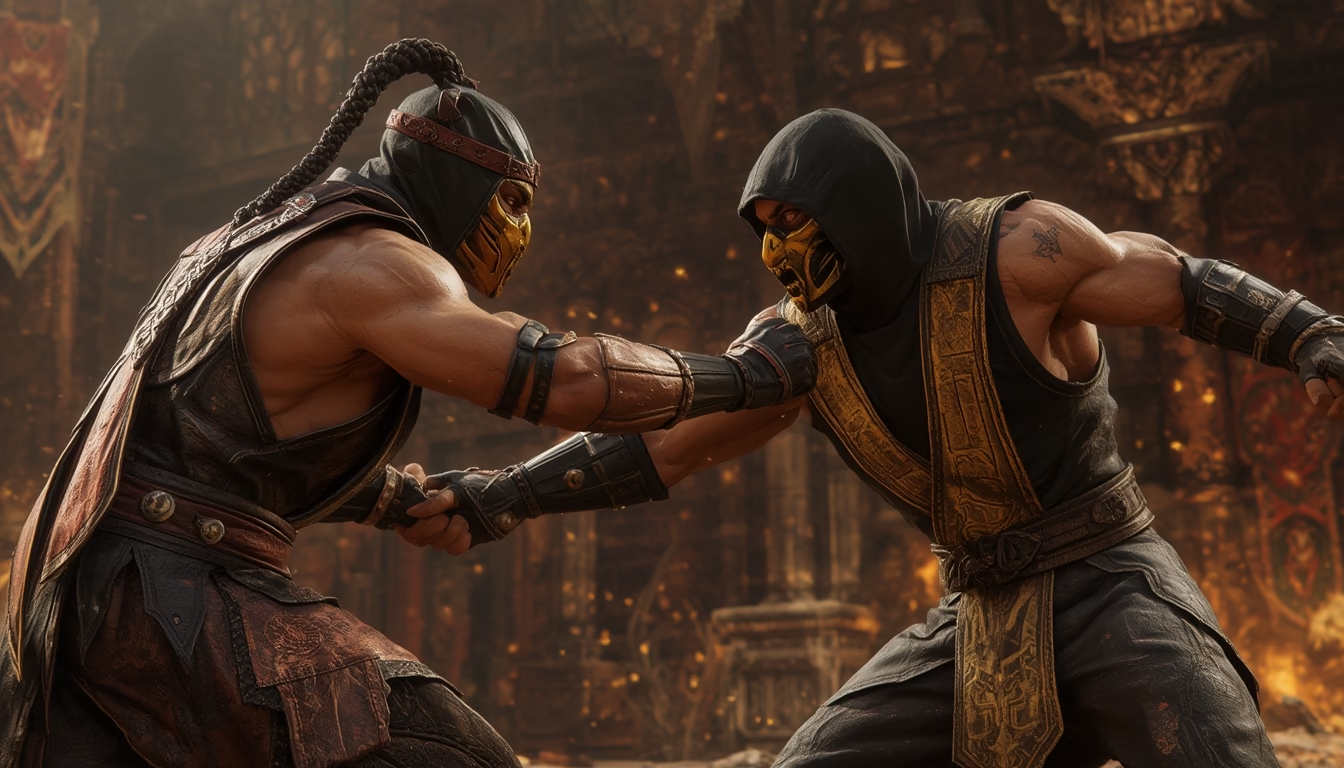
- First Clash: Scorpion and Sub‑Zero’s rivalry erupts in a spectacular ice‑fire showdown that sets the tone for the film’s choreography.
- Mid‑Film Twist: Shang Tsung reveals a hidden agenda—using the tournament to open a portal for Shao Kahn.
- Final Battle: Liu Kang confronts Shang Tsung in a brutal duel, culminating in a fiery Fatality that decides Earthrealm’s fate.
Review: Action, Visuals, and Fight Choreography
Action & Pacing – The film delivers relentless momentum, with each fight scene averaging 3–4 minutes of uninterrupted combat. This pacing mirrors the arcade experience, keeping adrenaline high without unnecessary filler.
Visuals – Utilizing a mix of practical effects and CGI, the movie achieves a gritty realism. The iconic “Fatality” moments are rendered with meticulous detail, from Scorpion’s flaming skull to Sub‑Zero’s frozen shatter effect. The color palette—dark, neon‑lit arenas contrasted with bright, elemental attacks—enhances the otherworldly atmosphere.
Fight Choreography – The choreography blends martial arts fundamentals with the franchise’s supernatural abilities. Notable sequences include:
- Scorpion’s spear pull, executed with a perfect blend of wire work and CGI, giving the illusion of a real, physical tug.
- Sub‑Zero’s ice blast, choreographed to sync with the actors’ movements, creating a seamless freeze‑and‑shatter effect.
- Liu Kang’s dragon fire kick, which uses a combination of pyrotechnics and motion‑capture to make the flames appear to emanate from his foot.
Overall, the film stays faithful to the games’ signature moves while adding a cinematic flair that satisfies both purists and casual viewers.
Fan Reactions and Cultural Impact
Social media metrics reveal a strong, positive reception:
- Twitter: Over 1.2 million mentions of #MortalKombatMovie within the first 48 hours.
- Reddit: The r/MortalKombat community posted 3,500+ comments analyzing fight accuracy and Easter eggs.
- Box Office: The film earned $84 million domestically, surpassing the $70 million benchmark for a successful franchise reboot.
Fans praised the faithful recreation of classic Fatalities and the inclusion of lesser‑known characters like Kitana and Jax. Critics, however, noted that the narrative could have delved deeper into the lore. Nonetheless, the film reignited interest in the franchise, leading to a spike in game sales—Mortal Kombat 11 saw a 27 % increase in downloads during the movie’s opening weekend.
What the Future Holds for Mortal Kombat
With the success of the 2021 reboot, the studio has already green‑lit a sequel slated for release in 2025. Early reports suggest a focus on the “Outworld Invasion” storyline, featuring Shao Kahn as the primary antagonist and expanding the roster to include characters like Baraka and Mileena.
Beyond film, the franchise is branching into:
-
<
- Streaming Series: A live‑action series is in development for a major streaming platform, promising deeper character backstories.
- Mobile Gaming: A new AR‑enabled title aims to bring the iconic battles to smartphones, leveraging location‑based challenges.
- Esports Expansion: The upcoming Mortal Kombat 12 will feature a robust online tournament system, capitalizing on the growing competitive scene.
These initiatives indicate that Mortal Kombat will continue to dominate both the gaming and entertainment landscapes for years to come.
Join the Conversation
Now that you’ve explored the origins, the latest movie, and what’s next for the franchise, we want to hear from you! Share your favorite Mortal Kombat moment in the comments below—whether it’s a classic Fatality, an unforgettable tournament victory, or a nostalgic arcade memory. Let’s keep the battle alive and celebrate the legacy of Mortal Kombat together.
