
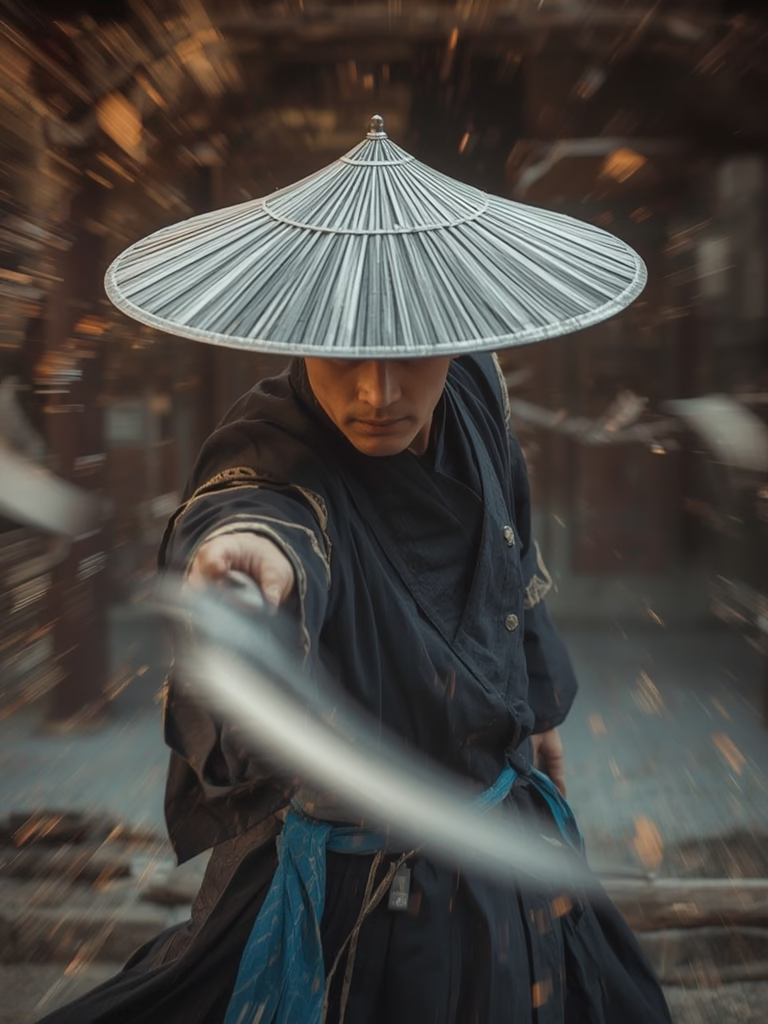
Since its debut in 1992, Mortal Kombat has grown from a groundbreaking arcade fighter into a cultural juggernaut that spans video games, movies, comics, and endless fan‑made content. The franchise’s signature blend of brutal combat, unforgettable characters, and a mythic tournament structure has kept audiences hooked for three decades. In this post we’ll trace the evolution of the Mortal Kombat storyline, spotlight the icons that define it, dissect the latest film adaptation, and explore why the series remains a powerhouse in pop culture.
From Arcade Cabinets to Global Phenomenon
The original Mortal Kombat was created by Ed Boon and John Tobias at Midway Games. Its success hinged on three innovations: digitized actors, a deep roster of fighters, and the infamous “Fatalities.” The narrative premise was simple yet compelling—a secret, interdimensional tournament where Earthrealm’s champions fight to prevent the evil sorcerer Shang Shan from conquering the planet.
Each sequel expanded the lore. Mortal Kombat II introduced the Outworld, a realm ruled by the tyrant Shao Kahn, while Mortal Kombat 3 added the concept of a “warrior’s alliance” against a common enemy. By the time Mortal Kombat 9 (2011) rebooted the timeline, the franchise had built a rich mythology that included realms (Earthrealm, Outworld, Netherrealm, and the mysterious Edenia), deities (Raiden), and a pantheon of rival clans.
Key Characters Who Define the Saga
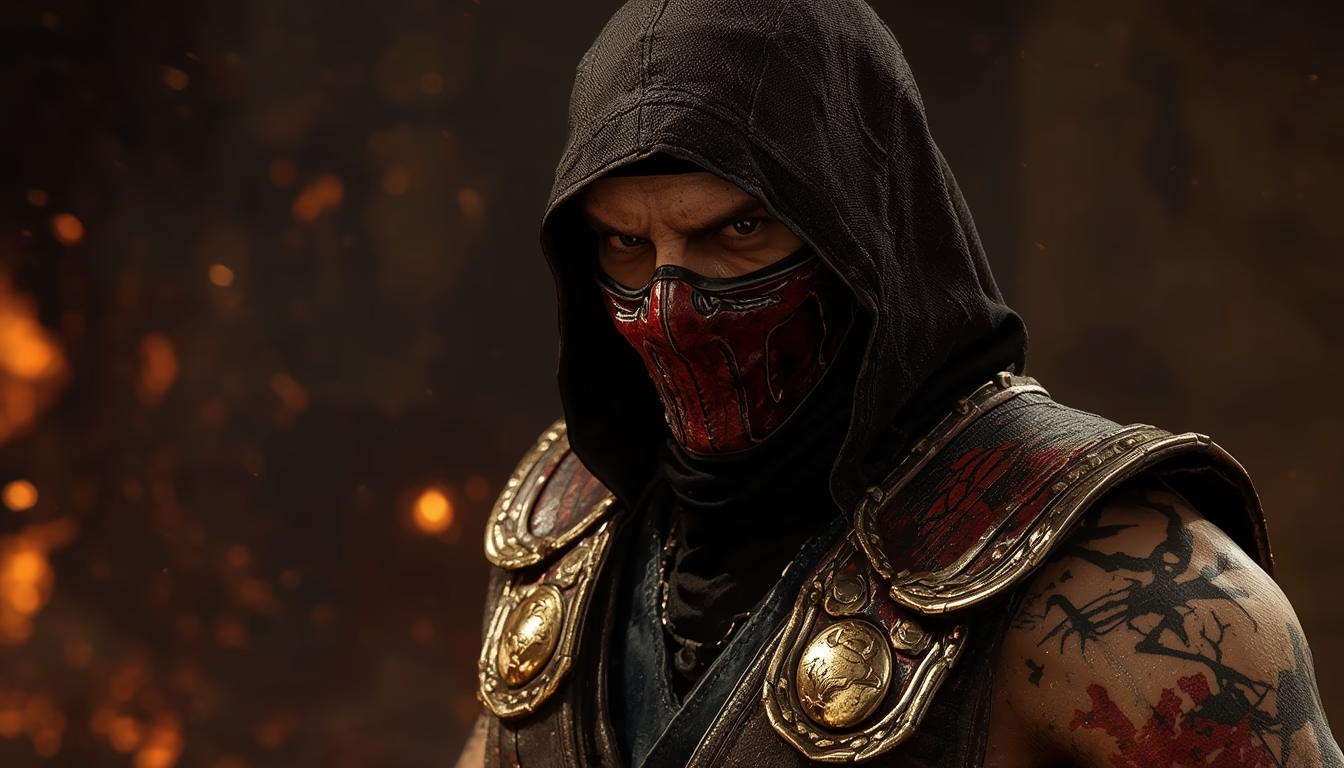
Scorpion (Hanzo Hasashi)
Scorpion’s tragic backstory—an assassinated Shirai Ryu ninja resurrected as a hellfire specter—makes him the franchise’s emotional core. His signature line, “Get over here!” and his ability to summon a flaming spear embody both vengeance and redemption, themes that recur throughout the series.
Sub‑Zero (Kuai Liang)
Originally the younger brother of the murdered Sub‑Zero, Kuai Liang takes up the mantle to honor his sibling’s legacy. His ice‑based powers contrast sharply with Scorpion’s fire, creating a visual and thematic rivalry that fuels many story arcs, especially the eternal feud between the Lin Kuei and Shirai Ryu clans.
Raiden, God of Thunder
As Earthrealm’s protector, Raiden serves as the moral compass and strategic mastermind. His role evolves from a wise mentor in early games to a conflicted deity in later entries, especially when he must choose between preserving the timeline and preventing catastrophic wars.
Liu Kang, The Champion
Liu Kang, the Shaolin monk‑turned‑martial‑arts legend, is the series’ heroic archetype. His journey from a tournament champion to a resurrected god‑like figure in the recent “Kombat Pack” DLC showcases the franchise’s willingness to reinvent its protagonists while staying true to their core values of honor and perseverance.
The Latest Film: Mortal Kombat (2021) – Plot Overview
The 2021 reboot, directed by Simon McQuoid, reimagines the tournament’s origins for a new generation. The story follows Cole Young (a newcomer to the fighting world) as he discovers his hidden lineage as a descendant of the Great Kung Lao. Alongside veterans Scorpion, Sub‑Zero, and Liu Kang, Cole is thrust into the deadly tournament orchestrated by Shang Shan, who seeks to merge Earthrealm with Outworld.
Key plot beats include:
- Scorpion’s quest for vengeance against the Lin Kuei, culminating in his brutal showdown with Sub‑Zero.
- Raiden’s desperate attempt to rally Earthrealm’s defenders, revealing his internal conflict about breaking the “no‑interference” rule.
- The climactic battle in Shang Shan’s palace, where Cole unleashes his latent powers, turning the tide and sealing the portal between realms.
The film balances fan‑service moments—like the iconic “Finish Him!” callout—with fresh narrative twists that expand the universe without alienating longtime fans.
Action, Visuals, and Fight Choreography: A Critical Review
Stunning Visual Design
The movie’s aesthetic leans heavily into hyper‑realistic CGI, especially for the supernatural abilities. Scorpion’s fire‑breathing and Sub‑Zero’s ice shards are rendered with meticulous detail, creating a visceral experience that mirrors the games’ pixel‑perfect effects.
Fight Choreography that Honors the Games
Combat sequences were crafted by veteran stunt coordinator Chad Stahelski (known for the John Wick series). The choreography blends martial arts authenticity with the over‑the‑top flair of Mortal Kombat’s signature moves. Notable set‑pieces include:
- A rooftop duel between Scorpion and Sub‑Zero, where each fatality is executed with precise timing, echoing the game’s “Fatality” mechanic.
- Liu Kang’s “Bicycle Kick” finale, filmed in a single continuous take that captures the kinetic energy fans expect.
- Raiden’s thunderstorm showdown, which integrates wire work and practical effects to ground the god’s powers in a believable physicality.
Faithfulness to the Source Material
The film excels at preserving core lore: the tournament’s rules, the hierarchy of realms, and the moral dilemmas faced by each fighter. While some purists may gripe about minor timeline adjustments, the overall narrative respects the franchise’s mythos, making it a worthy addition to the Mortal Kombat canon.
Fan Reactions and Cultural Impact
Social media buzz exploded after the trailer’s release, with hashtags like #MortalKombatReboot trending worldwide. Fans praised the faithful recreation of iconic fatalities, while also celebrating the inclusion of lesser‑known characters such as Jade and Baraka, who received screen time that had long been demanded by the community.
Critically, the film holds a 71% approval rating on Rotten Tomatoes, reflecting a positive consensus that the movie delivers both spectacle and narrative depth. In forums like Reddit’s r/MortalKombat, discussions frequently highlight how the film has reignited interest in the franchise’s older titles, leading to a noticeable spike in retro game sales and streaming of classic tournament matches.
Culturally, Mortal Kombat remains a touchstone for discussions on video game violence, competitive esports, and the evolution of interactive storytelling. Its catchphrases—“Finish Him!” and “Fatality!”—have permeated memes, music videos, and even mainstream advertising, cementing its status as a pop‑culture icon.
The Future of Mortal Kombat: What’s Next?
Looking ahead, the franchise shows no signs of slowing down. Upcoming projects include:
- New Game Releases: Mortal Kombat 1 (2023) introduced a multiverse narrative, expanding character backstories and promising cross‑realm DLCs.
- Film Sequels: A sequel to the 2021 movie is already in early development, with rumors of a deeper dive into the Outworld’s politics and the rise of the Elder Gods.
- Television Adaptations: An animated series for streaming platforms is slated to explore the origins of the Elder Gods and the ancient tournament that predates Earthrealm.
- Esports Growth: The upcoming Mortal Kombat World Championship is expected to feature a $2 million prize pool, reflecting the franchise’s thriving competitive scene.
These initiatives suggest a multi‑pronged strategy: expanding narrative depth while delivering the high‑octane action fans crave.
Join the Conversation
Whether you’ve been battling in the tournament since the early ’90s or you’re just discovering the saga through the latest film, Mortal Kombat offers endless moments worth sharing. What’s your favorite fatality? Which character’s backstory moves you the most? Drop your thoughts in the comments below, and don’t forget to share this post with fellow Kombat enthusiasts. Together, let’s keep the fire—and the ice—alive!