
Since its first pixel‑perfect punch in 1992, the Mortal Kombat franchise has become a cultural juggernaut that stretches from arcade cabinets to blockbuster screens. Whether you’re a veteran who still smells the ozone of the original “Fatality” or a newcomer drawn in by the recent film, the series offers a perfect blend of mythic storytelling, unforgettable characters, and over‑the‑top combat. In this post we’ll walk through the franchise’s origins, its leap to the silver screen, the iconic fighters who define it, and what the latest movie brings to the table. Buckle up—there’s a lot of blood, lightning, and nostalgia to unpack.
From Arcade to Legend: The Video‑Game Roots
The story begins in 1992 when Midway Games released the first Mortal Kombat arcade title. Designed by Ed Boon and John Tobias, the game distinguished itself with digitized actors, a gritty aesthetic, and a controversial level of graphic violence. The “Fatalities”—gory finishing moves that let players end a fight in style—sparked a national debate and even helped launch the ESRB rating system.
What set the game apart wasn’t just the gore; it was the deep lore. A mystical tournament held every generation decides the fate of Earthrealm, pitting its champions against warriors from realms like Outworld and Netherrealm. This simple premise gave writers room to create a sprawling mythology that would later fuel movies, comics, and a massive esports scene.
The Leap to Film: Mortal Kombat’s Cinematic Journey
After two successful sequels, the franchise’s first cinematic attempt arrived in 1995 with Mortal Kombat, directed by Paul W.S. Anderson. The film captured the game’s signature look—bright neon backdrops, exaggerated blood splatters, and a soundtrack that still gets fans humming. Though critics were mixed, the movie’s box‑office success proved the brand could thrive beyond consoles.
A sequel, Mortal Kombat: Annihilation (1997), tried to cram every character and plot twist into a single film, resulting in a chaotic narrative that left many fans disappointed. The franchise went dark for two decades, but the video‑game series kept evolving, introducing new fighters, story arcs, and a robust online community.
Key Characters Who Define the Kombat Universe
Scorpion (Hanzo Hasashi)
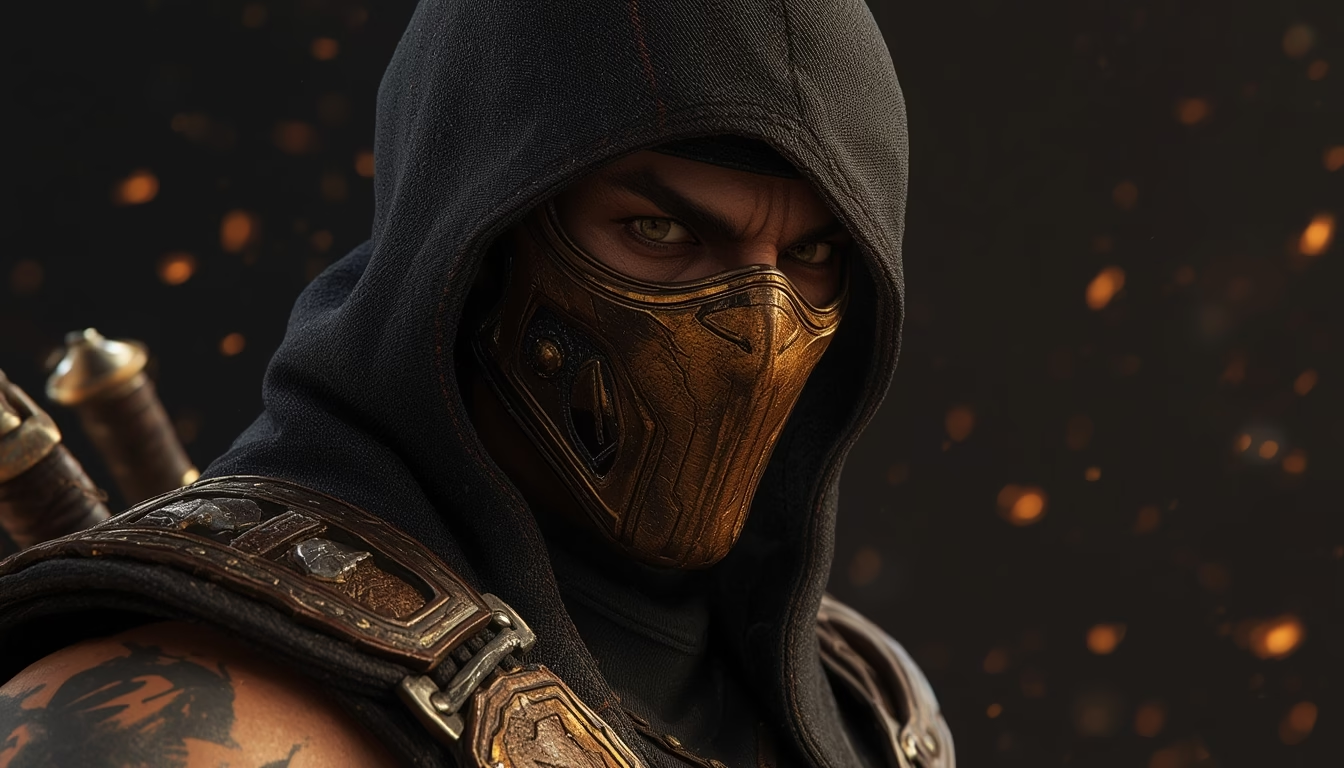
Scorpion is the undead specter with a flaming skull and a signature “Get over here!” spear. Driven by vengeance after his clan’s massacre, his story weaves through betrayal, redemption, and an unending rivalry with Sub‑Zero. Scorpion’s iconic look—yellow ninja garb, chain‑spear, and hellfire—makes him instantly recognizable.
Sub‑Zero (Kuai Liang)
The original Sub‑Zero, Bi‑Han, was killed by Scorpion, paving the way for his younger brother Kuai Liang to take up the mantle. Armed with cryogenic powers, Sub‑Zero can freeze opponents, create ice clones, and wield a deadly ice sword. His journey from a cold‑blooded assassin to a protector of Earthrealm adds emotional depth to the franchise.
Raiden
Raiden, the thunder god, serves as Earthrealm’s guardian. With his iconic white beard, glowing eyes, and staff that channels lightning, he balances the roles of mentor and warrior. Raiden’s moral dilemmas—protecting humanity while maintaining cosmic order—are central to many storylines, especially in the recent film.
Liu Kang
Liu Kang, the Shaolin monk‑turned‑hero, embodies the classic “chosen one” archetype. A master of martial arts and fire, he’s often the linchpin that unites Earthrealm’s fighters. His evolution from a cocky teen to a wise leader mirrors the franchise’s growth, and his rivalry with Shang Tsung remains a fan favorite.
The Latest Film: Mortal Kombat (2021) – Plot at a Glance
The 2021 reboot, directed by Simon McQuoid, re‑imagines the tournament with a darker, more visceral tone. The story follows a group of Earthrealm warriors—Cole Young (a new protagonist), Liu Kang, Kung Lao, and the classic trio of Scorpion, Sub‑Zero, and Sonya Blade—who must stop the sorcerer Shang Tsung from merging Earthrealm with Outworld.
Key plot beats include:
- Cole’s discovery that he is the son of a legendary kombatant, giving him a personal stake in the tournament.
- Scorpion’s quest for vengeance against the sorcerer who murdered his family.
- Sub‑Zero’s internal conflict as he confronts his brother’s death and the promise of a new clan.
- Raiden’s desperate gamble to open a portal to Outworld, setting the stage for the final showdown.
The film culminates in an epic battle at Shang Tsung’s arena, where each fighter showcases their signature moves, leading to a cliffhanger that hints at a sequel.
Action, Visuals, and Fight Choreography: A Critical Review
Visually, the movie embraces a gritty realism while preserving the franchise’s neon‑lit aesthetic. The use of practical effects for blood splatter and the iconic “Fatalities” feels authentic, and the CGI is reserved for supernatural abilities—fireballs, ice shards, and lightning—keeping the focus on tangible combat.
The fight choreography stands out as the film’s strongest asset. Director Simon McQuoid hired seasoned martial‑arts choreographers who blended traditional kung fu with the exaggerated, high‑impact moves fans expect from the games. Scorpion’s spear pull, Sub‑Zero’s ice blast, and Liu Kang’s dragon fire are executed with precise timing, making each showdown feel both cinematic and true to the source material.
In terms of faithfulness, the movie hits the mark on several fronts:
- Character designs stay true to their game counterparts, down to the smallest details like Scorpion’s skull mask and Raiden’s thunder‑clad armor.
- Signature moves are not just visual gags; they’re integral to the combat sequences, giving fans the satisfaction of seeing “Get over here!” and “Ice‑clone” in live action.
- Story beats such as the tournament’s ancient rules and the moral dilemma of merging realms echo the game’s narrative arcs.
However, the film does take liberties—most notably the introduction of Cole Young, a fresh character designed to serve as the audience’s entry point. While some purists balk at a non‑canonical hero, his presence helps ground the story for newcomers and provides a relatable emotional core.
Fan Reactions and Cultural Impact
Since its release, the 2021 Mortal Kombat has sparked a wave of conversation across social media platforms, Reddit threads, and fan conventions. Long‑time fans praised the movie’s commitment to the franchise’s brutal aesthetic, especially the faithful recreation of classic Fatalities. The “Kombat Kodes” Easter eggs—hidden references to obscure game moves—became viral talking points, encouraging repeat viewings.
Critics, meanwhile, highlighted the film’s balance of nostalgia and fresh storytelling. While some felt the pacing lagged during exposition, the consensus was that the action sequences more than compensated for any narrative hiccups.
Beyond the screen, Mortal Kombat continues to influence pop culture. Its catchphrases (“Finish Him!”) appear in memes, its iconic characters inspire cosplay at major conventions, and the franchise’s soundtrack—pulsating synth beats and heavy metal riffs—remains a staple in gaming playlists. The series also paved the way for discussions about video‑game violence and its place in mainstream media.
What’s Next for the Mortal Kombat Franchise?
The cliffhanger ending of the 2021 film sets up a potential sequel that could explore the aftermath of the portal opening, the rise of new villains like Shao Kahn, and deeper dives into the realms of Outworld and Netherrealm. Meanwhile, the video‑game side is gearing up for the next major release, promising expanded story modes, new fighters, and even more refined combat mechanics.
On the streaming front, a live‑action series is reportedly in development, aiming to explore the backstories of lesser‑known characters such as Kitana and Mileena. This could broaden the franchise’s narrative universe and keep fans engaged between movie releases.
In the esports arena, Mortal Kombat tournaments continue to draw large audiences, with prize pools growing year over year. The competitive scene not only fuels community enthusiasm but also serves as a testing ground for new moves and character balances that often influence future game updates.
Join the Conversation: Share Your Favorite Kombat Moments
Whether you’re cheering for Scorpion’s fiery comeback, marveling at Sub‑Zero’s ice‑shattered finish, or reminiscing about the first time you heard Raiden’s thunderous roar, the Mortal Kombat franchise has given us countless unforgettable moments. What’s your most epic fight scene? Which Fatality still makes you gasp? Drop your favorite Kombat memory in the comments below and let’s keep the conversation raging. And don’t forget to share this post with fellow fans—because the fight for the ultimate Kombat legacy never ends.
