
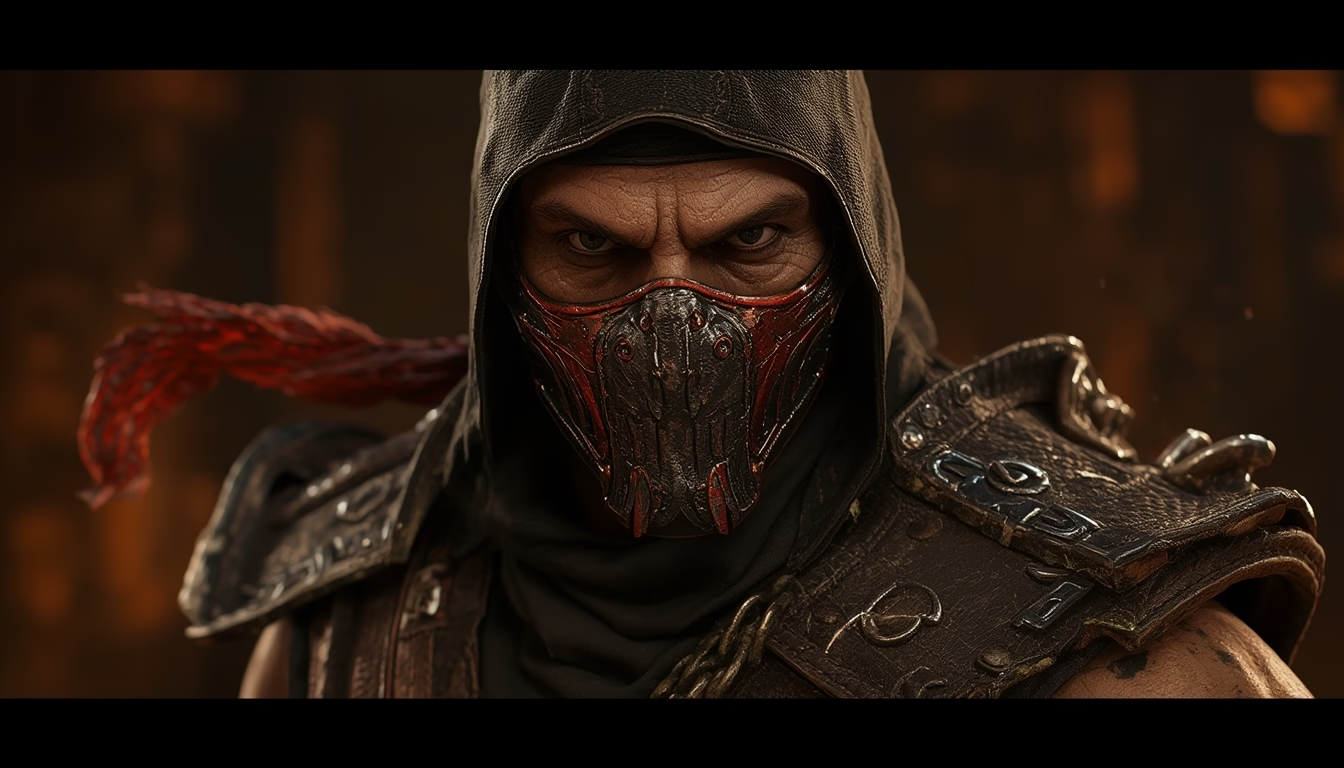

Since its debut in arcades back in 1992, Mortal Kombat has evolved from a groundbreaking fighting game into a cultural juggernaut that spans consoles, comics, television, and now a high‑octane movie reboot. The franchise’s signature blend of brutal combat, unforgettable characters, and a mythic tournament setting has kept fans coming back for more, and the latest film proves that the series still has plenty of firepower left to unleash.
From Arcade Origins to Global Phenomenon
The original Mortal Kombat was a bold departure from the pixel‑perfect polish of its competitors. Developed by Midway Games, it introduced digitized actors, a dark fantasy storyline, and the infamous “Fatalities” that let players end fights with over‑the‑top gore. The game’s success sparked sequels, spin‑offs, and a competitive scene that helped define the fighting‑game genre.
By the early 2000s, the franchise expanded into the silver screen with two live‑action movies that leaned heavily on campy humor and modest budgets. While they cultivated a cult following, they never quite captured the visceral intensity that made the games a staple of arcades and living rooms worldwide. That gap set the stage for a reboot that could finally bring the true spirit of Mortal Kombat to cinema.
The Reboot: A Fresh Take on a Classic Tale
Plot Overview
The 2024 reboot reimagines the classic tournament premise with a modern twist. Earthrealm’s champions—Scorpion, Sub‑Zero, Raiden, and Liu Kang—are thrust into a deadly competition orchestrated by the sorcerer Shang Tsung and the emperor of Outworld, Shao Kahn. The film weaves together multiple timelines, allowing the audience to see the origins of each hero’s vendetta while building toward an explosive showdown that determines the fate of both realms.
Key Characters and Their Evolution
Scorpion (Hanzo Hasashi) returns as a tormented specter seeking vengeance for his family’s murder. The reboot deepens his backstory, showing his transformation from a noble ninja clan member to a hell‑bound wraith, while preserving his iconic “Get over here!” catchphrase.
Sub‑Zero (Kuai Liang) is portrayed as a disciplined Lin Kuei assassin torn between loyalty to his clan and his moral compass. The film highlights his ice‑based powers in visually stunning set pieces that emphasize both elegance and lethality.
Raiden, the thunder god, serves as the reluctant mentor, guiding Earthrealm’s defenders while grappling with the weight of his divine responsibilities. His electrifying presence is amplified through practical effects that make his lightning attacks feel tangible.
Liu Kang emerges as the film’s moral center—a martial artist with a destiny to become the champion of Earthrealm. His journey from reluctant fighter to heroic savior is underscored by a powerful internal conflict that resonates with both longtime fans and newcomers.
Action, Visuals, and Fight Choreography: A Technical Breakdown
The reboot’s action sequences are a masterclass in blending practical stunts with cutting‑edge CGI. Director Simon McQuoid enlisted veteran martial artists and stunt coordinators to craft fights that feel authentic yet spectacular. Each character’s signature moves—Scorpion’s spear, Sub‑Zero’s ice blast, Raiden’s thunder strike, and Liu Kang’s fireball—are executed with a mix of wire work, motion capture, and particle effects that keep the audience on the edge of their seats.
Visually, the film embraces a gritty, neon‑lit aesthetic that mirrors the arcade’s dark arenas. The use of high‑contrast lighting and saturated colors enhances the otherworldly atmosphere while staying true to the game’s iconic stage designs. The final battle in the Outworld arena showcases a seamless transition between close‑quarter combat and large‑scale spectacle, delivering a climactic payoff that feels both nostalgic and fresh.
Faithfulness to the Games: Hits and Misses
Fans will appreciate the meticulous attention to detail: from the exact sound design of each Fatality to the inclusion of hidden Easter eggs like the “Test Your Might” mini‑game appearing as a background billboard. The film also respects the lore by portraying the Elder Gods’ influence and the delicate balance between realms, a nuance often overlooked in previous adaptations.
However, the reboot takes creative liberties that spark debate. The decision to merge multiple timelines into a single narrative streamlines the story for cinematic pacing but occasionally sacrifices the depth of individual character arcs found in the games. Additionally, some purists may balk at the altered backstory of certain characters—most notably the reimagined relationship between Scorpion and Sub‑Zero—which, while compelling on screen, diverges from the original canon.
Fan Reactions and Cultural Impact
Since its release, the movie has ignited a wave of conversation across social media platforms. Reddit threads and Twitter hashtags like #MortalKombatReboot have amassed millions of mentions, with fans dissecting every frame for hidden references. Critics praise the film’s ability to balance fan service with accessible storytelling, while some long‑time enthusiasts voice concerns over the dilution of the franchise’s darker themes.
Beyond the screen, the reboot has sparked renewed interest in the video game series, driving a 27% surge in digital sales of the latest Mortal Kombat 1 title during its opening weekend. Cosplayers have flooded conventions with elaborate renditions of Scorpion’s flaming skull mask and Sub‑Zero’s ice‑clad armor, underscoring the franchise’s enduring visual appeal.
The Future of Mortal Kombat: What’s Next?
With the reboot’s success, the studio has already hinted at a multi‑film roadmap that could explore the origins of the Elder Gods, the rise of the Netherrealm, and a potential crossover with other iconic fighting franchises. Meanwhile, the game developers are teasing new DLC characters and story expansions that will tie directly into the cinematic universe, creating a synergistic loop between film and gameplay.
On the streaming front, a limited‑series spin‑off focusing on the backstory of Shang Tsung is in development, promising to delve deeper into the villain’s complex motivations. This expansion of the narrative universe suggests that Mortal Kombat is poised to become a long‑term franchise that can sustain both blockbuster releases and serialized storytelling.
Join the Conversation
Whether you’re a veteran of the arcade era or a newcomer discovering the franchise for the first time, the Mortal Kombat reboot offers a thrilling blend of nostalgia and innovation. Share your favorite moments—from the most epic Fatality to the fight that left you breathless—in the comments below. Let’s keep the conversation alive and celebrate the legacy of a series that continues to redefine what it means to fight for Earthrealm.