
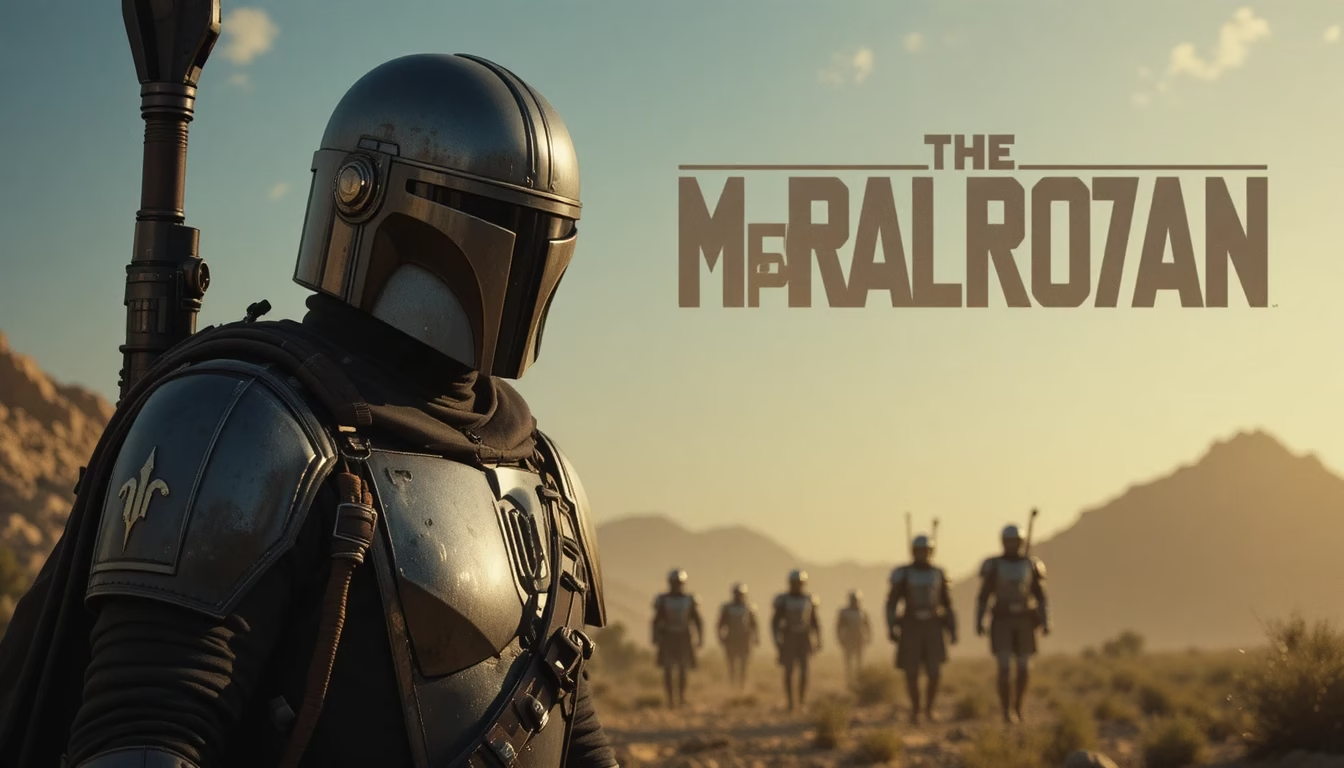
With The Mandalorian’s unprecedented streaming success, a feature film adaptation isn’t just likely—it’s essential for Star Wars’ cinematic future. Here’s why, when, and how it should happen.
Introduction: From Small Screen Phenomenon to Big Screen Event
When The Mandalorian premiered on Disney+ in 2019, it didn’t just revive the Star Wars franchise—it redefined what Star Wars storytelling could be. With global cultural impact (“Baby Yoda” became an instant icon), critical acclaim (8.7/10 on IMDb, 90%+ on Rotten Tomatoes across seasons), and proven box office draw through theatrical events like Season 2’s finale fan screenings, the foundation for a feature film has been firmly established. In an era where streaming series regularly spawn theatrical releases (Downton Abbey, Stranger Things planned film), The Mandalorian’s transition isn’t just logical—it’s financially and creatively imperative for Disney.
Why a Film Makes Strategic Sense
1. Box Office Potential
- The Star Wars brand maintains formidable theatrical power: The Rise of Skywalker earned $1.077 billion despite mixed reviews
- Pedro Pascal’s rising star power post-The Last of Us and Gladiator II
- Din Djarin and Grogu are more recognizable than many recent cinematic heroes
- Projected opening: $150-200 million domestic based on Marvel-compound hype
2. Franchise Evolution Necessity
- The theatrical Skywalker saga concluded in 2019
- Recent films have struggled with direction and identity
- The Mandalorian represents the most universally beloved new Star Wars narrative
- A film could bridge the gap between streaming stories and cinematic events
3. Cultural Timing
- Audience appetite for “space western” meets “lone wolf and cub” tropes remains high
- Practical effects/model work nostalgia aligns with current filmmaking trends
- Opportunity to create the first truly great Star Wars film since Disney’s acquisition
The Perfect Story: What a Mandalorian Film Should Adapt
Concept: The Mandalorian: The Lost Tribe
Plot Framework:
- Following events of Season 3, Din Djarin and Grogu are recruited by Bo-Katan
- A distress signal emerges from the Unknown Regions: a lost Mandalorian colony
- This colony holds not only survivors but the original Mand’alor mask—the ultimate symbol of leadership
- Moff Gideon’s remnant forces (or new Imperial warlord) seek it for its mythic power
- Journey becomes both physical and spiritual: What does it mean to be Mandalorian when the old ways are scattered?
Why This Works:
- Expands lore without contradicting existing canon
- Allows standalone adventure while advancing overarching narrative
- Explores themes of identity, legacy, and cultural preservation
- Provides spectacle (new planets, large-scale battles) worthy of cinema
Creative Team: Who Should Helm It
Director:
- Jon Favreau (executive producer/showrunner) – understands tone, character, practical/digital balance
- Deborah Chow (directed acclaimed episodes) – proven with Star Wars visual language
- Gareth Edwards (Rogue One) – mastery of grounded, gritty Star Wars warfare
Writer:
- Dave Filoni co-writing with Favreau – protects canon consistency
- Add a cinematic screenwriter for structure/pacing (Drew Goddard?)
Cinematographer:
- Greig Fraser (Dune, Rogue One) or Barry “Baz” Idoine (series DP)
- Maintain the distinctive “analog future” visual aesthetic
Production Design: Translating Series Magic to Cinema
What to Keep:
- Practical suits, real locations blended with Volume technology
- The lived-in, used universe aesthetic
- Creature designs by Legacy Effects
- Ludwig Göransson’s thematic score with expanded orchestration
What to Enhance:
- Larger-scale worlds beyond episodic budgets
- More elaborate spacecraft interiors/battles
- Epic vistas matching Dune or Lawrence of Arabia in scope
- Enhanced creature effects for cinematic close-ups
Cast: Returning and New Faces
Confirmed Returns:
- Pedro Pascal as Din Djarin (more face time via helmet-removal scenes)
- Various Grogu puppetry/animatronics with enhanced expressions
- Katee Sackhoff as Bo-Katan Kryze
- Carl Weathers as Greef Karga (likely supporting)
- Giancarlo Esposito as Moff Gideon (flashback or hologram)
New Additions:
- A major star as the lost colony’s leader (Viggo Mortensen type)
- New droid companion with celebrity voice
- Imperial antagonist with nuance beyond “evil officer”
Challenges and Solutions
Challenge 1: Accessibility
- Casual viewers haven’t seen 24 episodes of television
- Solution: Cold open recap via stylized animation/prologue
- Design story as standalone while rewarding longtime fans
Challenge 2: Tone Balance
- Series balances gritty western with family-friendly elements
- Solution: Follow Rogue One model—serious stakes with moments of warmth
- PG-13 rating allowing slightly more intensity
Challenge 3: Runtime vs. Pacing
- Episodes work in 30-50 minute chapters
- Solution: 2 hour 15 minute film structured in three clear acts
- Maintain episodic “mission” structure within cinematic framework
Release Strategy and Projections
Ideal Timeline:
- Announcement: Star Wars Celebration 2025
- Filming: 2026
- Release: December 2027 (10-year anniversary of The Force Awakens)
Marketing Approach:
- First look: Super Bowl 2027 spot
- Trailer: May the 4th, 2027
- Premiere: Hollywood with cast in Mandalorian armor
- IMAX/PLF exclusive first week
Box Office Projections:
- Conservative: $700M worldwide (above Solo but below main saga)
- Moderate: $900M-$1.1B (with strong reviews and cultural event status)
- Optimistic: $1.2B+ (if positioned as “the Star Wars film event of the decade”)
Legacy Potential
A successful Mandalorian film could:
- Launch a new trilogy of standalone films
- Cement the post-Skywalker era as commercially viable
- Integrate streaming characters into theatrical releases fluidly
- Demonstrate that Star Wars’ future lies in character-driven stories over cosmic stakes
- Potentially spin off into Grogu standalone films (animated or live-action) as the character ages
Conclusion: The Way Forward
The Mandalorian represents Star Wars at its best: mythic yet personal, innovative yet nostalgic, expansive yet intimate. A feature film isn’t merely a cash-grab—it’s an opportunity to elevate what already works into a cinematic event that could define the franchise’s next generation.
Disney’s recent theatrical struggles with Star Wars (Solo underperformance, indefinite film delays) create the perfect vacuum for a proven property to step in. With Favreau and Filoni’s stewardship, Pascal’s star power, and Grogu’s undeniable appeal, The Mandalorian film isn’t just another adaptation—it could be the course-correction Star Wars needs.
The formula exists. The audience is waiting. The mythosaur is stirring. All that remains is for Disney to recognize what fans already know: The Way of the Mandalorian belongs on the big screen.
Final Prediction: Announcement within 18 months, release by 2028, with potential to become the highest-grossing Star Wars film since The Force Awakens. This is the way.
